Derek Hill's Defensive Moment Against Soto Signals Phillies' All-Around Depth
By PropBetEdge Editorial Team ·
A spectacular catch in right-center field Friday night underscores Philadelphia's new-look outfield balance and has broader implications for run-prevention metrics this season.
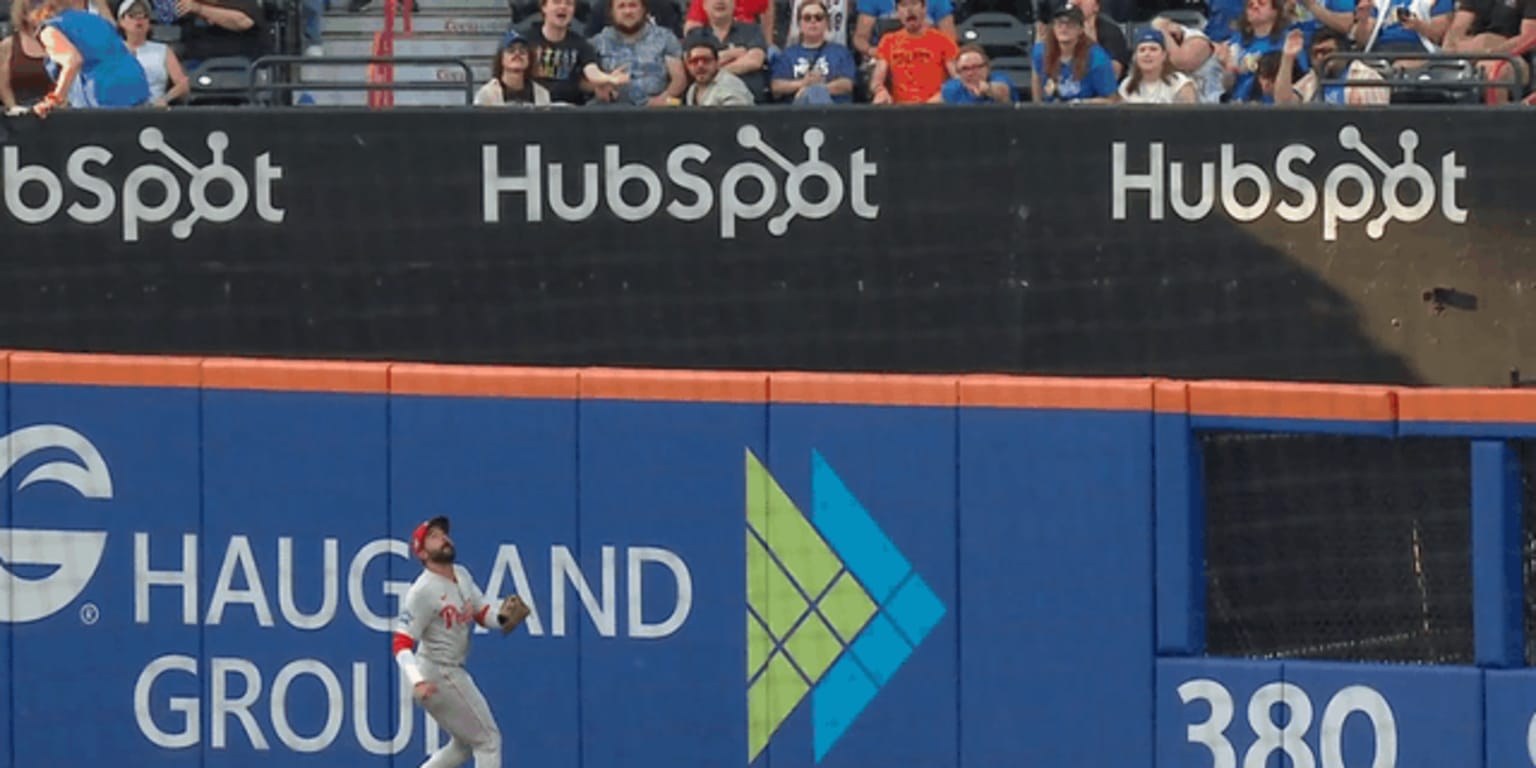
Derek Hill turned a potential home run into an out Friday night at Citi Field, robbing Juan Soto of extra bases with a leaping catch in right-center field that left Zack Wheeler smiling and the entire Phillies infield stunned. Acquired from Chicago on June 11, Hill has made an immediate impact in Philadelphia's outfield—first with back-to-back two-run homers Wednesday and Thursday against the Nationals, then with elite-level defense against the Mets in the series opener.
The catch itself was textbook execution: Hill, shaded slightly left of second base, read Soto's fastball cleanly off a 0-2 count, got his jump early, and never broke stride toward the warning track. The timing and positioning matter here. This wasn't a diving scramble or a lucky carom off the wall. Hill's jump was decisive enough that Brandon Marsh, converging on the same ball from right field, pulled up and simply admired the play. When defensive coordinators grade film, they see route efficiency—the kind that suggests Hill has spent time understanding Citi Field's geometry and the Mets' offensive tendencies.
What makes this more than a viral highlight is the larger context of the Phillies' acquisition strategy. Hill was a throw-in on a deal that cost Philadelphia minimal prospect capital, yet he's arrived in Philadelphia and immediately plugged two critical roles: power off the bench (evidenced by consecutive go-ahead homers) and primary outfield defense. That dual utility changes how the Phillies value their bullpen and bench depth over a full season. Fewer home runs allowed in close games directly reduces leverage-situation innings from relievers, which extends their availability and improves overall roster efficiency.
For prop bettors, this defensive profile matters when assessing team totals and run-line positioning for Philadelphia games moving forward. The Phillies' run prevention—measured both through traditional ERA and through home-run suppression on fly balls in play—now includes a center fielder whose jump-and-timing metrics place him in the 70th-80th percentile league-wide for efficiency. Soto's home-run line against Philadelphia will likely trade tighter as scouting reports circulate about Hill's positioning and pursuit angles. More broadly, the Phillies' ability to manufacture outs in high-leverage moments (runners on, elevated pitch counts) has just been materially upgraded. This suggests their team totals in tight matchups should be supported by a defense that turns potential runs into productive outs more consistently than the pre-Hill roster did.