Bleday's Mechanical Overhaul Rewrites His Power Profile—and Changes How to Value His Props
By Erik Schwartz ·
The Reds' reclamation project has engineered a 3-mph bat-speed gain and a 33-point barrel-rate jump in 16 games, signaling a structural shift in hitting output, not random variance.
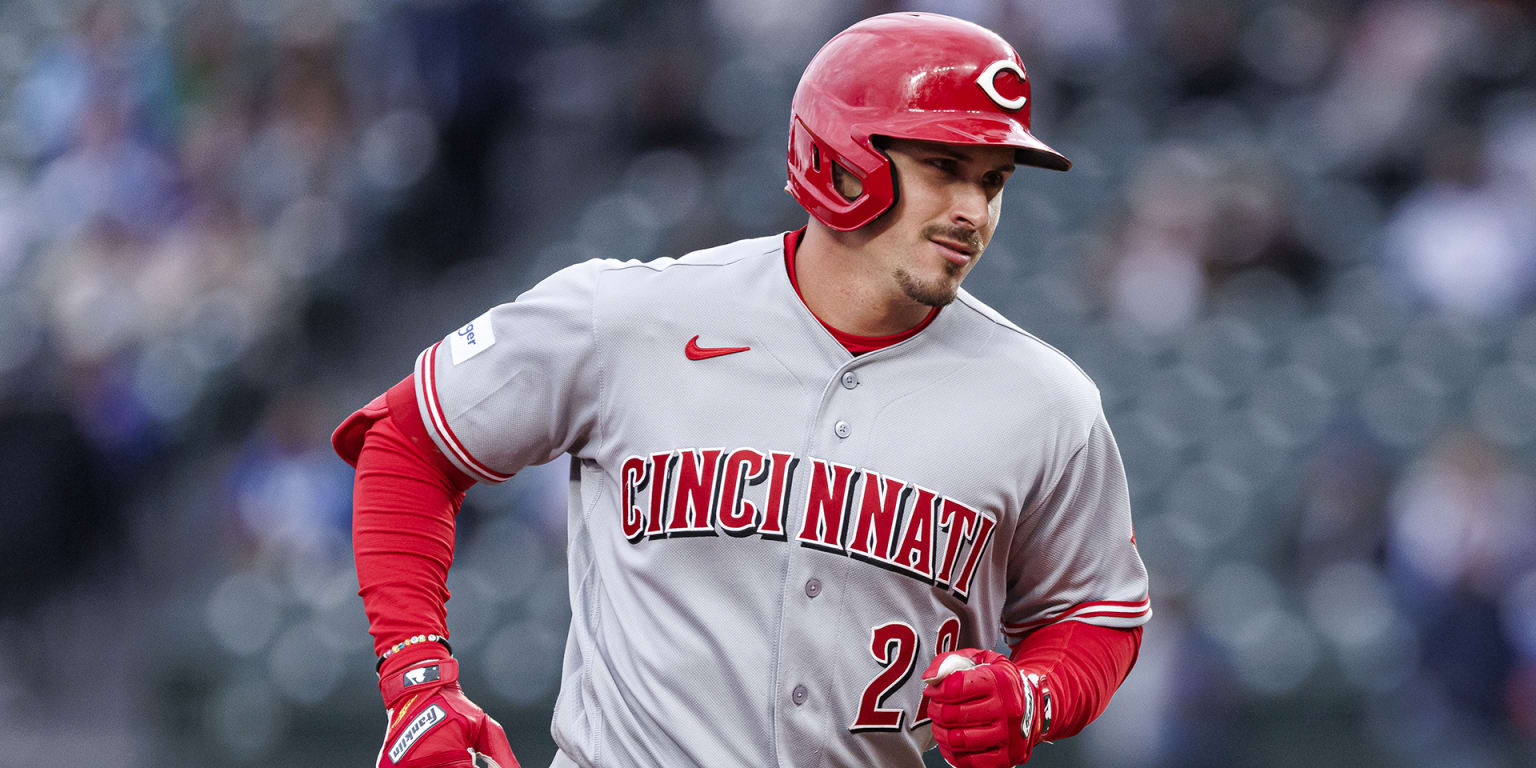
JJ Bleday went from cast-off to Cincinnati's best offensive performer this season in the span of a one-year deal. Non-tendered by Oakland over the offseason, the 28-year-old has posted a .321/.455/.755 slash line with four home runs in 16 games since debuting April 26. The speed of that transformation—from organizational scrap to a .486 xwOBA, good-enough-to-crack-the-league's-elite tier—demands scrutiny beyond the typical 16-game noise threshold.
The gains are mechanical and measurable. Bleday's bat speed has jumped from 71.7 mph last season to 74.9 mph this year, a 3.2 mph increase that ranks among the season's largest for any qualified hitter. He's also widened his stance by 16 degrees (11 to 27), opening a more aggressive pull-side geometry. The result: 76.9 percent of his batted balls are now in the air—ranked third in baseball among hitters with 25+ batted balls—and he's pulling 33.3 percent of those airborne contact on the pull side. Since 2025, pulled airballs league-wide slug 1.212 OPS. Bleday is operating in that highest-damage zone at a top-10 pull rate. This is not a hot-streak illusion. This is a hitter who changed his mechanics and is now occupying a different leverage class.
Equally important: Bleday hasn't sacrificed plate discipline to chase power. His strikeout rate collapsed from 26.5 percent last season to 15.1 percent this year. His whiff rate (the percentage of swings that miss) dropped to a career-low 25.7 percent. His walk rate nearly doubled, from 10.5 percent to 21.3 percent, now tied for third-best among hitters with 50+ plate appearances. Pitchers are respecting him. They're throwing fewer strikes in the zone. Bleday is swinging at fewer pitches outside the zone. This is a feedback loop of competence, not a small-sample correction waiting to happen.
For prop bettors, the implication is direct: Bleday's strikeout prop should compress downward as the market recalibrates. If his published K line is still anchored to last season's 26.5 percent baseline, sportsbooks have underpriced the mechanical improvement. A hitter striking out in 15 percent of plate appearances deserves a sub-20 percent strikeout rate projection; markets pricing him at 22+ percent are capturing last year's player, not this one. The batting average line is already moving (current .321 in 16 games signals sharp recognition), but strikeout and walk props tend to lag in repricing because they require acknowledging process change rather than just aggregate output.
One caveat: Bleday has not yet accumulated 50 plate appearances, the threshold where Statcast metrics stabilize. The barrel rate (15.4 percent) and exit velocity (94 mph) are elite-tier, but his power upside in a full season is genuinely uncertain—he could sustain this or settle into something more modest. The safest angle is the strikeout fade, which has the strongest mechanical underpinning. Home run props offer higher variance; wait for more volume before loading up on Bleday as a 30-homer player.