Extra-Inning Heads-Up Play Reveals Toronto's Defensive Arbitrage Against Houston's MVP-Caliber Offense
By PropBetEdge Editorial Team ·
Andrés Giménez's split-second deception in the 10th inning exposed a vulnerability in how elite hitters navigate high-leverage baserunning — a flaw worth tracking when Blue Jays pitching lines tighten in late-game scenarios.
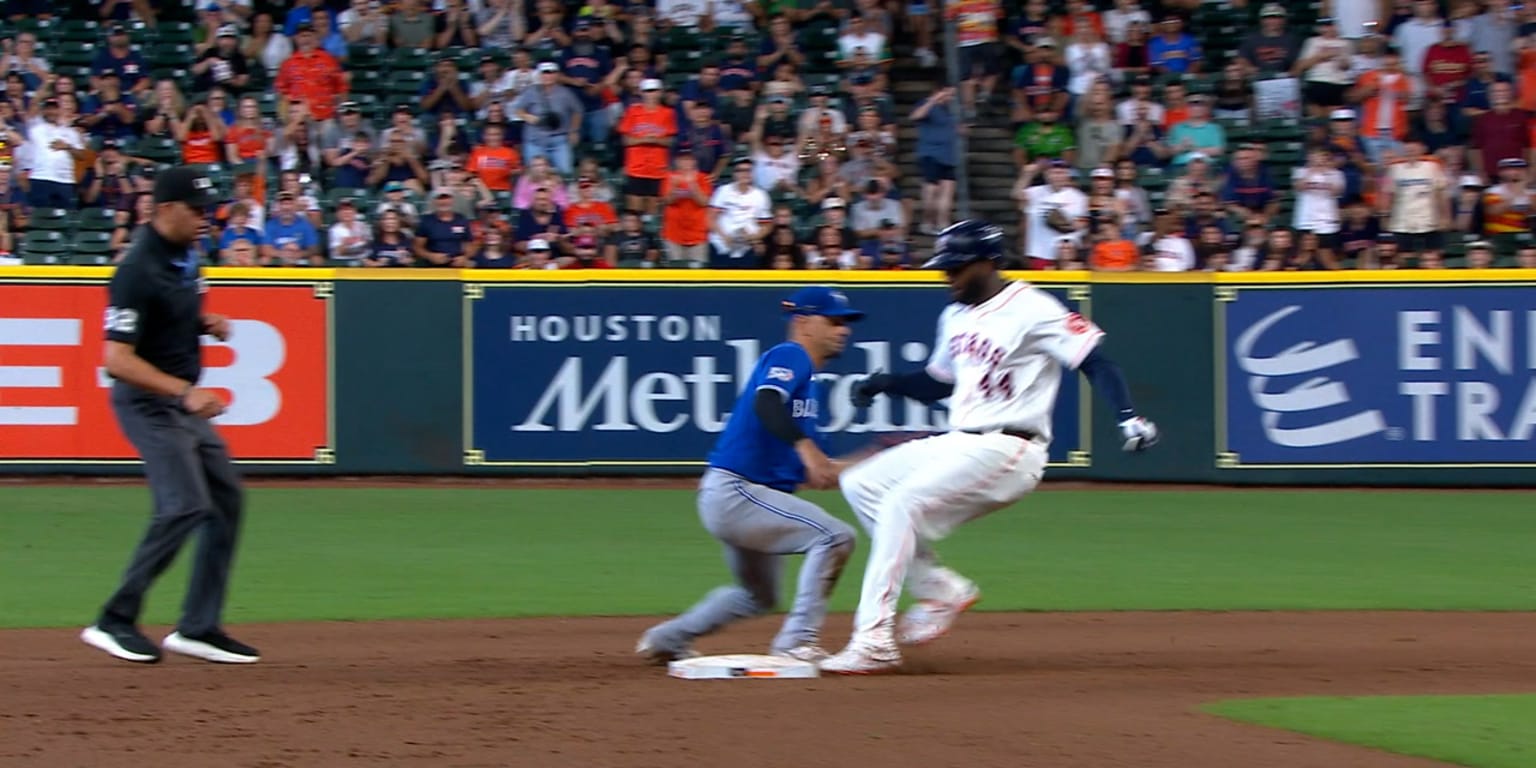
Toronto's 5-4 extra-inning victory over Houston Wednesday hinged on a single moment of defensive improvisation that carries more weight than the highlight reel suggests. With the Astros trailing 5-3 in the bottom of the 10th, Yordan Alvarez — the AL's most prolific hitter this season — drove a ball into right field with legitimate extra-base potential. Nathan Lukes fired an accurate throw to second base, where shortstop Andrés Giménez executed a high-risk, high-reward deception: he faked that the relay hadn't arrived yet, forcing Alvarez to approach the base standing upright rather than sliding. The tag came down uncontested. One out. Inning defused.
Alvarez later acknowledged the trick worked because he'd lifted his head mid-sprint to survey the incoming throw — a momentary lapse in baserunning discipline at the worst possible time. He'd committed to the deception's premise before his eyes confirmed the ball's location. This isn't random luck. Houston's MVP-caliber lineup (Alvarez, Jose Altuve, Kyle Tucker) has thrived all season by attacking pitches other teams wouldn't challenge, making them vulnerable to the inverse: defensive mind games that create false urgency or hesitation. Blue Jays manager John Schneider framed the moment as a necessary "break" you need in extra innings — a euphemism for Toronto catching Houston in a momentary lapse rather than executing a perfectly designed play.
The strategic context matters more than the individual play. With Altuve on deck and Houston's middle-order hitters performing at elite levels, Toronto faced a legitimate choice: walk Alvarez or pitch to him. They pitched, trusted their defense, and benefited from Giménez's quick thinking. That sequence suggests Toronto's bullpen (which will see elevated leverage usage as this playoff race tightens) can lean on defensive execution to manufacture outs rather than pure stuff — a meaningful hedge when discussing team totals and run-prevention props in late-inning spots. Houston's offense has carried the Astros into contention, but high-leverage baserunning situations expose the difference between regular-season dominance and postseason discipline.
For bettors tracking pitcher strikeout props and team-total unders in Toronto's upcoming games, this play underscores an emerging pattern: the Blue Jays' defense can create negative variance for opposing hitters in high-pressure moments. Alvarez's stumble wasn't mechanical failure; it was situational overload. When Houston's lineup faces Toronto pitchers in close games, expect the Astros' run-scoring efficiency to dip below their season average. This isn't a broad regression forecast — it's a specific leverage angle tied to how Toronto deploys its defense in extra frames.
The betting implication is narrow but durable: unders on team totals (both sides) in Blue Jays-Astros matchups during the final weeks of the season carry an edge if Houston is trailing late. Toronto's willingness to trust defensive aggression over raw velocity suggests their pitching staff can navigate high-stress situations with better efficiency than their ERA+ alone indicates. Conversely, when the Astros are favored, expect their implied run total to price in their offensive ceiling without fully adjusting for the defensive pressure Toronto applies in close games.