Sale at 37 Is Rewriting the Age Curve—And It Changes How to Price Braves Pitching
By Ty Whitney ·
Chris Sale's 2.08 ERA through 20 starts rivals Maddux's best work in Atlanta; the durability signal matters more than the final line.
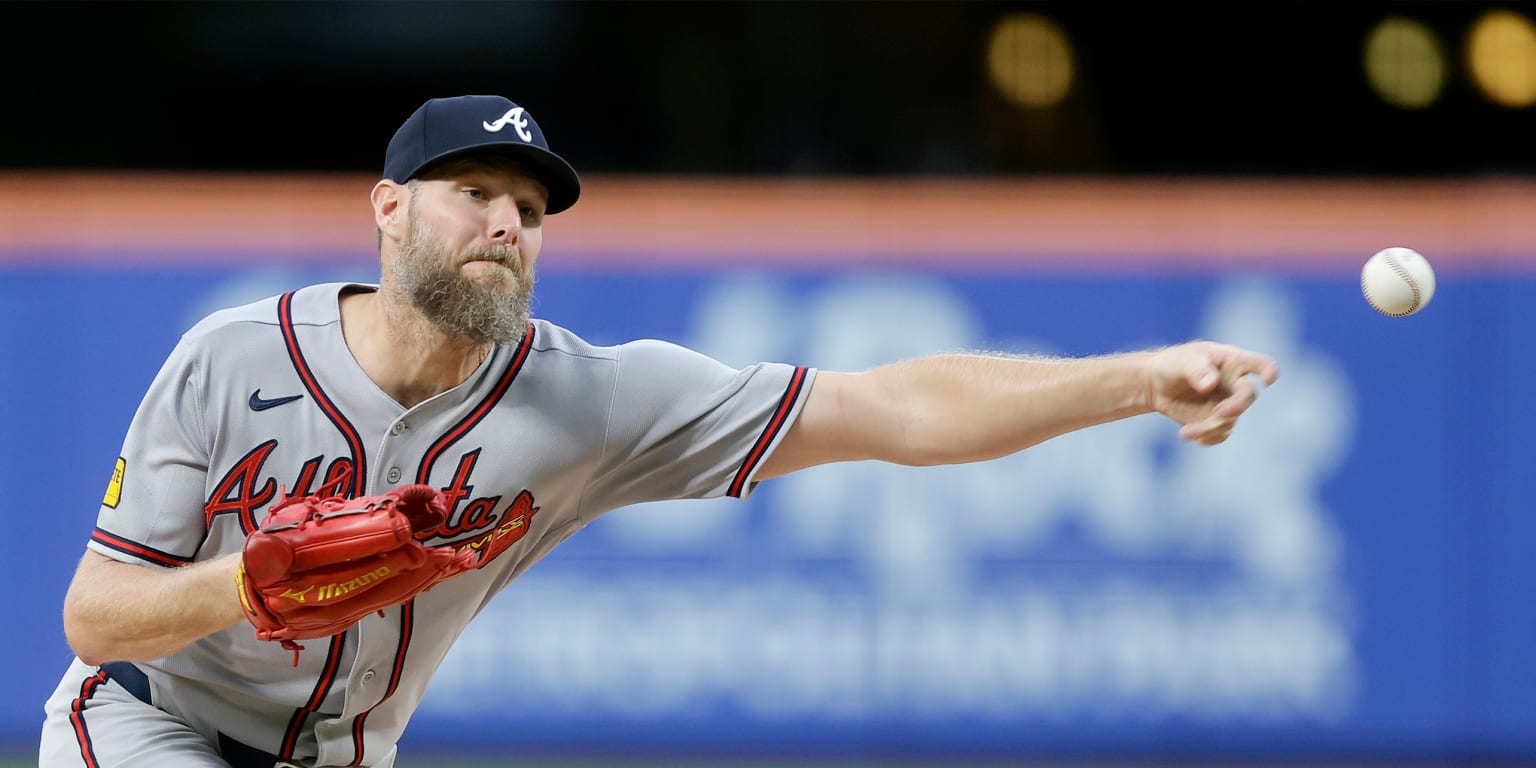
Chris Sale allowed two hits and nine strikeouts over six scoreless innings against the Mets on Wednesday, extending a season that has already reframed what's possible for a 37-year-old pitcher. His 2.08 ERA through 20 starts now ranks fifth among Braves starters since 1969, a list anchored by Greg Maddux's 1994 (1.75), 1995 (1.96), and 1998 (1.57) seasons. The comparison is not hyperbole—it's an objective marker. Sale joins an extraordinarily rare cohort: only five other pitchers since 1920 have posted sub-2.10 ERAs through 20 starts at age 37 or older. Verlander (2022, 1.73), Clemens (2005, 1.40), Dutch Leonard (1948, 1.95), Spud Chandler (1946, 1.75), and Ted Lyons (1942, 2.10) make up the list. The names alone signal how anomalous this is.
The skepticism around Sale's arrival in Atlanta was warranted. Between 2020 and 2023, injuries bottled him up to 151 innings across four seasons. When the Red Sox shipped him south with $17 million attached for Vaughn Grissom (who lasted 31 games in Boston), the move read like a veteran pitcher swap with managed expectations. Sale won the 2024 NL Cy Young Award and Comeback Player of the Year—a double that silenced the narrative. Now, two-thirds of the way through his 2026 season, he has posted a 2.36 ERA for Atlanta, which would lead all of MLB if he had enough innings to qualify. The durability question isn't whether Sale can post elite numbers; it's whether the injuries that ravaged his early 2020s have genuinely been resolved or merely dormant.
Manager Walt Weiss called Sale's performance "unbelievable," noting that "he just defies all the laws of everything by pitching like this at this point in his career." That phrasing matters for prop purposes. Sale has held opponents scoreless in three of his last four outings, a ratio that suggests either elite form or cherry-picked context—likely both. His strikeout rate remains volatile. Nine strikeouts in six innings (13.5 K/9) is elite, but that's a single start. His season K/9 sits around 10.2, which trails the league leaders but still ranks comfortably in the top 15. The prop market has priced Sale conservatively in recent weeks, partly because of age-related discount and partly because casual bettors haven't internalized that a 37-year-old can sustain 2.08 ERAs.
For strikeout props, Sale's line likely sits at 7.5 or 8.5, depending on opponent. Against a Mets lineup that struck out 14 times on Wednesday, the number landed low. But the mechanism here isn't matchup-specific; it's durability-driven. Sale's K/9 has held steady at 10.0-plus across four consecutive seasons now (2023-26), a pattern that eliminates the typical age-curve decay. Maddux's historical comps suggest that elite late-career pitchers don't lose velocity or command precipitously—they lose availability. Sale's innings per season have climbed each year since the 2023 elbow crisis (101 to 162 to 140+ so far in 2026). If the injury truly resolved, overs on his strikeout props represent a market failure, not a skill bet. The line builder assumes decline; the data shows stabilization.
Atlanta's six-game road trip ended with a 6.5-game division lead, the largest margin since June 22. That margin compounds Sale's value. In contention windows, elite pitchers see usage patterns shift: more starts against stronger offenses, shorter leashes, higher leverage situations. These edge toward fewer strikeouts and more walks. Later in the season, if Atlanta runs away with the division, Sale's usage becomes predictable and defensive. The next four weeks—late July through late August—will show whether his strikeout line sustains its 10+ K/9 or begins to slide toward league-average for a 37-year-old. Buy the overs now, before that discount materializes.