Joshua Báez's Four-Homer Night Signals Prospect Ready for Acceleration
By Erik Schwartz ·
A Triple-A breakout on the three-year anniversary of his father's death offers real evidence that the Cardinals' power prospect is closing the gap to the majors faster than his current prospect ranking suggests.
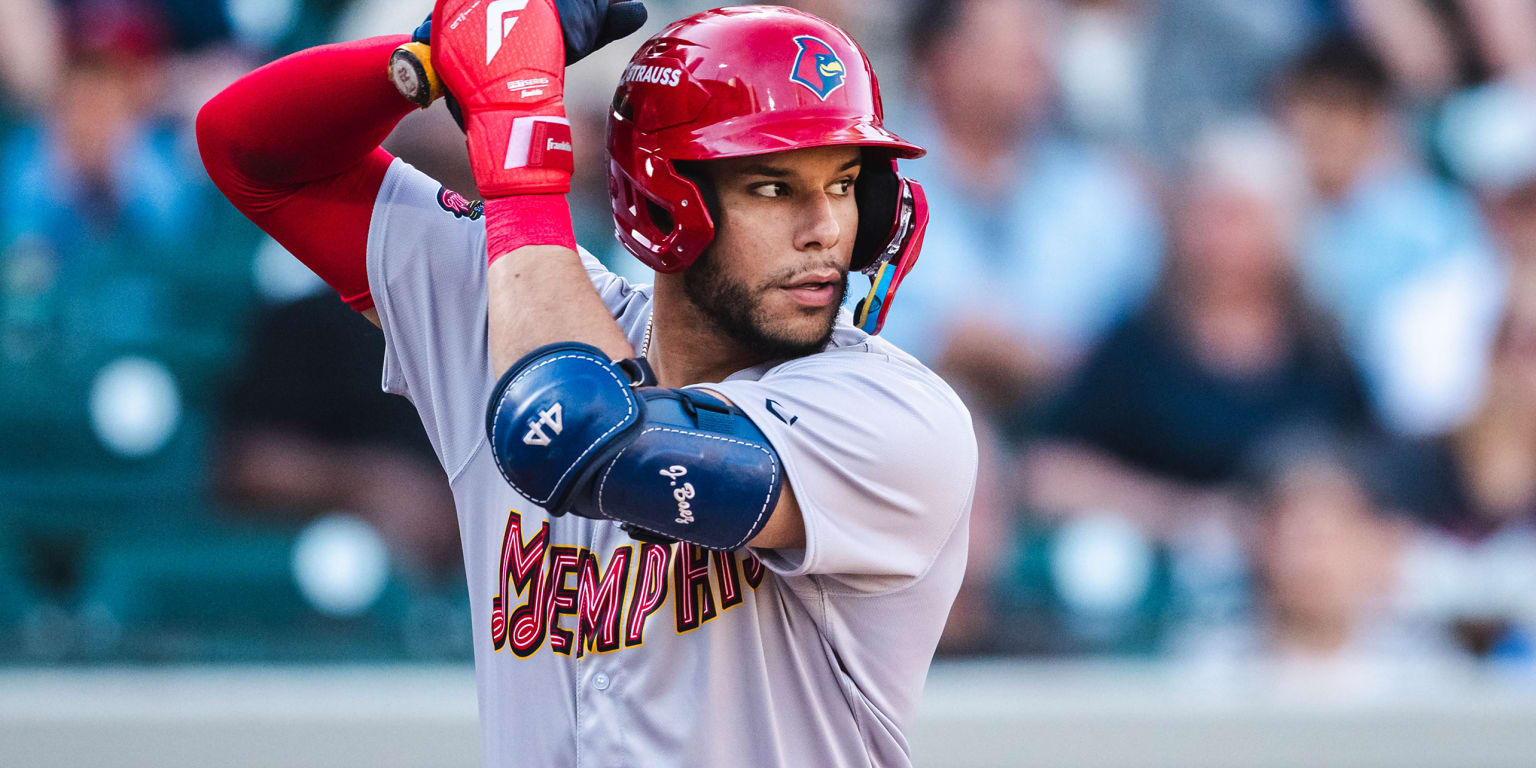
Joshua Báez launched four home runs in a single game for Memphis on Tuesday, June 17—a career night that arrived on the three-year anniversary of his father Jose Manuel's passing. The 22-year-old outfielder finished 4-for-5 with seven RBIs and 1,510 feet of combined distance, the kind of singular offensive eruption that occasionally punctures the noise of prospect development and forces front offices to recalibrate.
The volume tells part of the story. Báez entered the night having already surpassed his previous career high of 20 home runs from 2025, sitting at 23 bombs across 62 games. A four-homer performance in one night is not routine—only 14 minor leaguers since 2005 have managed it, and Báez is the first in Cardinals organization history. His slash line of .282/.345/.631 through 62 games reflects a power-forward profile: elite exit velocity (the 408-foot center-field shot registered at over 100 mph off a fastball), patience in the zone (he laid off a hanging slider in the sixth before demolishing the fourth), and the kind of bat speed that generates what Memphis broadcaster Alex Coil called "a different sound when it comes off his bat." That last descriptor matters—broadcasters and scouts use audio cues precisely because they correlate with barrel rate and sustained power production.
What complicates the narrative is evaluation versus circumstance. Single-game outliers, even dominant ones, often carry inflated variance. Báez's four-homer outburst will not repeat next week. His slugging percentage for the season (.631) already sits well above league-wide Triple-A averages, and one game—however poignant in its timing—will not push him to a call-up on its own. But the underlying metrics support acceleration. His 62-game sample shows consistent power generation across multiple pitch types. His patience improved markedly from last season (walk rate trajectory suggests discipline added to raw pop). The exit velocity profile—multiple 100+ mph contacts in a single game—points to a young hitter still learning to barrel everything, with upside velocity remaining untapped.
From a betting perspective, prospect call-ups carry indirect value in two lanes. First, if the Cardinals are serious about a late-season playoff push, the pathway to Báez shortens materially; a .631 slugging percentage with power-speed tools eventually forces a promotion, and early June call-ups signal confidence in a timeline accelerating ahead of consensus. Second, when Triple-A prospects make their MLB debuts mid-season, DFS and early-half totals for the team shift upward. The Cardinals' mid-summer stretch projections already price in current roster composition; adding a 23-home-run, sub-triple-slash asset to the bottom of a lineup changes expected run environment on a per-game basis. Watch for Memphis box scores over the next two weeks. If Báez sustains .280+ with 20+ percent home run rate over 15 games, the call-up becomes a matter of organizational efficiency, not prospect development. That efficiency, in turn, affects team-total pricing for Cardinals games in July and beyond.
For now, Tuesday's game is best read as confirmation of something scouts already believed—Báez's floor is higher than his ranking. The four-homer night was not the catalyst for that belief; it was the validation of it.