Harrison's Two-Pitch Masterclass Signals Brewers Rotation Depth
By Erik Schwartz ·
Kyle Harrison's 11-strikeout shutout at Wrigley exposes a ceiling in Cubs offense and raises questions about Milwaukee's pitching value going forward.
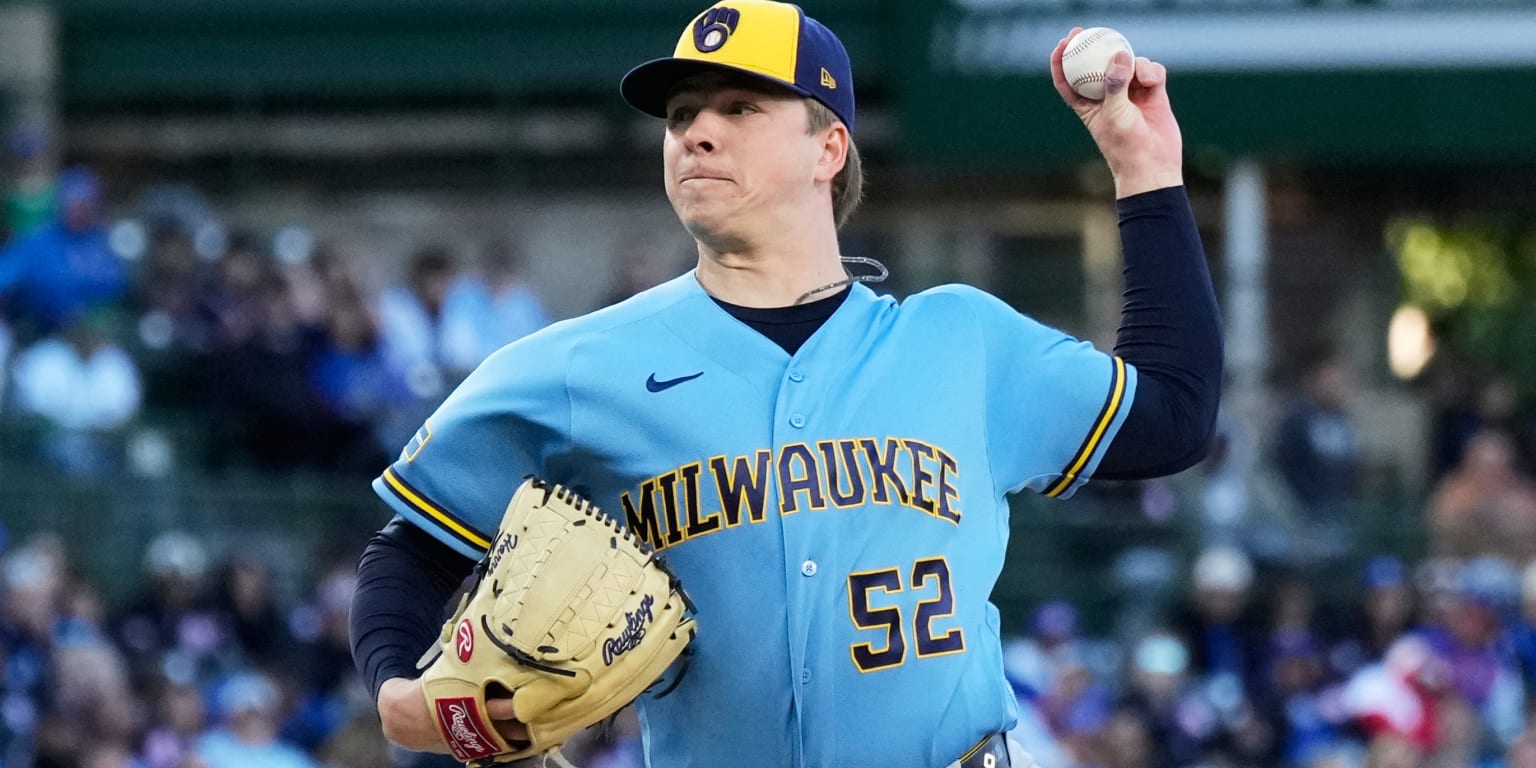
Kyle Harrison delivered the kind of outing that reshapes a pitching evaluation. Seven scoreless innings, two hits allowed, 11 strikeouts on just 94 pitches—the left-hander's performance Wednesday night completed Milwaukee's sweep of Chicago and lowered his ERA to 1.77 since joining the Brewers. After Nico Hoerner's leadoff double, Harrison retired 15 consecutive Cubs hitters, a run that included the walk in the second. This wasn't a one-pitch dominance scenario; Harrison operated almost exclusively with a four-seam fastball (95.5 mph average, 97.6 mph peak) and a slurve, generating eight of his 11 strikeouts on the fastball alone while maintaining a 65-strike rate out of 94 total pitches.
What stands out mechanically is Harrison's efficiency relative to his swing-and-miss rate. Eight strikeouts on the heater suggests the Cubs were helpless against velocity and movement rather than chasing out of the zone. His two-pitch mix—no changeup, minimal secondary variation—should theoretically expose him to sit-fastball approaches, yet Chicago managed just two hits total. The Brewers' run support came largely from manufacturing and defensive leniency: David Hamilton's unearned "Little League home run" on a Crow-Armstrong misplay scored three runs in the second, and Hamilton later turned a fly ball into a triple on a Suzuki miss at the wall. Milwaukee's actual quality contact was minimal; the sweep works because the Cubs couldn't generate baseline offense, not because the Brewers overwhelmed them.
For betting purposes, the immediate takeaway is cautionary rather than bullish. Harrison's line in this spot—elite fastball command against a bottom-half offense at home—tells us less about his true level than it does about the Cubs' current offensive dysfunction. The Brewers scored five total runs across the series with significant help from Chicago's defense and baserunning mistakes by Milwaukee (not the other way). This environment inflates both pitcher strikeout rates and offense-suppression narratives. Harrison's K-rate will cool once he faces stronger contact profiles; the 11-strikeout outing was real, but the Cubs' inability to put bat on ball was more about their depth chart than Harrison's unmasking.
Where this matters for the card: Harrison's next few starts will attract sharp action on his strikeout props and team total unders based on Wednesday's dominance. Market makers will price him at elevated K-rates and imply tighter Brewers team totals, especially if he faces league-average or weaker offenses. The edge exists in fading that short-term recency until he proves the two-pitch mix travels against lineups that don't swing-and-miss at 40% rates. Jake Bauers' continued production (21-game on-base streak, 11-game hit streak) is real organizational momentum, but don't let one elite performance in a neutral zone cloud the underlying quality of contact. Cubs' poor ball-striking is their problem; Harrison's sustainability is a different question.
The Brewers' sweep was decisive and clean. But sweeps built on opponent mistakes and defensive breakdowns tend to regress faster than those built on consistent offensive output. Watch the next market pricing for Harrison's K line and unders—there's overcorrection risk embedded in the post-dominant-outing number.