Harrison's Forearm Tightness Exits Brewers' Rotation Mid-Surge
By PropBetEdge Editorial Team ·
Milwaukee's 24-year-old breakout starter lands on the IL with left forearm tightness, forcing a rotation reshuffle during a pennant race with a 7.5-game division lead.
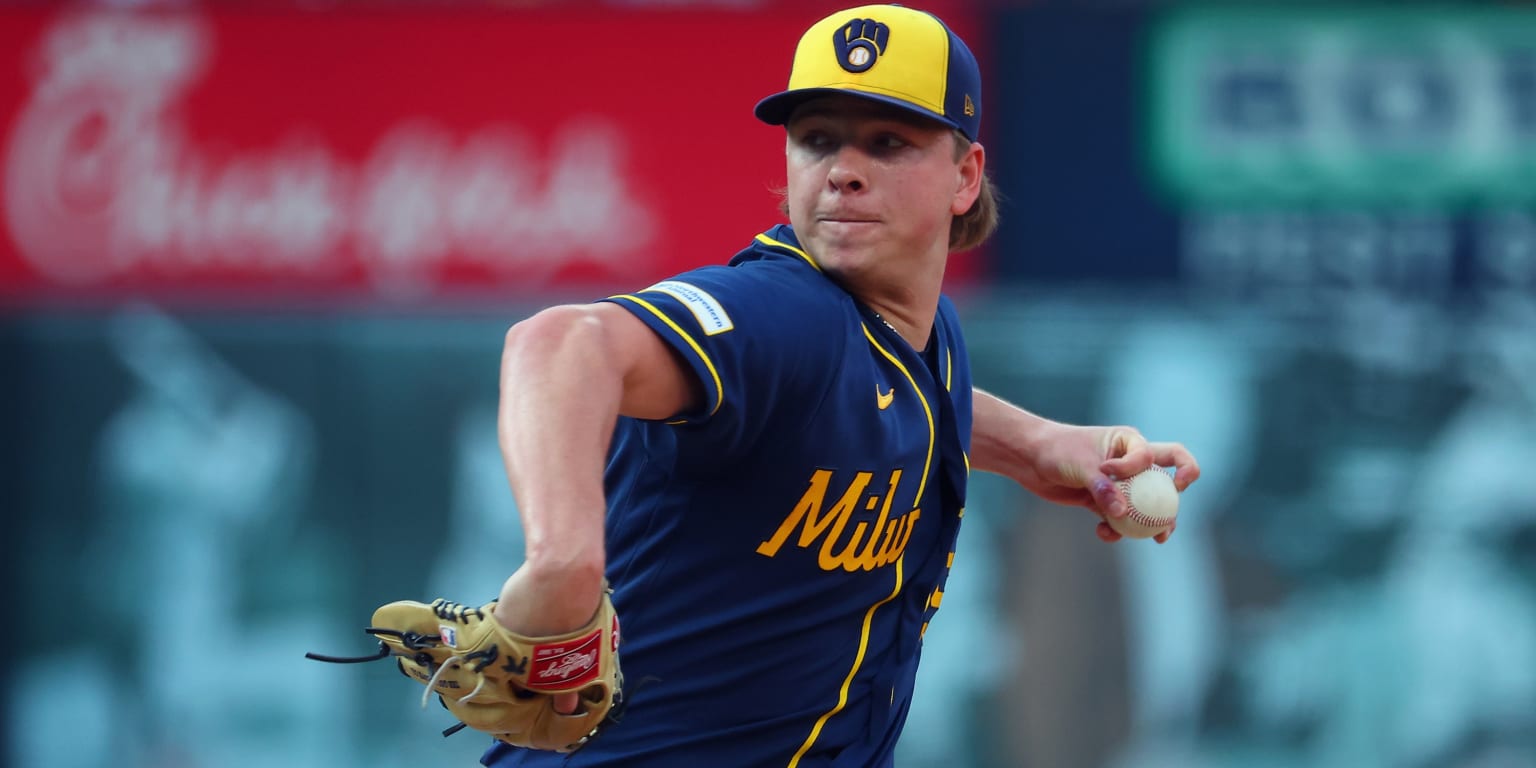
Kyle Harrison was placed on Milwaukee's 15-day injured list Saturday due to left forearm tightness, with the placement retroactive to July 9. The move arrives two days after his latest outing and one week before the All-Star break—a natural juncture for a recovery window that Harrison himself characterized as temporary rather than structural. Robert Gasser, a left-handed depth starter with a 4.15 ERA in eight appearances, was recalled from Triple-A Nashville as the corresponding move.
Harrison's injury timing matters because his velocity and command have been the story of Milwaukee's season. Acquired from Boston just before Spring Training, the 24-year-old arrived with pedigree but unproven durability at the big-league level. Through 17 starts, he has compiled an 8-2 record with a 3.01 ERA across 83.2 innings, striking out 101 batters—a 10.87 K/9 rate that ranks among the league's upper quartile for starters with 75-plus innings. His presence in the rotation has been central to the Brewers' stranglehold on the NL Central; Milwaukee entered Saturday with a 7.5-game cushion over the Cubs.
The red flag is not the injury itself but the recent performance trend. In his last two starts before the IL stint, Harrison allowed six runs across 6.2 innings—a sharp departure from his season baseline. Forearm tightness in a young pitcher who has logged a full workload over five months reads as fatigue rather than acute trauma, and the All-Star break provides a natural reset point. Harrison's own quoted confidence—"It isn't a long-term thing"—suggests the team views this as precautionary, not a tear or structural damage requiring extended recovery.
For proposition bettors, the immediate impact is Gasser's elevation into rotation volume. His 4.15 ERA and 2-3 record mask a middling strikeout rate (7.12 K/9 in 38.1 innings) and suggest he is a velocity-dependent pitcher whose stuff plays down against stronger lineups. In the seven to ten days Harrison is likely to remain on the shelf, Gasser will face elevated workload and consequent scrutiny on his strikeout and earned-run props. Brewers team totals should also compress slightly; Harrison's 3.01 ERA and 10+ K/9 rate were league-average run-prevention. Gasser's 4.15 mark is a material downgrade. Any games Gasser starts should see modest rain on over projections for Milwaukee's runs unless the opponent's offense is below average.
The durable angle lies in Harrison's return timeline. The 15-day retroactive placement means he becomes eligible to return around July 24, well ahead of playoff baseball. His strikeout-to-walk ratio and fastball velocity will be worth monitoring in any rehab assignment or first post-IL start; if he returns without velocity loss and with his command intact, his K-prop lines should be efficiently priced immediately after reinstatement. The injury is real, but the prognosis appears conservative.