Michael Harris II's Mechanical Precision Against Miami Reveals a Repeatable Edge
By PropBetEdge Editorial Team ·
Back-to-back homers with nearly identical exit velo, launch angle, and landing spot suggest Harris has unlocked a stable approach against Marlins pitching.
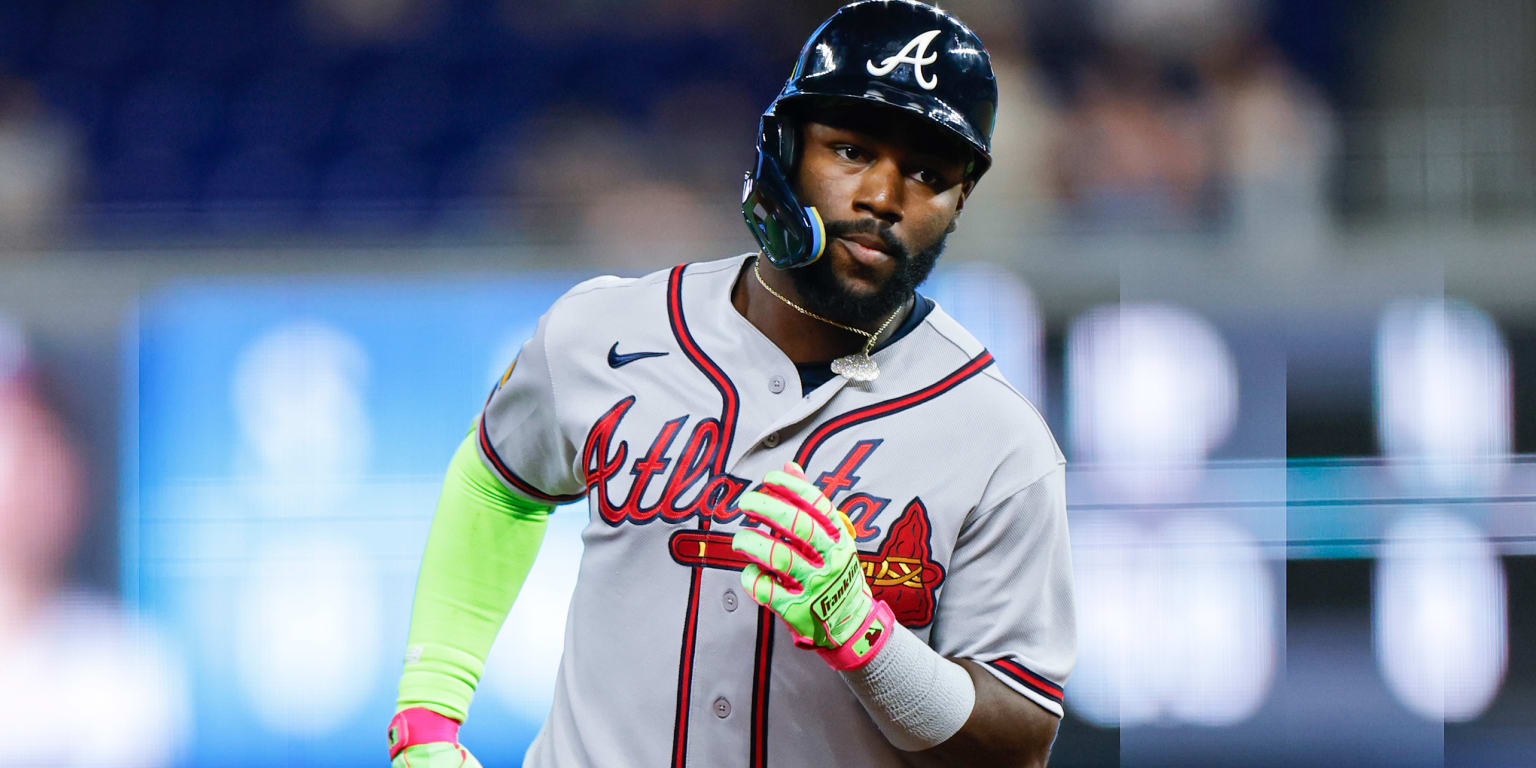
Michael Harris II has found a repeatable swing against Miami. On consecutive trips to loanDepot park, the Braves outfielder launched homers with exit velocities separated by just 0.4 mph—110.5 mph on Thursday off Sandy Alcantara, 110.1 mph two days earlier off Andrew Nardi. The launch angles differed by a single degree (18 vs. 19), hang times by a tenth of a second (4.4 vs. 4.3), and both balls landed on the same patch of turf in right-center, traveling 418 and 421 feet respectively. Even his bat speed remained constant: 78.7 mph on both swings. This is not noise. It is the mechanical signature of a hitter who has diagnosed a vulnerability and is exploiting it with precision.
The repetition matters because it eliminates randomness from the equation. A solo home run can be luck. Two homers with near-identical Statcast profiles—same exit velo within half a mile per hour, same launch angle within one degree, same landing zone—indicates Harris has found a repeatable pitch or pitcher tendency he can attack. When a hitter achieves that level of mechanical consistency across multiple at-bats in the same series, it typically signals he has identified something structural: a pitcher's release point, a specific pitch location, or a defensive alignment vulnerability. Alcantara and Nardi pitch from opposite sides—Alcantara is a righty, Nardi a lefty—which narrows the explanation to something about how Miami's pitching approaches Harris from both angles, not a single pitcher's tendencies.
For prop bettors, the edge here is not about predicting another home run in Harris's next at-bat; the market will quickly price in elevated home run probability as word spreads. The real signal is about Harris's current form and confidence level. A hitter capable of replicating his swing mechanics across multiple games is operating in a rare state of rhythm and precision. That translates downstream into elevated contact rates, fewer strikeouts, and sustained offensive production. His batting average, runs scored, and RBI totals against Miami should track higher than his season baseline, not because the next homer is guaranteed, but because a hitter in this kind of mechanical lock rarely regresses over a short series.
The Marlins defense cannot adjust to what Harris is doing without fundamental changes to their pitching approach—moving fastballs around the zone, changing release points, or mixing in off-speed pitches earlier in counts. If Alcantara and the Marlins staff continue to attack Harris with the same sequences that produced those two homers, expect the pattern to extend. Harris's 78.7 mph bat speed and 18-19 degree launch angles are optimized for power; pitches in certain zones (middle-in to middle-out) will yield the same result repeatedly until Miami alters course.
For the next Braves-Marlins matchup, bettors should lean into Harris offensive props—home runs, total bases, and runs scored—if he faces either Alcantara or similar Marlins righties. The edge is not a wild guess; it is a mechanical signal that repeats. The market may not yet have fully adjusted for a hitter operating at this level of precision against this specific opponent. Early numbers on Harris props in the next Miami game carry value before sharp action prices in the repeatable advantage.