Harper's Heavier Bat Opens a Mechanical Edge Against Met Pitching
By PropBetEdge Editorial Team ·
After hitting for the cycle with a 35-ounce bat, Harper's equipment swap signals a repeatable adjustment that could inflate his power output in the short term.
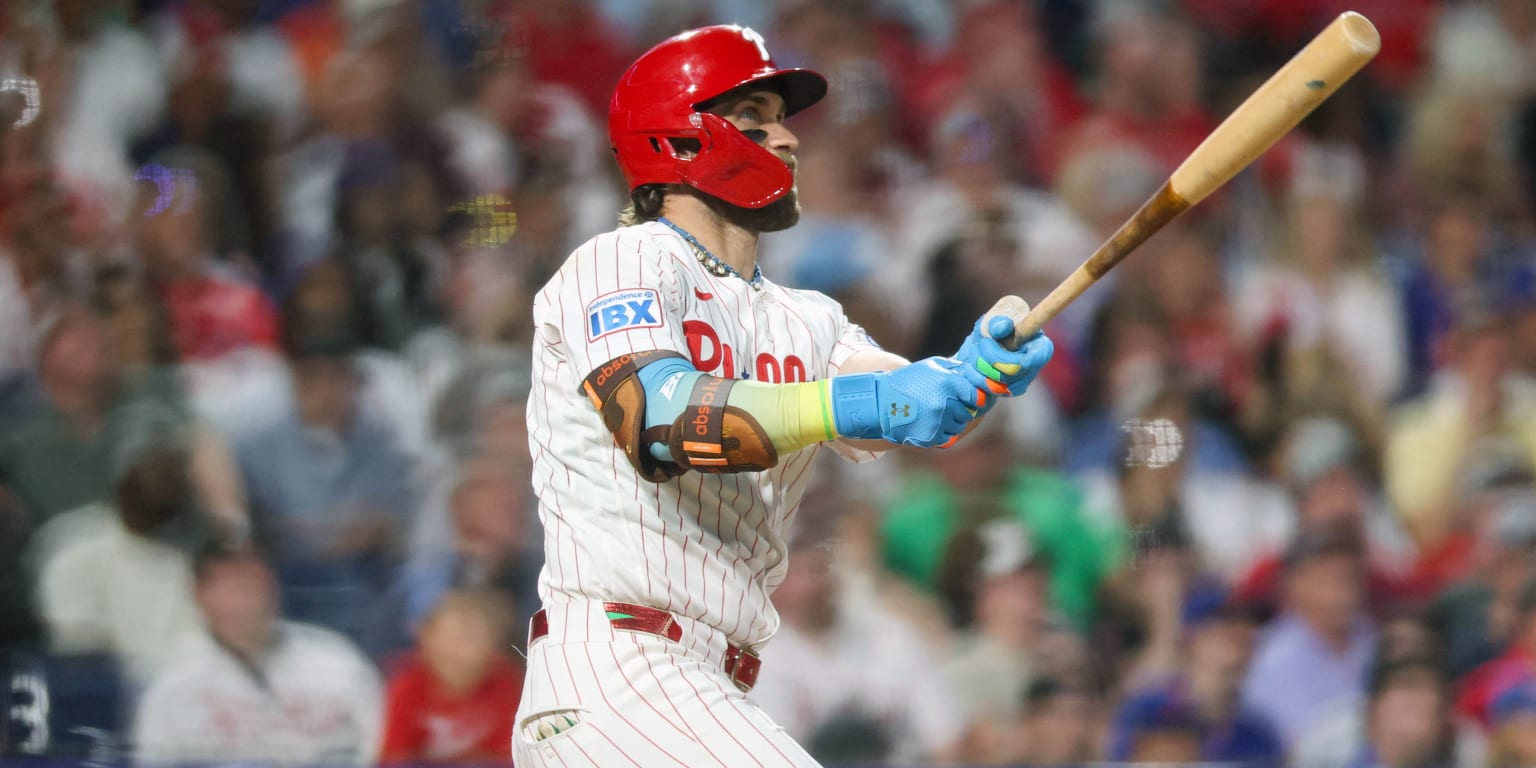
Bryce Harper accomplished a cycle Saturday night against the Mets—his first in a Major League career spanning nearly two decades. The tool he used to do it wasn't new equipment; it was old equipment, deliberately heavier than his typical game bat. On Sunday, Harper abandoned the heavier 35-ounce bat for his first at-bat and struck out. He returned to it for his remaining three trips to the plate and produced a double, a home run, and a single. That's not noise. That's a mechanical variable.
The cycle itself is a novelty—a rare, high-variance event that doesn't repeat. But the underlying mechanism does matter. A heavier bat forces a hitter to commit earlier in his swing, shorten his path slightly, and rely more on bat speed than bat weight to generate exit velocity. For hitters with Harper's swing mechanics and strength profile, this trade-off can improve contact consistency on offspeed pitches while slightly reducing pure distance on fastballs. The Mets' pitching staff—heavy on breaking stuff, particularly from relievers—would have exposed any bat-speed deficit. Instead, Harper thrived, which suggests the equipment adjustment aligns with how the opponent attacks.
The context matters: Philadelphia outscored New York 21–5 over the final two games of the series, and this matchup came 75 games into the season—the latest the two division rivals had met since 1996. The Phillies' lineup was fully operational, with Kyle Schwarber adding his 29th home run on Sunday. Wheeler and Sánchez combined for a 2.31 ERA over their 11⅔ innings in the series finale. This wasn't a narrow win built on Harper alone; it was a systematic offensive and pitching advantage.
For betting purposes, the heavier bat is a one-off mechanical experiment, not a permanent toolkit shift. Harper himself didn't use it for his opening at-bat Sunday, suggesting it's a matchup-dependent tool, not a universal upgrade. The Phillies will face varied pitching mixes over their next stretch, and the equipment change won't persist against fastball-heavy opponents where the shorter path becomes a liability. A triple was the only offensive outcome Harper didn't record, meaning the bat worked for contact quality but didn't unlock all four hit types—a sign the edge is specific to breaking-ball environments, not absolute.
The real betting signal is directional: Harper's home run prop should carry elevated juice in matchups against offspeed-heavy bullpens over the next 7–10 days while the heavier bat remains in his mental toolkit. Conversely, his strikeout rate may tick up slightly if he remains committed to the equipment change, because the shortened path increases chase risk on pitches below the zone. The Phillies themselves merit slight upticks on team-total and run-line props in series against Met-like pitching profiles—heavy relief, breaking-ball reliance. But this is a narrow, time-bound edge. Once Harper or the Phillies coaching staff assess the repeatability question (likely within three series), the adjustment either formalizes into routine or fades back to pregame work.