Harper's Derby Exit Signals What Matters: His Swing Is Sharp Heading Into August
By Ty Whitney ·
Bryce Harper's first-round elimination at Citizens Bank Park tells a different story than the scoreboard suggests—and it has real implications for his late-season prop slate.
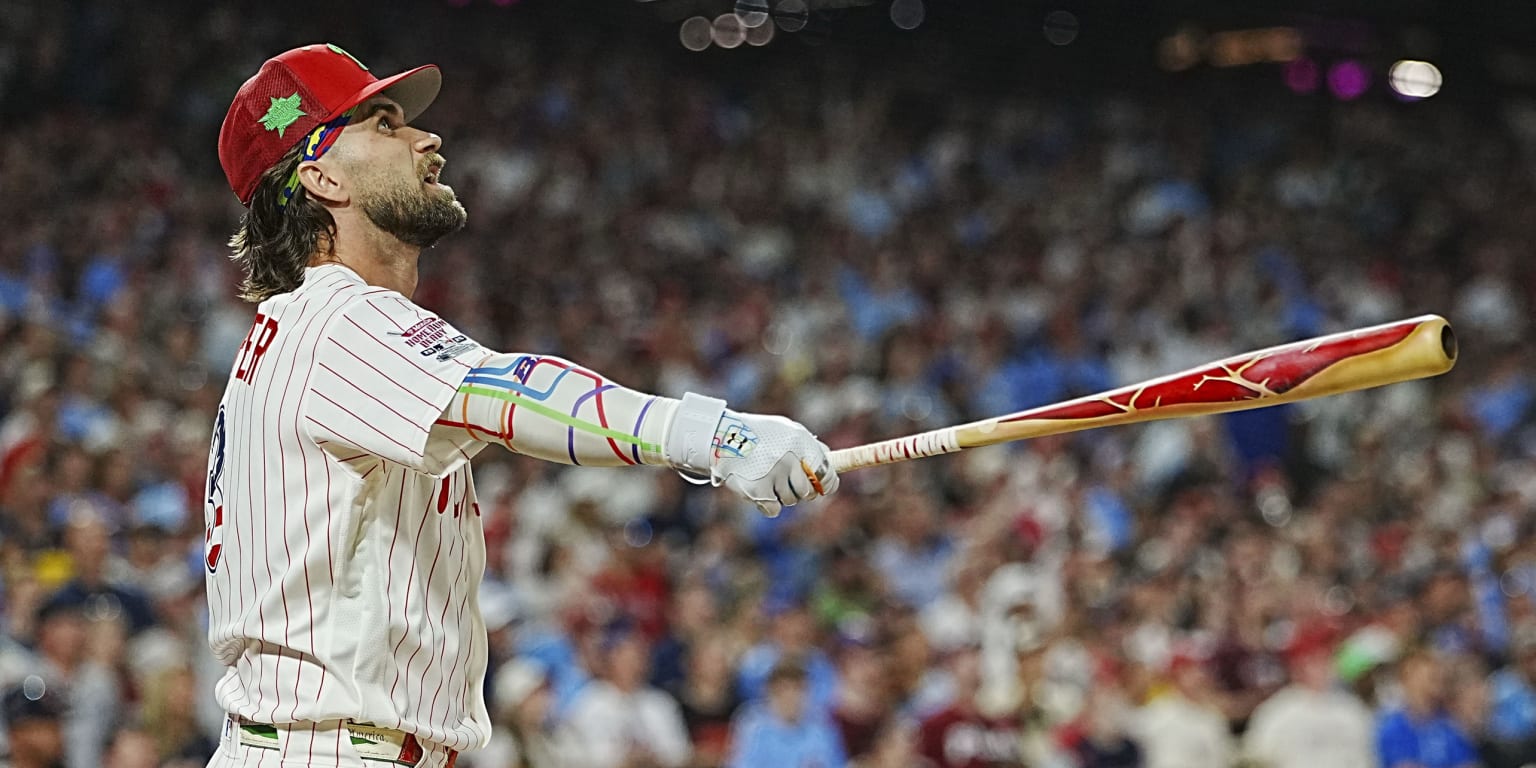
Bryce Harper hit eight home runs and lost in the first round of the 2026 Home Run Derby on Monday night at Citizens Bank Park. Kyle Schwarber, his Phillies teammate, advanced with ten. Willson Contreras (Red Sox), Jordan Walker (Cardinals), and Junior Caminero (Rays) also moved on. Harper's longest blast traveled an estimated 482 feet off the bat at 110 mph. For a player who claimed eight years ago he'd never compete in another Derby after winning at Nationals Park in 2018, the return to home soil—and the chance to perform in front of Philadelphia's sellout crowd—was enough to change his mind.
The first-round exit looks like a loss on the surface. It isn't. What the Derby actually measured Monday night was Harper's raw exit velocity and barrel quality under pressure, not his ability to compete. Ten home runs in a derby format requires a particular swing—upper-cut aggressive, maximizing launch angle—that sacrifices the contact discipline that defines his regular-season approach. In a three-minute, six-swing window, hitters are chasing elevation, not command. Harper's 482-foot shot (110 mph exit velo) wasn't a fluke; it's evidence his bat speed and power ceiling haven't deteriorated. At age 33, with a productive 2026 season already in the books ahead of the All-Star break, Harper's physical tools remain elite.
The timing of that measurement matters. We're now 18 days from the trade deadline (July 31) and seven weeks from the postseason. Harper's ninth All-Star selection in 2026 reflects a season that's tracking well above his injury-plagued 2024 and middling 2025. A 482-foot bomb off a live arm in a high-pressure setting is exactly the kind of proprioceptive data that should inform how we size his power props in the second half. He's swinging with conviction and generating genuine barrel-to-ball contact.
For bettors, the Derby spotlight also reveals a secondary angle: Harper's willingness to return to the event despite his 2018 vow underscores his confidence in his current form. Reluctant participants don't take the stage unless they believe they have something to prove—or they're already confident enough that home-field comfort outweighs the risk. His on-field performance supports that confidence. In a compressed August schedule and into October, lean toward Harper's home-run props (specifically, overs on his two-game HR totals when Philly faces fastball-heavy pitching). The Derby didn't crown him, but it confirmed his swing mechanics are intact. That's the edge.
Schwarber's ten-bomb advancement is noteworthy as a narrative (Phillies teammate wins at home), but it doesn't change the underlying metric: Harper's exit velocity and distance were genuine. The format simply penalizes the hitter who trusts contact over chaos.