Cubs Lineup Shuffle Masks Deeper Contact Crisis; Crow-Armstrong Leadoff Experiment Tests Depth Over Spark
By PropBetEdge Editorial Team ·
Chicago's decision to bench Ian Happ and elevate Pete Crow-Armstrong to leadoff is triage, not cure—a rotation move that exposes a team-wide hitting collapse in scoring situations.
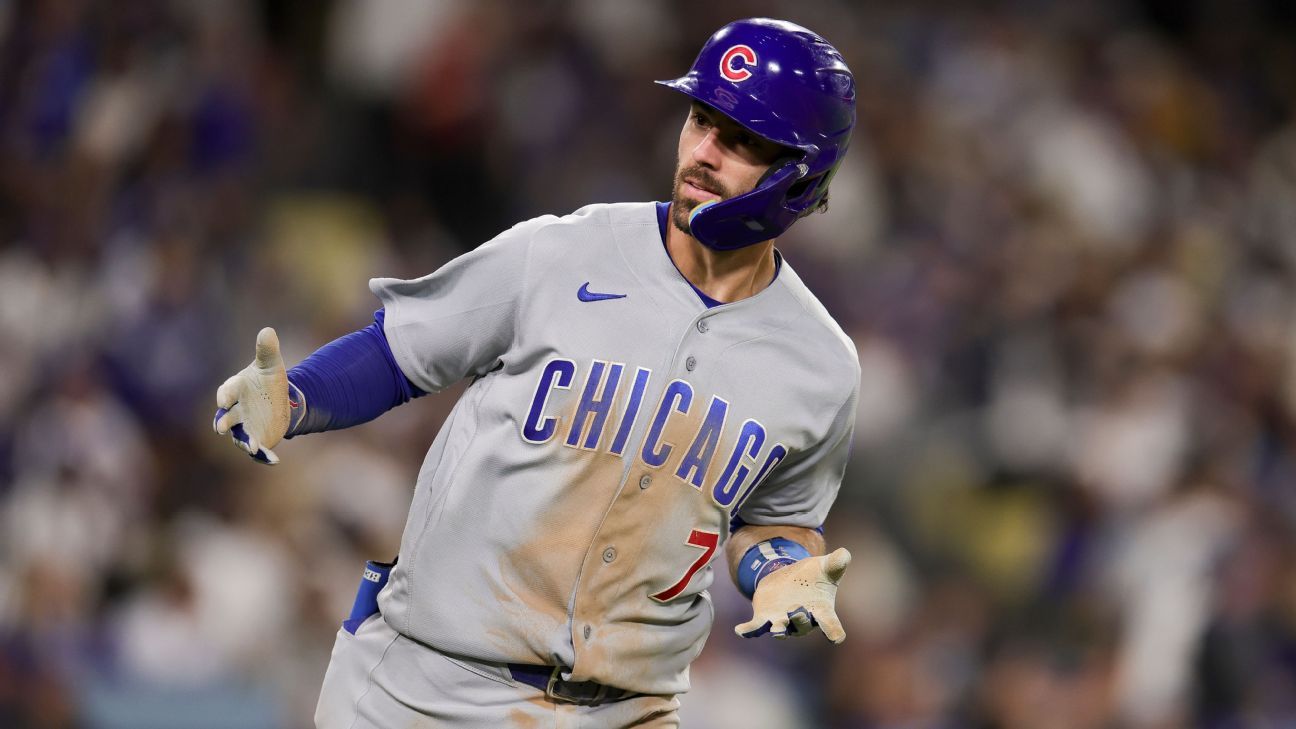
The Cubs are rotating players out of the lineup, not rotating their way out of trouble. Manager Craig Counsell benched Ian Happ on Saturday against Houston while moving centerfielder Pete Crow-Armstrong to leadoff, a swap that signals acknowledgment of a broader offensive malfunction rather than a fix for it. Happ is 1-for-24 with a .143 average in runners-in-scoring-position spots this season; the rest of the offense isn't far behind. Seiya Suzuki sits at .130 in RISP situations. Dansby Swanson is at .170. This isn't one player's slump—it's systemic contact failure when it matters.
The Cubs rank second in on-base percentage, which means they're constructing scoring chances efficiently. They're just not converting them. Over the past few weeks, that conversion gap has widened into a six-game losing streak and four consecutive series losses. Counsell's candid postgame assessment—"When you're going through it, you don't understand how you're going to get out of it"—is honest but also reveals the scope of the problem. This is a team that led MLB in run production through April, then hit a wall when opposing pitchers tightened their approach with runners in scoring position. Happ taking a day off doesn't change pitcher behavior; it changes personnel.
Crow-Armstrong moving to leadoff is where the lineup experiment becomes relevant for prop bettors. The 24-year-old centerfielder has elite speed (17 stolen bases in 2024) and a career .295 OBP, but his power remains developmental—8 home runs in 341 plate appearances this season. Placing him at leadoff prioritizes his baserunning asset and on-base ability over traditional power production, a strategic choice that suggests Counsell is betting on run creation through volume and pace rather than exit velo. In Friday's loss, the Cubs had runners in scoring position multiple times and failed to convert; moving Crow-Armstrong ahead of the power bats (Swanson, Suzuki) theoretically increases the chance that speed off first adds value when those middle-order hitters do connect.
But the real edge here is exposure to Cubs team totals and game overs. When a team's problem is explicitly RISP conversion, not getting baserunners on, you're looking at games with high OBP and low run scoring—classic under territory despite high-difficulty baserunning scenarios. The Astros have a top-10 run prevention unit. Placing a speed asset like Crow-Armstrong at leadoff doesn't overcome a contact crisis; it gambles on late-inning situations where he's already in scoring position. The Cubs' market-implied team total will likely stay modest because the offense remains broken at the point of impact. The lineup shuffle papers over the underlying issue without resolving it. That fragility is the real prop signal: lean unders on Cubs team totals until the RISP hitting normalizes, which could take weeks of at-bats to prove out.