Hancock's Early Exit Exposes Seattle Bullpen Usage as Mariners Rally Past Tampa Bay
By Erik Schwartz ·
A second-inning hand injury to Emerson Hancock forced the Mariners into a seven-inning relief effort, but Seattle's pen delivered—and now faces a compressed timeline heading into the All-Star break.
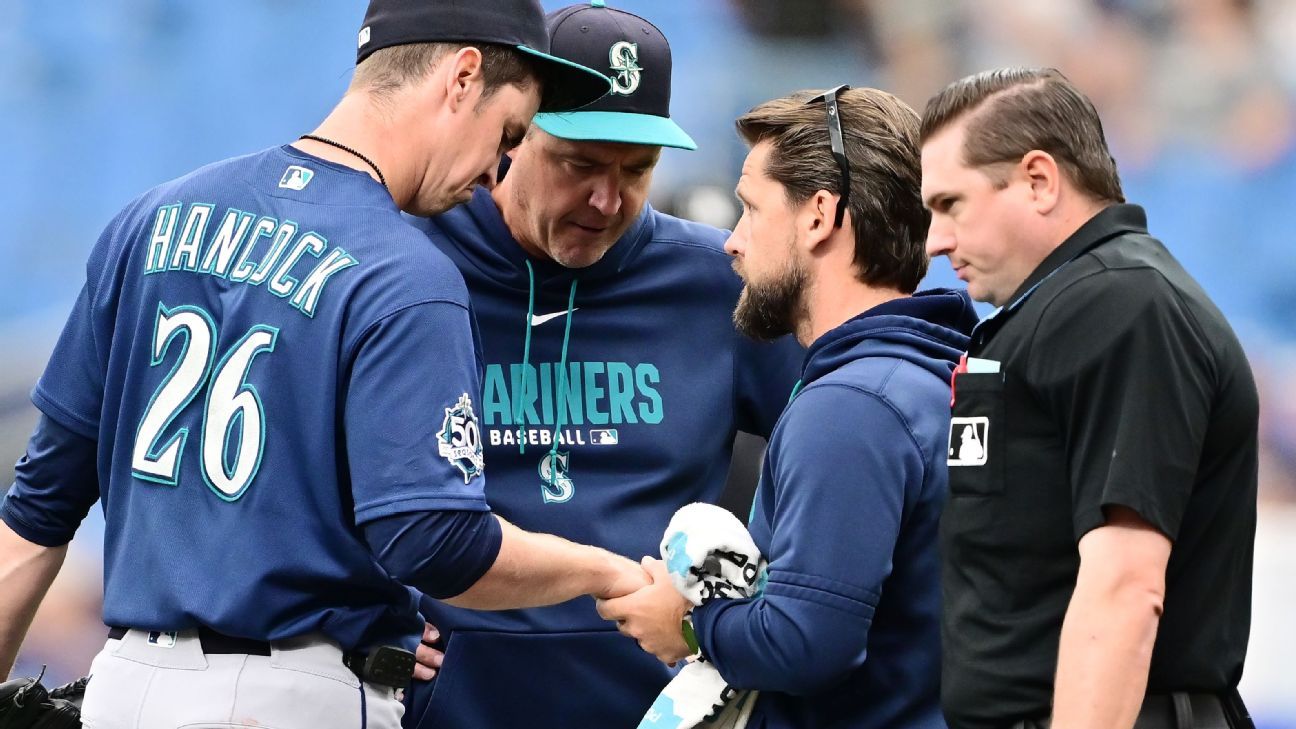
The Mariners snapped a five-game losing streak Sunday with an 8-2 win over Tampa Bay, but the victory came at a cost that will ripple into their weekend trade deadline calculations. Starting pitcher Emerson Hancock took a 107.2 mph one-hopper off his pitching hand on his first pitch to Yandy Diaz in the second inning. X-rays cleared structural damage to his palm and middle finger, but the bruise forced him out after just 19 pitches. He stayed long enough to retire Diaz at first and strike out Junior Caminero before a two-out walk to Victor Mesa Jr. ended his day.
What should have been a routine Sunday starter became a bullpen stress test five days before the All-Star break. Jose Ferrer needed one pitch to strand the runner and pitched a scoreless third, then four more relievers worked the remaining innings, allowing just four hits the rest of the way. The work was clean—no runs surrendered after Hancock left—but the cost was leverage and depth spent on a game Seattle had already seized control of after scoring three runs in the second on Victor Robles' bases-loaded sac fly and J.P. Crawford's two-run double. Weston Wilson and Randy Arozarena added solo homers later, giving the Mariners a 7-0 cushion before Tampa Bay scored twice late.
The injury itself is minor; Hancock avoided a hand fracture that could have sidelined him for weeks. But the timing exposes a personnel vulnerability. Seattle is 48-49 heading into the All-Star break—a team clawing back from a 1-5 road trip that included three straight losses to the Marlins. Their pitching depth is now under scrutiny. If Hancock's bruise sidelines him for even one turn through the rotation, the Mariners will need to lean on relievers again while potentially addressing starter depth at the deadline. Meanwhile, Tampa Bay (57-37) carries the best AL record into the break, making this loss a genuine opportunity cost.
For prop players, the real angle sits with Seattle's bullpen workload over the next four games before the All-Star break. Ferrer, Munoz, and the relievers who pitched Sunday are now on the radar for reduced leverage if the Mariners face another early starter exit. If Hancock misses time and returns to the rotation mid-August, look for elevated pitch counts from relievers in games where they're forced into extended duty. Conversely, if Hancock clears before his next start, the bullpen savings could shift relief usage back to normal. The injury itself doesn't move lines immediately, but it creates a dependency: watch Mariners bullpen reliever prop lines—K props and innings pitched—for the next week. Any starter absence would create fresh volume, but that's a conditional bet tied to Hancock's status update, which the team will likely provide by Monday.
Tampa Bay's run-scoring drought—two runs on six hits through eight innings—wasn't the product of heroic relief work. It was the result of a Rays offense that went cold at the worst moment. Diaz and Jonathan Aranda scored their runs in the eighth and ninth after the game was decided. That passivity, combined with the Mariners' early aggression, makes this a matchup story that probably won't repeat.