Hoglund Out for 2026: Athletics Lose Another High-Ceiling Arm to the Injury Spiral
By Erik Schwartz ·
A labral repair and cartilage work sidelines Oakland's promising right-hander for the entire season, deepening the organization's pitching crisis.
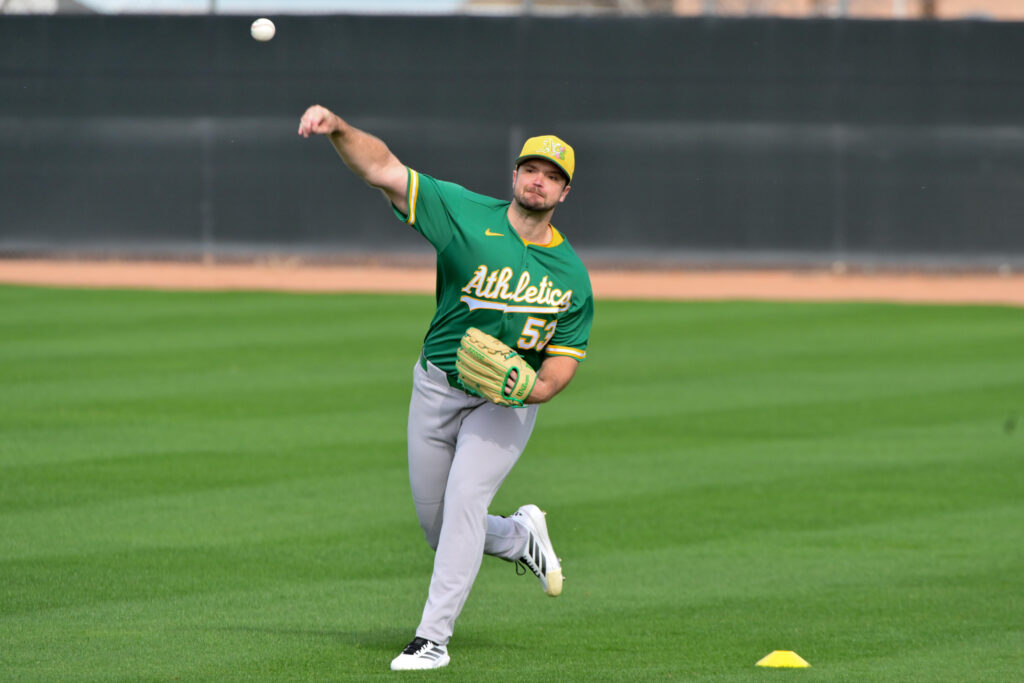
Gunnar Hoglund will not pitch in 2026. The Athletics announced yesterday that their 25-year-old right-hander underwent left hip surgery—a labral repair paired with cartilage debridement to treat femoroacetabular impingement—and will miss the entire season as a result. The timing is brutal: Hoglund was a centerpiece of Oakland's youth movement, a high-velocity prospect the organization had invested draft capital and minor-league development into. Now he joins a growing list of Oakland arms sidelined by structural injury.
Femoroacetabular impingement is not a trivial diagnosis. The condition involves abnormal contact between the femoral head and acetabulum, which over time degrades cartilage and can tear the labrum—precisely what happened here. For a pitcher, hip stability is foundational. The hip generates ground-force energy that transfers through the kinetic chain to the arm. When hip mechanics are compromised, pitchers either lose velocity, develop compensatory arm-side stress, or both. Recovery from labral repair typically spans 6–9 months, with return-to-sport timelines extending into the following season for overhead athletes. The 2026 season is gone.
The injury casts a shadow over Oakland's rotation construction heading into the stretch run of the year. The Athletics were banking on Hoglund's upside—his fastball sits in the mid-97s when healthy, and he has flashed the ability to miss bats. His absence forces the organization to rely more heavily on aging veterans or younger, less-proven options in the major-league rotation. That reconfiguration matters for playoff odds and team-total pricing. For bettors tracking Oakland's over/under on wins, this is a material deterioration in projected run-prevention. The A's were never a juggernaut, and losing a young starter in his prime development window narrows the margin for error considerably.
From a prop-betting perspective, this injury fundamentally alters Oakland's rotation leverage in games where Hoglund was slated to start. Any pitcher-pairing line work or rotation-based overs now face higher risk: without a reliable third or fourth option in the rotation, Oakland will lean harder on its bullpen, fatigue will accumulate, and ERA in back-to-back-game scenarios tilts toward elevation. Team totals for Athletics games in the back half of any series—where bullpen depletion is most acute—should trend toward undervaluation. Similarly, any strikeout-prop work tied to Oakland's rotation depth dries up. The organization loses not just Hoglund's strikeout potential but also the margin of flexibility that his presence provided in scheduling rest for other arms.
The broader narrative is grimmer still: Oakland's injury history in recent years has been pronounced. Losing another high-ceiling arm to a structural issue deepens the organizational skepticism around player health infrastructure or plain bad luck. Either way, sportsbooks have already begun repricing Oakland's ceiling. Any preseason or mid-season optimism built into the A's team total or win projections should be treated as stale. Hoglund will not contribute a single inning in 2026. Plan accordingly.