Guardians Break Late-Inning Curse With 5-Run Eighth; Confidence Inflection Point Looms
By PropBetEdge Editorial Team ·
Cleveland's first come-from-behind win while down 3+ runs after seven innings since May 2025 rewires a month-long offensive collapse and resurrects a pitching-first roster's championship credibility.
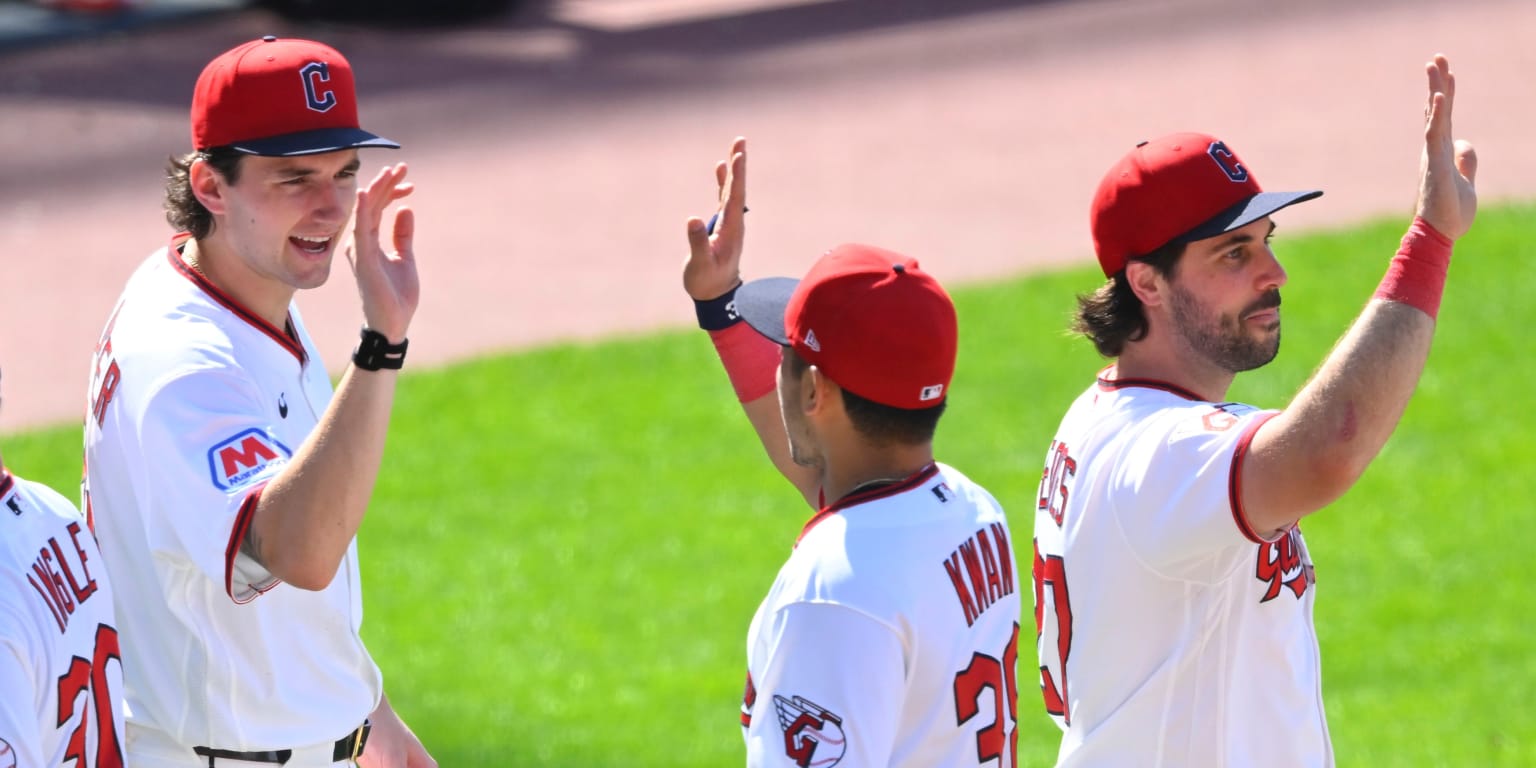
The Guardians entered Sunday with a 2-33 record when trailing after seven innings. Against Seattle's bullpen in the bottom of the eighth, they erased a 4-1 deficit and won 6-5 on a five-run rally capped by Rhys Hoskins' two-run double down the left-field line. Manager Stephen Vogt called it "as big of a win as we've had all year," and the substance backs the declaration—not because comebacks are rare (they aren't), but because this one punctures a very specific and damaging pattern for a team that has quietly folded in late-inning spots all season.
Context matters here. Cleveland scored 76 runs in June, 29th in baseball, while operating without superstar José Ramírez (fractured left hamate bone). The offense had squandered multiple chances in the first seven innings—runners on second and third with no outs in the second, bases loaded with no outs in the fifth, nothing to show. The defense had also misfired (a slow relay on a Julio Rodríguez score in the third, a Brayan Rocchio throwing error), amplifying the sense that the afternoon was drifting toward another familiar loss. The stadium was quiet. Vogt emptied his bench, mixing and matching for favorable matchups, but even that felt like rearranging chairs on a sinking ship. Then, in the eighth: Rocchio singled, Cooper Ingle walked, Daniel Schneemann delivered an RBI single, Patrick Bailey sacrificed, Steven Kwan drew a walk to load the bases. Chase DeLauter, returning from a two-week injured-list stint, lined the game-tying single. Hoskins' double followed. The script flipped.
The betting implication sits in one uncomfortable zone: survivor bias meets momentum reality. A single win, even a dramatic one, does not cure a 10-13 June record or a 2-33 late-deficit profile. But confidence inflection points are real in baseball. A roster that has internalized defeat in the eighth inning suddenly knows it can manufacture one. That's not a statistical mirage—it's a psychological pivot with measurable runway. Over the next week to ten days, watch for the Guardians to behave differently in close games: more aggressive baserunning, less panic in the batter's box, pitchers who pitch loose knowing the offense has shown it can answer. The Mariners were the first casualty. They won't be the last.
For prop action, the angle is not "Guardians will keep winning," which is recency. The angle is team total unders are a fade for the next 2-3 games. The offense that ranked 29th in June just manufactured five runs on five hits with two outs and runners in scoring position—not an elite sequence, but a functional one after six weeks of mechanical failure. If the market prices the Guardians at a team total of 3.5 or 4.0 over the next two contests, that reflects June's offensive drought. It does not account for a newly re-established belief that runners in scoring position are convertible. Hoskins and Kwan, both lefties, showed patience and selectivity in the eighth. That's the mechanism: not a talent upgrade, but a behavioral shift in how the lineup executes when leverage is highest. Bet the team total over in the short term before the market reprices the confidence gain.