Griffin's Seven-Pitch Arsenal Keeps Nationals Afloat in Camden 10-Inning Victory
By Erik Schwartz ·
Foster Griffin's command and pitch mix diversity carried Washington past Baltimore, but the bullpen's fragility means even dominant starters can't paper over organizational issues.
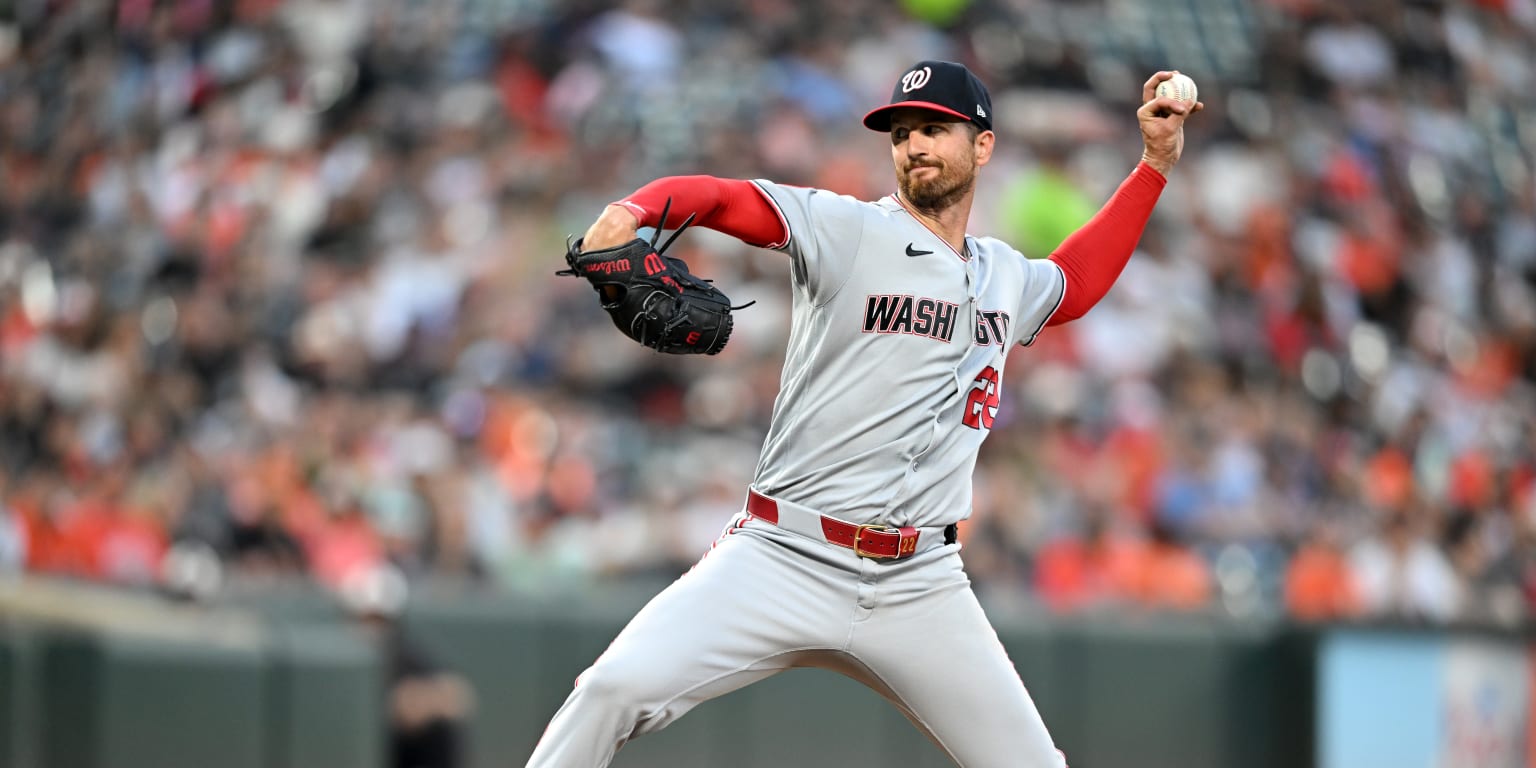
Foster Griffin struck out nine Orioles batters over seven innings in the Nationals' 4-3, 10-inning win at Camden Yards on Saturday, anchoring a win that snapped a four-game losing streak. The performance marked Griffin's third time matching his career high in strikeouts this season and extended a streak of five consecutive starts allowing one run or fewer—the longest such run by a Nats starter since Aníbal Sánchez in 2022. Griffin's 112 pitches represented the highest total by a Washington starter since Patrick Corbin's 113-pitch outing on June 28, 2022, against Pittsburgh. What separates Griffin from conventional starters is structural: a cutter-anchored arsenal built around six secondary offerings gives him an operational depth most pitchers lack. On Saturday, he adjusted his pitch mix mid-start, deploying his changeup 17.9% of the time—well above his 9.8% season rate—while dropping his four-seam fastball to 12.5% usage. That's not reactive tinkering; that's a calculated response to Orioles lineup tendencies. He worked around 26 batters with surgical precision, allowing just three hits and two walks while the bullpen, predictably, hemorrhaged a two-run tying rally in the eighth.
The offensive context matters for prop construction. Washington collected double-digit hits for the first time since Griffin's previous start (June 21), indicating the lineup's volatility rather than a correction toward baseline production. Three runs proved insufficient because the relief corps couldn't hold a lead—the fourth blown lead in their past five games. That's the organizational ceiling: even when Griffin manufactures a near-perfect start, the team still needs extra innings to secure a win. For bettors, this reveals the constraint on Nationals unders when Griffin takes the ball.
Griffin's strikeout rate is durable because it flows from pitch diversity and command, not luck. His nine strikeouts on Saturday sit alongside his usage adjustments—the changeup spike, the fastball throttle—suggesting he's not just dominating one pitch type but systematically outworking hitters across multiple looks. Over his first full MLB season as a starter, he's thrown 112 pitches in a single outing, indicating a workload capacity and durability that supports consistency in strikeout props across his next several starts. The mechanism is specificity: fewer batters per inning means fewer opportunities for the bullpen to wreck leads, and fewer contact events means higher strikeout density.
For prop purposes, Griffin's K line (likely 7.5–8.5 depending on opponent and book) carries an edge when facing lineups that struggle with secondary pitches. His changeup deployment against Orioles hitters who chase fastballs showed tactical layering. Against opponents with lower chase rates or higher contact rates on offspeed, the same pitch mix might compress his strikeout total. The real angle isn't "he struck out nine, so take the over"—that single performance will overcorrect the market within 24 hours. The angle is this: Griffin's seven-pitch menu and his willingness to redistribute usage mid-game suggest his strikeout floor is protected by scheme flexibility, not volatile on-off nights. In a four-start window, his K props will land within a tight band relative to his 8.7 K/9 pace this season, making overs on his strikeout lines defensible when books price them as volatile.