Gray's Dominance Masks Boston's Real Edge: The Sweep Reveals a Yankees Vulnerability in Leverage
By Ty Whitney ·
Sonny Gray threw a no-hitter through eight innings, but the Red Sox won because the Yankees' bullpen cracked under tenth-inning pressure—a pattern worth tracking as deadline acquisitions reshape relief depth.
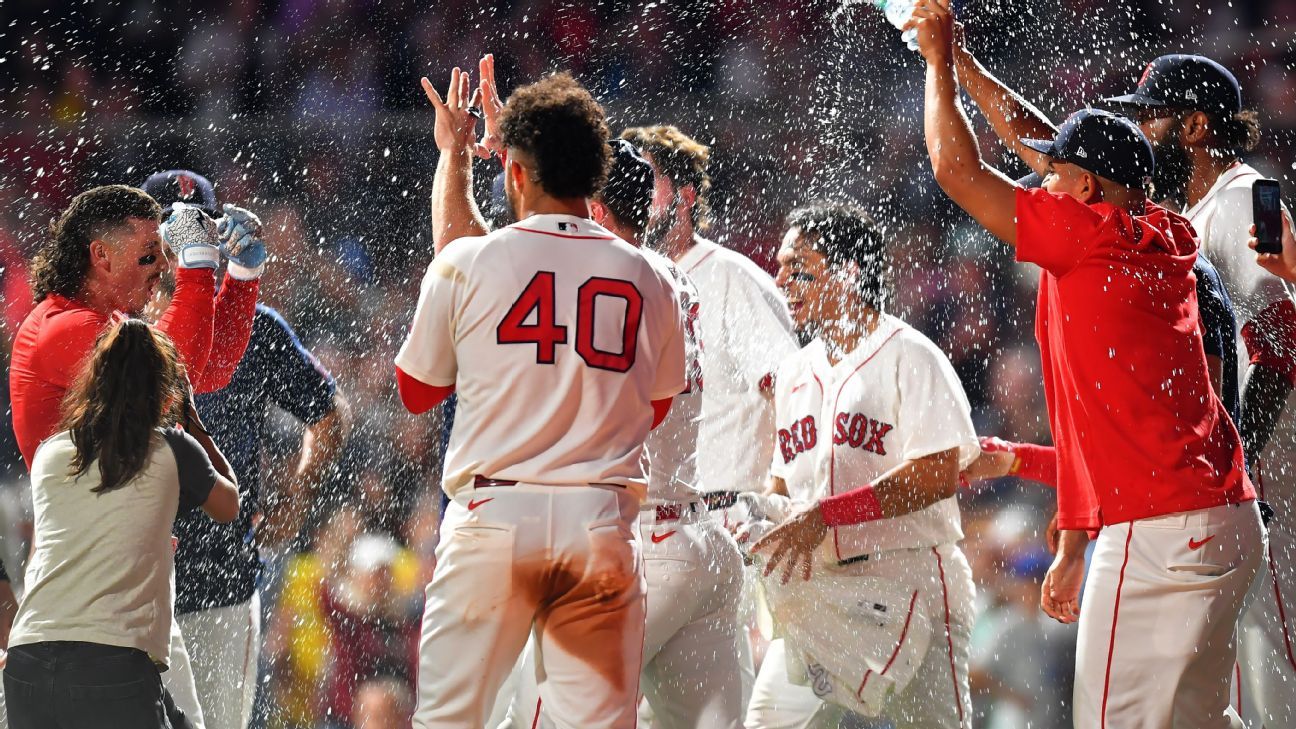
The Red Sox completed a four-game sweep of the Yankees at Fenway Park on Sunday night with a 5-4 victory in ten innings, their first four-game winning streak of 2026 and a stunning reversal of fortune for a last-place Boston team that walked into the series as a significant underdog. Jarren Duran's tenth-inning single capped a three-run rally after Boston had surrendered a two-run lead in the ninth, turning what looked like a Yankees escape into a complete organizational collapse.
But the narrative you're reading—Gray's brilliant no-hitter through eight, his 2,000th career strikeout milestone—obscures the actual story. The Yankees came to Boston with the AL's best record and left a game behind Tampa Bay in the division. Two throwing errors by two-time Gold Glove right fielder Wilyer Abreu in the final two innings provided the immediate culprit, but the deeper issue was New York's inability to execute closure. All-Star closer Aroldis Chapman allowed two runs in the ninth to blow a 2-0 lead; Fernando Cruz (4-3) couldn't preserve a 4-3 edge in the tenth. The Yankees didn't lose because Boston outplayed them over four games—they lost because their relief infrastructure failed when the margin narrowed.
This pattern matters for one specific reason: the Yankees' bullpen composition is in transition. With the trade deadline fast approaching (July 30, 2026), New York's closer usage and late-inning touch profile remains unsettled. Chapman, now 38, has posted a 4.15 ERA since the start of June. The ninth-inning meltdown Sunday was the third blown save of his season, a frequency that screams volatility rather than stability. When elite closer arms become unreliable in July, teams scramble to add insurance—but the window to acquire and integrate a new arm is brutally narrow. For the next two to three weeks, until the deadline passes, the Yankees' over/under on team totals should trade at a discount reflecting this uncertainty.
Boston, conversely, finished the series having won games 2, 3, and 4 in walk-off or late-inning fashion—a run that owes more to fortune and opponent collapse than sustainable baseball. Red Sox team totals should trend toward tighter pricing going forward; the sweep was real, but it was also an artifact of facing a Yankees bullpen in visible distress. The angle here is not to chase Boston overs off the back of momentum, but to fade Yankees overs until deadline roster moves clarify their ninth-inning architecture.