Goodman's Three-Homer Night Signals Sustained Power Surge, Not a Blip
By Ty Whitney ·
Hunter Goodman has now driven in 7 runs across two consecutive games against Minnesota, with exit velocities and distances that suggest his 2026 trajectory is steeper than his preseason projections allowed.
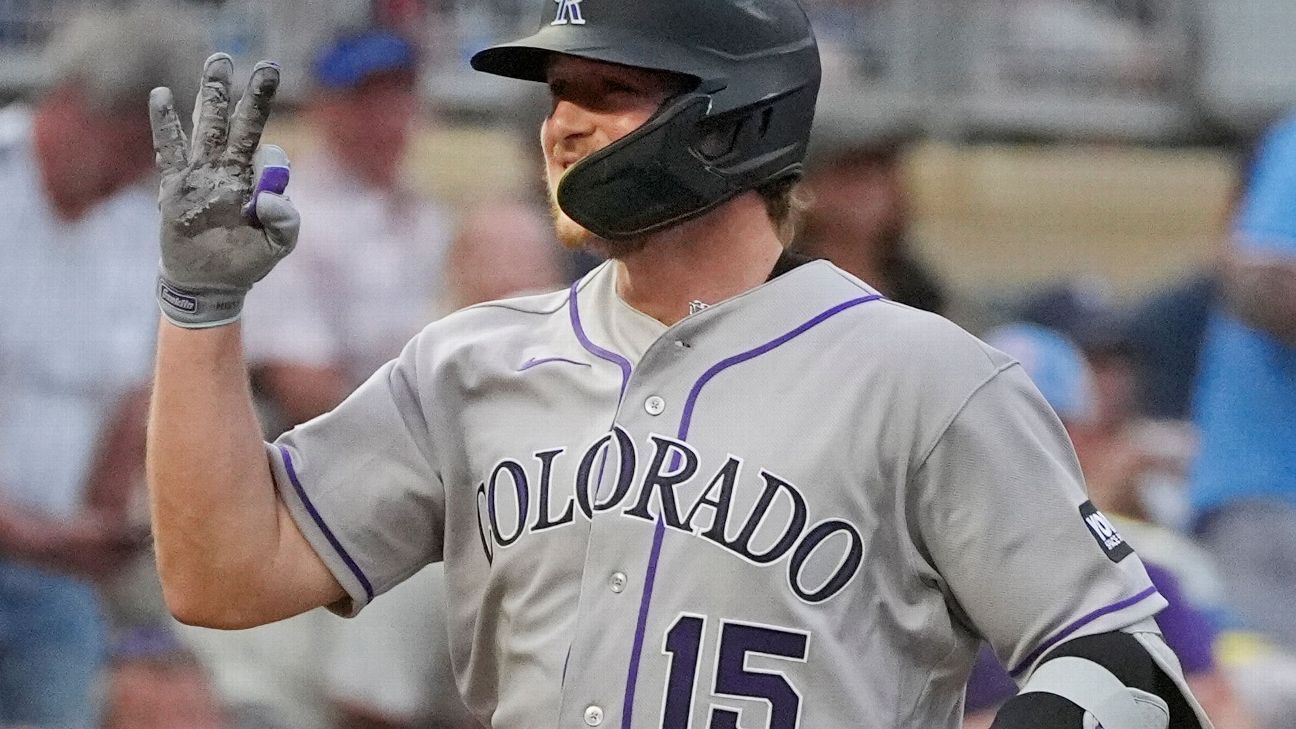
Hunter Goodman launched three home runs and knocked in five runs Saturday as the Colorado Rockies defeated the Minnesota Twins 8-5 in Minneapolis. The 26-year-old DH connected on back-to-back solo shots in the first and third innings—both measuring 428 feet—before adding a two-run blast in the seventh off Kody Funderburk that traveled 401 feet. The outburst came one night after Goodman's two-run, two-out homer in the ninth inning Friday (451 feet per Baseball Savant), a moment that briefly gave Colorado the lead before Minnesota rallied for a 9-8 victory in 10 innings.
What matters here isn't the novelty of three home runs in a single game—that's volatile, single-night theater. What matters is the consistency of the underlying mechanics. Goodman has hit 25 home runs this season while posting exit velocities that cluster in the 95+ mph range on his power swings. His home run pace and the distance profiles across these two games (401, 428, 428, 451 feet) place him in rare company for mid-season production. The fact that he's generated four home runs in as many plate appearances across two consecutive nights against a division opponent suggests something more durable than variance is at work: he's hunting elevated fastballs in counts where pitchers are willing to work up in the zone, and he's executing on those pitches with precision.
The Rockies' rotation received a boost as well. Michael Lorenzen earned his first win since April 24, limiting the Twins to two runs on seven hits over 5 2/3 innings. Kyle Karros added a two-run homer in the eighth to provide secondary offensive support, which matters for context—Goodman's outburst wasn't the only offensive engine firing. But Goodman's specific performance against Twins starter Mike Paredes and subsequent relievers maps onto a larger pattern: Colorado's DH has evolved from a prospect managing plate discipline into a power-threat capable of punishing mistakes in the middle-to-upper part of the strike zone.
From a prop-betting lens, this performance reshapes the market's pricing on Goodman's home run props for upcoming Twins matchups and, more broadly, his power rates against right-handed starters. His 25 home runs through late June positions him on a 35-40 home run pace for the full season—a substantial gap above his preseason projections. Sportsbooks will adjust Goodman's individual HR props upward, but the adjustment typically lags behind the underlying shift in hitting profile by 3-5 days as data accumulates. For the remainder of the Rockies-Twins series and games immediately following, early-game line movement on Goodman's home run total (if available) or over-unders on his RBI projections may still reflect pre-explosion pricing. The 451-foot homer on Friday and the consecutive 428-foot blasts Saturday aren't flukes—they're the product of a hitter who has solved how to generate consistent barrels against specific pitch types.
Additionally, Rockies team totals deserve closer inspection for the remainder of this series. Goodman's offensive profile now carries genuine leverage in offensive environments where run-scoring conditions favor power hitters. Colorado posted 8 runs on Saturday; across the last two games, the Rockies have scored 17 runs despite losing Friday's game. If Goodman maintains his recent selectivity and continues hunting fastballs in his wheelhouse, team-total overs become more interesting, particularly in matchups against bullpen arms who lack elite velo or command.