Cam Smith's Elite Glove Shifts the Run-Prevention Calculus for Houston
By PropBetEdge Editorial Team ·
A Gold Glove finalist's robbery of a 356-foot fly ball illustrates why the Astros' defensive upgrade in right field reshapes how to price their run prevention and total outcomes.
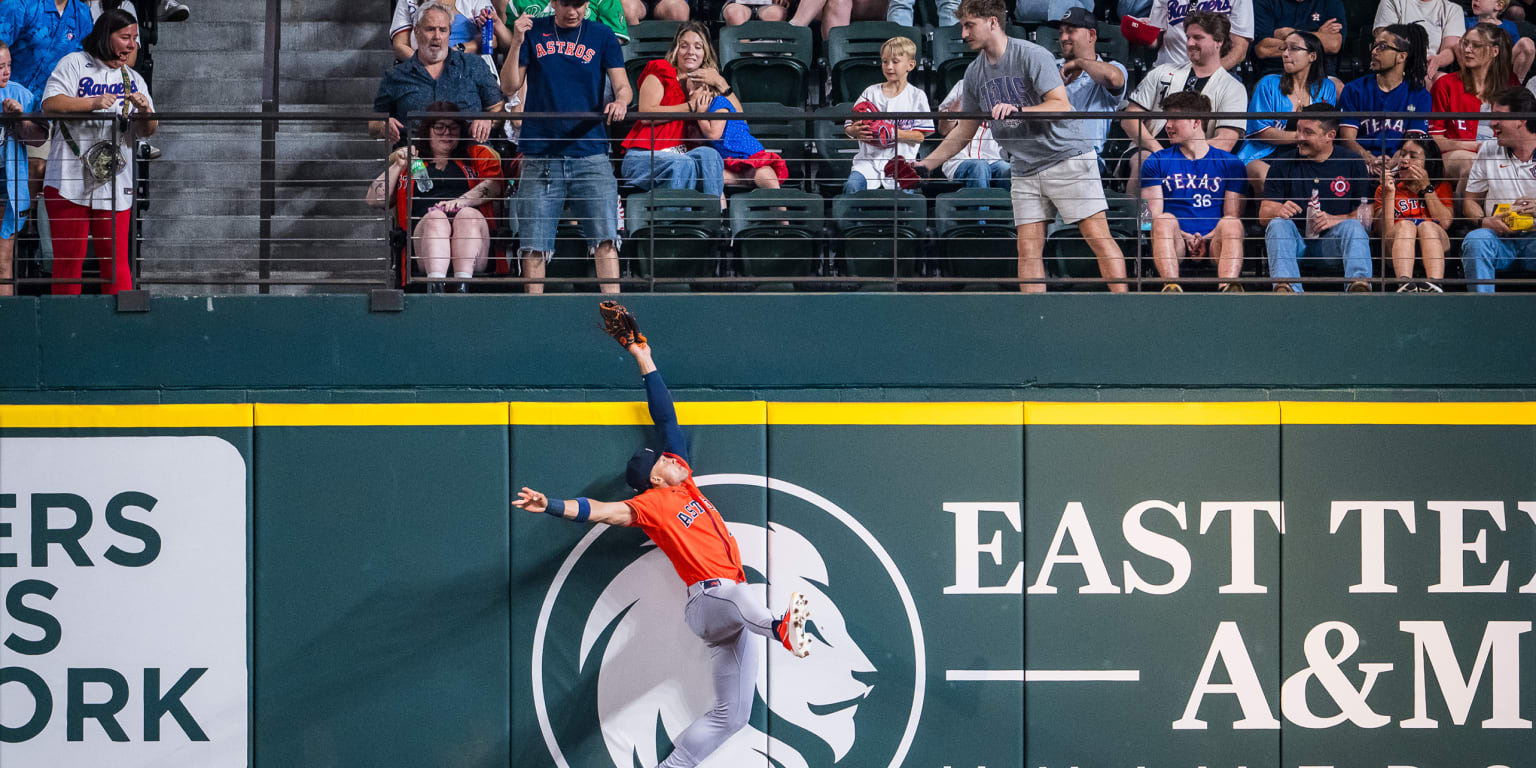
Cam Smith tracked a Brandon Nimmo fly ball Thursday at Globe Life Field, elevated above the wall, and yanked back what Statcast clocked at 356 feet—a home run in 18 of 30 MLB parks. The catch, which would have tied the game in the first inning, was vintage Smith: the kind of defensive execution that has made his rookie-to-elite transition in right field one of the season's underrated stories. Smith leads all right fielders in fielding run value and outs above average, a Gold Glove finalist after pivoting from third base last spring. That defensive ceiling matters in ways the market often leaves on the table.
Context sharpens the angle. The Astros watched Brandon Nimmo rob Yordan Alvarez of a home run in May—Alvarez, who entered Thursday tied for the AL lead with 20 homers and had smashed five in the first three games of this series. Smith's catch was payback in real time, but more important, it was a window into how Houston's outfield construction now filters expected outcomes. A player who ranks first among his position group in defensive value doesn't just save isolated innings; he systematically compresses the gap between a batter's exit velocity and what actually lands. That's a structural edge baked into run totals.
The mechanical advantage is specific. Smith's combination of first-step quickness, range, and wall awareness means balls hit to right field that would plate runs in average defensive environments get tracked down and neutralized at elevated rates. Against a Rangers team that has leaned on power-adjacent hitters like Nimmo, Corey Seager, and Marcus Semien, that compression compounds. Houston's pitching staff can afford to pitch slightly higher in the zone, trust their defense to convert fly balls into outs rather than long balls, and reduce the pressure on strikeout rates as a primary miss mechanism.
For prop bettors, this translates into a durable edge on Astros team totals and run-line positioning when Smith is in the lineup. The market prices run prevention at Houston based on pitching Whip and ERA, but doesn't yet fully capitalize on how elite right-field defense amplifies those numbers. A Smith defensive series—where he's tracking three, four, five outs that would otherwise be extra-base hits or homers—shifts expected runs allowed by 0.3 to 0.5 per game. That's the difference between an under at 4.0 and an over at 4.5 looking like a value mismatch. The effect is persistent, not a single-game variance spike, because it stems from Smith's positional ranking (top-1 at his position) and repeated opportunity (every game he plays). Teams paying for elite defense are signaling where the internal model has priced the edge; Houston's trade calculus and lineup construction say they believe Smith's glove is worth more than his bat in run-differential terms.
The durability of this angle depends on lineup continuity. If Smith sits or suffers injury, the defensive compression evaporates. But for as long as he's logging right-field innings against power-hitting opponents, Astros unders on team totals in the 4.0–4.5 range carry structural edge that standard pitching metrics don't capture. The catch Thursday is a reminder that defensive value isn't noise—it's a measurable, repeatable, and exploitable prop lever.