Judge's Return Timeline Remains Fluid; Yankees' Deadline Pivot Signals Caution
By PropBetEdge Editorial Team ·
Aaron Judge has been sidelined for 65 days with a rib stress fracture, and the Yankees GM's deliberately vague language about his next imaging suggests the team is bracing for an extended absence.
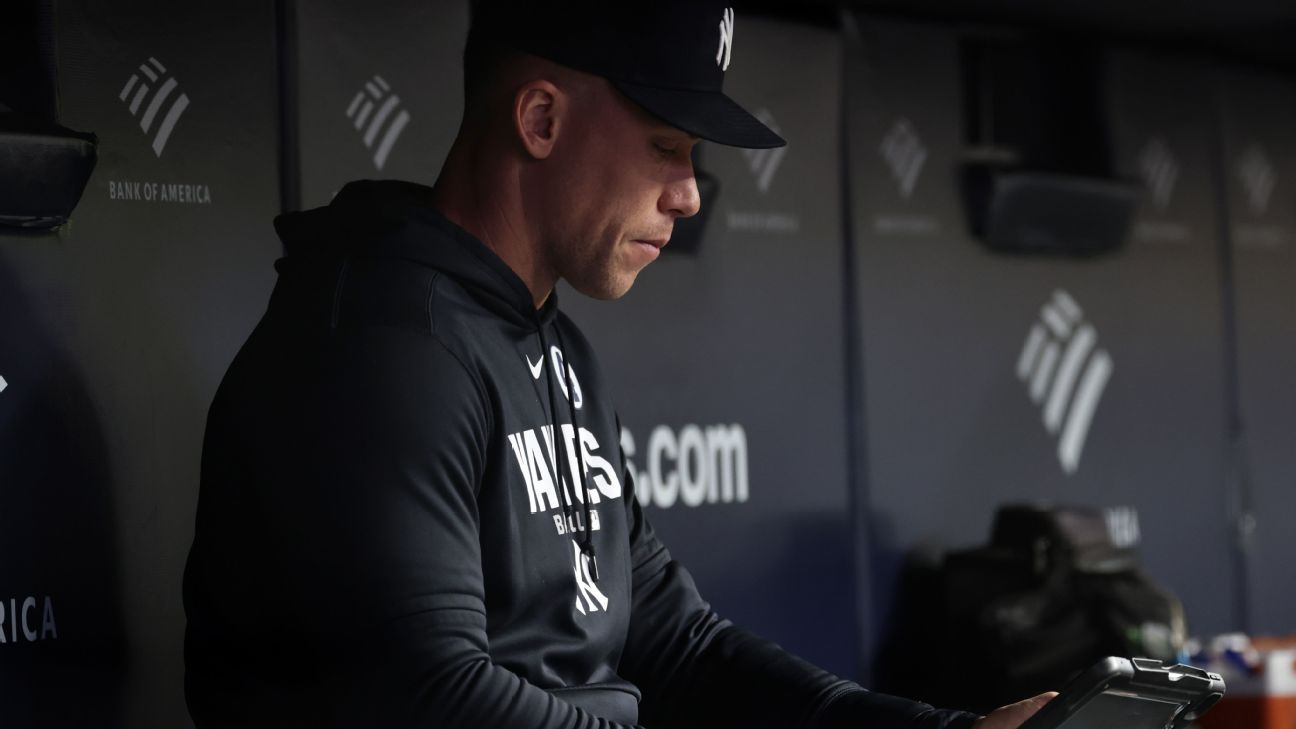
Brian Cashman held court after Monday's trade deadline with a statement designed to manage expectations: Aaron Judge will return this season, probably, barring the imaging results that haven't happened yet. The Yankees GM spoke in measured tones about timelines and guidelines and "comfort of deployment," which is executive-speak for "we don't actually know." Judge suffered a stress fracture in his right first rib on April 26 and played through escalating pain for 36 days before the injury rendered him unable to continue. He has not taken a swing since May 31—65 days of silence.
The damage arc tells the story. Through May 12, Judge was hitting .275 with 16 home runs across 43 games—pedestrian by his standards but functional. Then came the 16-game stretch after that initial threshold: .180 average, one home run, .550 OPS in 71 plate appearances. Judge went from limping through manageable games to essentially unplayable. He landed on the 10-day IL on June 5, then the 60-day on July 18. The jump to 60 days is not incidental; it signals the team had reset its internal calendar.
Cashman's refusal to name a date for the next imaging—"whenever we reimage, we'll get a better idea"—is the tell. Teams with genuine timeline clarity announce it. They say "mid-August" or "late August." Cashman instead pivoted to vagueness: healing is a moving target, comfort levels are undefined, the picture will improve once the scan happens. This is the language of uncertainty. And if the Yankees truly believed Judge would return within the next 3-4 weeks, the deadline acquisitions would have been depth moves, not the centerpiece trades executed. The team added Heliot Ramos and Luis Garcia Jr., signaling an internal expectation that Judge's absence will extend well into August or beyond.
For bettors holding Judge props or considering Yankees offensive totals, the implication is straightforward: the market was already discounting a late-August or September return based on the 60-day IL designation. But Cashman's deliberate hedging—"it's always possible that things don't go the way you want"—signals the team is now gaming scenarios where Judge misses significant additional time. If imaging in the next week or two shows incomplete healing, a move to the 90-day IL or a late-September-only return becomes the new baseline. The Yankees' deadline strategy and Cashman's non-answer confirm that optimism is aspirational, not factual.
For Yankees team totals and run-line props, the absence of Judge's .275/.370/.677 slash for an extended stretch (he was already production-depleted by injury before shutdown) removes roughly 10-15% of expected offensive value. The team compensated with Ramos, but Ramos is a reclamation project with a .215 career average and unproven fit. The Yankees are now operating on a contingency roster built for Judge's extended absence, not a Judge return.