Gelof's Hand Injury Ends Historic Hot Streak; Williams Slots Into A's Lineup
By PropBetEdge Editorial Team ·
Oakland's utility star snapped three concurrent streaks in a single swing, forcing a lineup reshuffle that reintroduces a trade acquisition mid-slump.
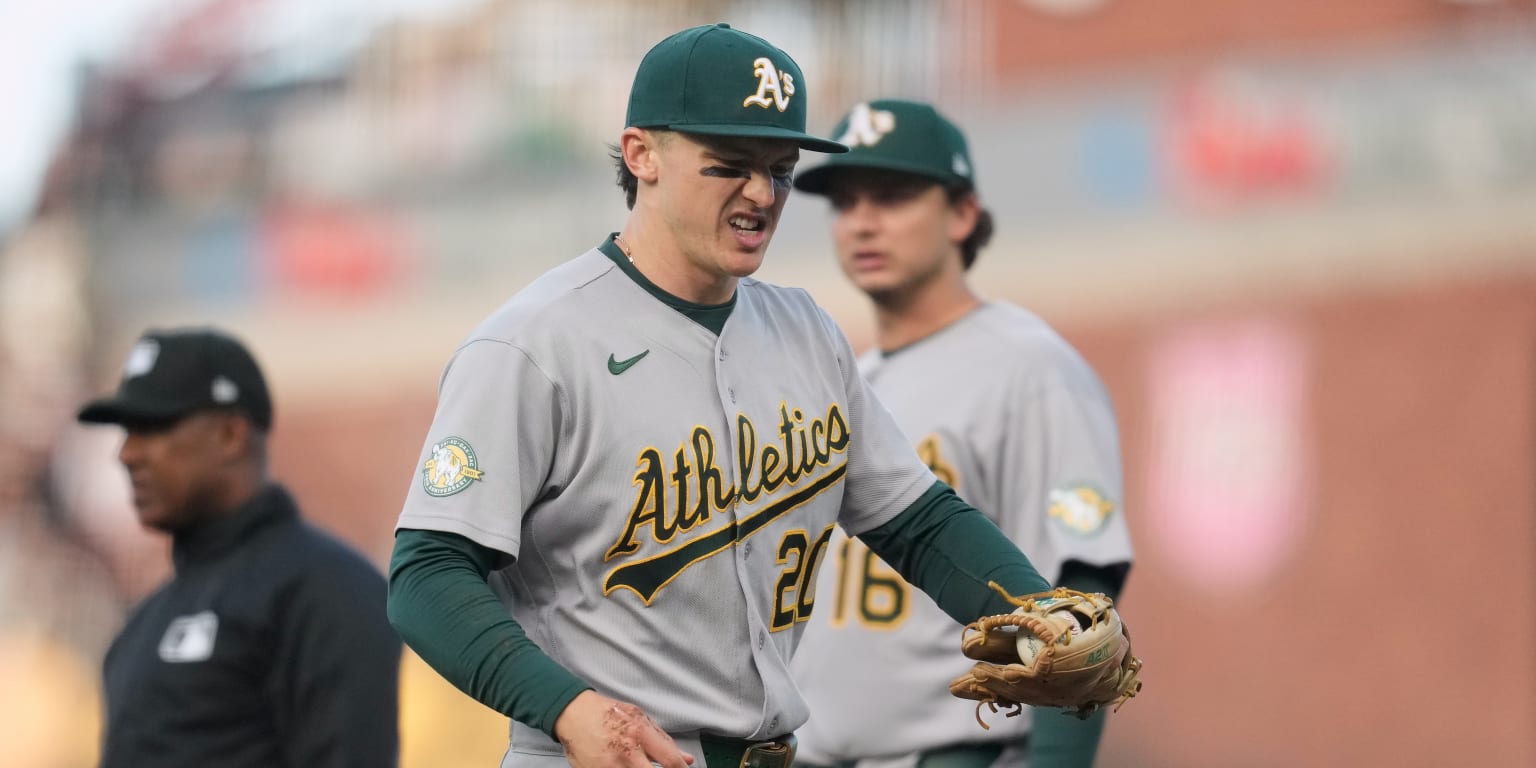
Zack Gelof is done for at least 10 days. The Athletics placed their utility infielder on the injured list retroactive to June 24 after his right hand was stepped on by Giants third baseman Matt Chapman during Tuesday's game, forcing an early exit in the second inning. The contusion ended not one, but three consecutive streaks—a 24-game hitting streak (tied for seventh longest in A's history, longest since 2002), a 27-game reaching-base streak, and a 13-game runs-scored streak that ranked fourth all-time for the franchise and the longest in 93 years. The timing is particularly brutal: Gelof was in the midst of a career-best offensive run. Over 62 games since his April 10 recall, he's slashing .282 with 10 doubles, one triple, and 11 home runs—the kind of sustained performance that transforms a depth piece into a core contributor.
To plug the hole, Oakland recalled infielder Alika Williams from Triple-A Las Vegas, where he'd landed just four days prior on June 21 after a brief stint in the majors. Williams arrived in Oakland as part of a May 16 trade with Pittsburgh (the A's sent minor league pitcher Kyle Robinson the other way), and his early numbers in an Athletics uniform were encouraging: .289/.340/.489 across 23 games, with five doubles and a home run. At shortstop and second base, he logged meaningful defensive time. His razor-thin Vegas sample (3-for-7 with power in two games) suggests he was swinging the bat well before the recall.
The lineup complexity cuts both ways. On one hand, Gelof's absence removes a momentum engine from the bottom half of Oakland's order—a player who was drawing pitches to hit and manufacturing baserunners at an elite rate. The 13-game runs-scored streak tells you he was in the right place at the right time, and that's not fungible. On the other hand, Williams offers defensive versatility and a track record (however modest) of making contact and driving the ball to all fields. The A's are banking on continuity rather than stopgap performance; if Williams sustains his early .289 average and positional flexibility, the lineup doesn't crater. The real risk is regression—Williams' early numbers are built on a small sample, and a 27-year-old recalled twice in five weeks is a depth play, not a star replacement.
For bettors tracking Oakland's offensive floor over the next 10 days, the Gelof absence narrows the margin for error. The A's team total will likely compress 0.3 to 0.5 runs depending on opponent pitching profile and ballpark. More granularly, Gelof's replacement won't generate the same baserunner equity; Williams' walk rate (2.2% in limited MLB time) lags Gelof's streaky plate discipline. If you've been fading Oakland totals because of Gelof's hot hand, the edge widens—not because Williams is a turnstile, but because he hasn't earned the same expected-value premium in the run-creation hierarchy. The hitting streak is gone; the reaching-base streak is gone; what remains is a competent utility infielder in a lineup that just lost its most productive recent catalyst.