Garver's Power Pivot Revives Seattle's Catcher-Dependent Win Formula
By Ty Whitney ·
With Cal Raleigh sidelined, Mitch Garver delivered the two-run homer that broke a scoreless tie—proof that the Mariners' offensive identity doesn't hinge on one name behind the plate.
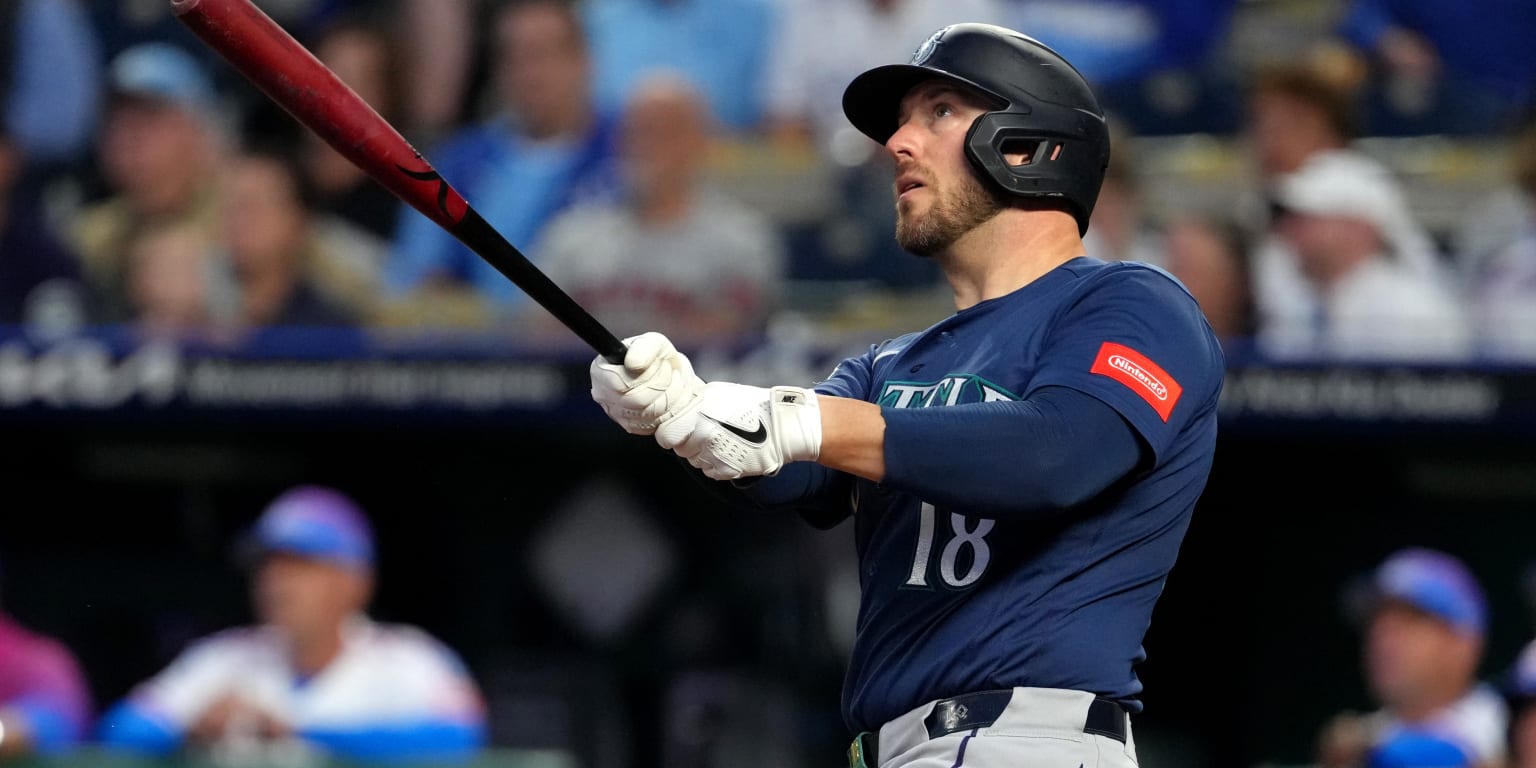
Mitch Garver hammered a two-run homer off Royals reliever Nick Mears in the seventh inning Friday to lift the Mariners past Kansas City 2-0, snapping a scoreless deadlock and underscoring a structural truth about Seattle's offense: the team's win rate depends less on who plays catcher than on consistent power production from that position.
Garver entered the series hitting .155 with minimal power output, but the moment mattered more than the numbers. Logan Gilbert had already silenced the Royals through 5⅔ innings on just two hits, turning the game into a classic pitcher's duel where a single swing could flip the outcome. That's when Garver's towering left-field shot became inevitable—not in the sense that Garver was due, but in the sense that the Mariners' strategic blueprint requires power from the battery rather than patience or small-ball accumulation. One swing, two runs, game decided.
Last season, Cal Raleigh anchored this same formula, cranking 27 home runs with a 137 wRC+. The question facing Seattle's front office wasn't whether Raleigh could sustain that—it was whether the offensive system itself would collapse if injury removed him. Friday's result suggests it won't, at least not immediately. Garver's presence in the lineup, even with a weak .155 average entering the game, carries implicit organizational confidence: Seattle knows this catcher can deliver power in high-leverage moments, which is the only offensive currency that matters in a 2-0 game.
For prop bettors, this game reveals an important market signal. Garver's individual hitting line will almost certainly remain under heavy public scrutiny given his poor early-season numbers, which means his prop totals—hits, RBIs, home runs—are likely overvalued on the downside. The market will price him as a slumping backup rather than a power-capable filling solution. But the Mariners deployed him in precisely the spot where those hits come: high-leverage at-bats with runners in scoring position. Against Royals relief pitching that struggled with command, Garver delivered. If Seattle continues to play him in cleanup or against right-handed pitchers in tight games, his actual leverage value disconnects entirely from his season batting average. A .155 hitter hitting cleanup in a 2-0 game is still a power swing away from the highlight.
Watch whether Garver's usage pattern changes now that he's cashed in one of these moments. If Dan Wilson continues to deploy him in leverage situations rather than benching him for matchups, his RBI and home run props deserve respect despite the weak aggregate stats. The Mariners didn't use him by accident—they used him by design. That design, not his batting average, determines his value.