Misiorowski's Dominance and Judge's Absence Reset the Yankees-Reds Ledger
By Erik Schwartz ·
A pitcher riding a historic hot streak and a New York offense recalibrated by injury create the sharpest edge on Friday's board.
Fourteen games scatter across Friday's slate, but the clearest analytical opportunity sits in two spots: Milwaukee's arm talent against Atlanta's depleted lineup, and New York's power gap against Cincinnati's road-weary starter.
Start with Jacob Misiorowski. Over his last seven starts, the Brewers right-hander is 6-0 with a 0.18 ERA—he's allowed one run across 49 innings and struck out 72. That's not a hot week. That's not variance. That's a pitcher operating at an elite level few arms sustain for any meaningful stretch. The Braves, meanwhile, have lost five of six since Ronald Acuña hit the injured list; their lineup has functionally regressed. Martin Perez carries a sharp 1.67 ERA at home for Milwaukee, but he doesn't exceed five innings regularly and owns a 2-2 record despite the surface metrics. The Brewers' bullpen is live, and more importantly, Milwaukee's road offense has posted a .925 OPS over the last two weeks with a .914 mark against left-handers—exactly what the Braves will throw. Misiorowski's win line at +110 prices in enough doubt to justify the leverage.
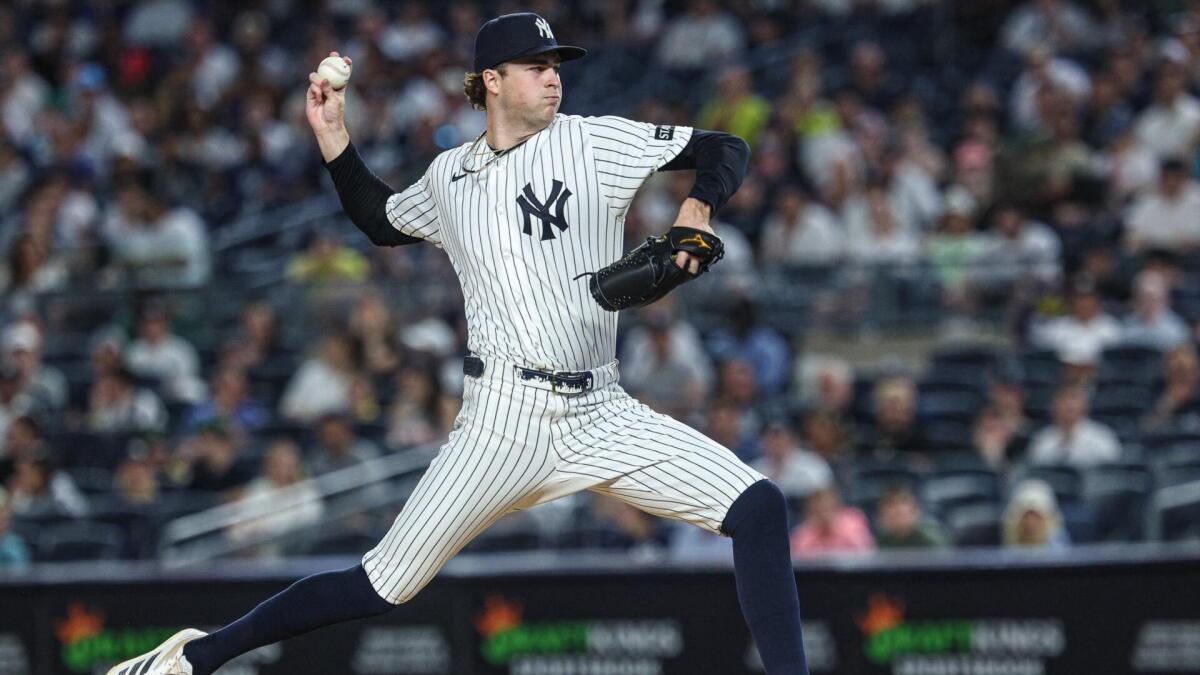
The Yankees-Reds matchup operates on a different axis: volume and recovery. Aaron Judge left the lineup on June 3 with a 4-6 week injury window, and New York has responded by going 9-3 since June 4 while averaging 5.7 runs per game—a figure that improves when Judge's bat returns. The Reds sent Rhett Lowder to Cincinnati, a starter who carries a 5.84 ERA in road games and hasn't cleared six innings since April 20. Cincinnati's bullpen ERA sits at 4.75 in June, a liability against a Yankees lineup that's built continuity despite the middle-of-the-order disruption. Cam Schlittler is the AL Cy Young favorite and has allowed zero or one run in nine of his last eleven starts; the Yankees' spread at -1.5 respects his excellence but underweights the structural advantage: Lowder's road split is historically poor, his workload pattern constrains bullpen rest, and the Yankees have already adjusted their offensive strategy to compensate for Judge's absence. When Judge does return, the spread widens further.
The Pirates-Rockies over 11.5 runs reads as a variance play rather than a mechanism play. Kyle Freeland is 1-7 with a 7.98 ERA and has leaked 10-plus ERA marks across seven straight starts; his last four starts totaled 12, 16, 17, and 21 runs. Bubba Chandler is serviceable but has stayed under five innings since April, and the Pirates' bullpen ERA is 5.13 in June. The Rockies have posted a .944 OPS against right-handers the last two weeks, and Colorado's bullpen has surrendered a 6.13 ERA across the same frame. The number is genuinely inflated, but the edge isn't because the pitchers are bad—it's because they're historically bad right now, and bad pitchers regress to their season norms faster than they regress downward. This is a bounce-back candidate pool, not a continuation pool. The over survives if both teams stay in funk, but the structural risk is higher than the surface metrics suggest.
Misiorowski's arm dominance and the Yankees' offensive recovery architecture are durable edges. The Pirates-Rockies over is a volume bet on continued ineptitude—sharp in isolation, but fragile across multiple days. Friday's best bets are the ones built on repeatable skill gaps, not on hoping bad pitchers stay bad.