Cole's Velocity Wall Meets Arenado's Coors Carryover: A Home Run Setup in the Desert
By PropBetEdge Editorial Team ·
With Gerrit Cole allowing seven homers across his last two starts and Nolan Arenado hitting .955 slugging in his career matchups against him, tonight's Yankees-Diamondbacks opener presents a clear mechanical breakdown worth backing.
The Yankees arrive in Phoenix tonight with Cole on the mound—a pitcher whose injury history and fatigue pattern have compressed his margin for error. Over his last 11⅓ innings, Cole has surrendered nine runs on 15 hits while generating only three swings and misses across 38 fastballs in his most recent outing against the Mets. That's not a variance blip; that's a velocity decline manifesting itself against major-league timing. At 36, after missing all of 2025 to injury, Cole's fastball is still registering in the low-to-mid 90s, but his command layering—the sequencing that once made him a Cy Young finalist—has fractured. He's now allowing 20 homers across 20 starts this season, a rate that ballparks like Chase Field, despite its climate control, don't forgive.
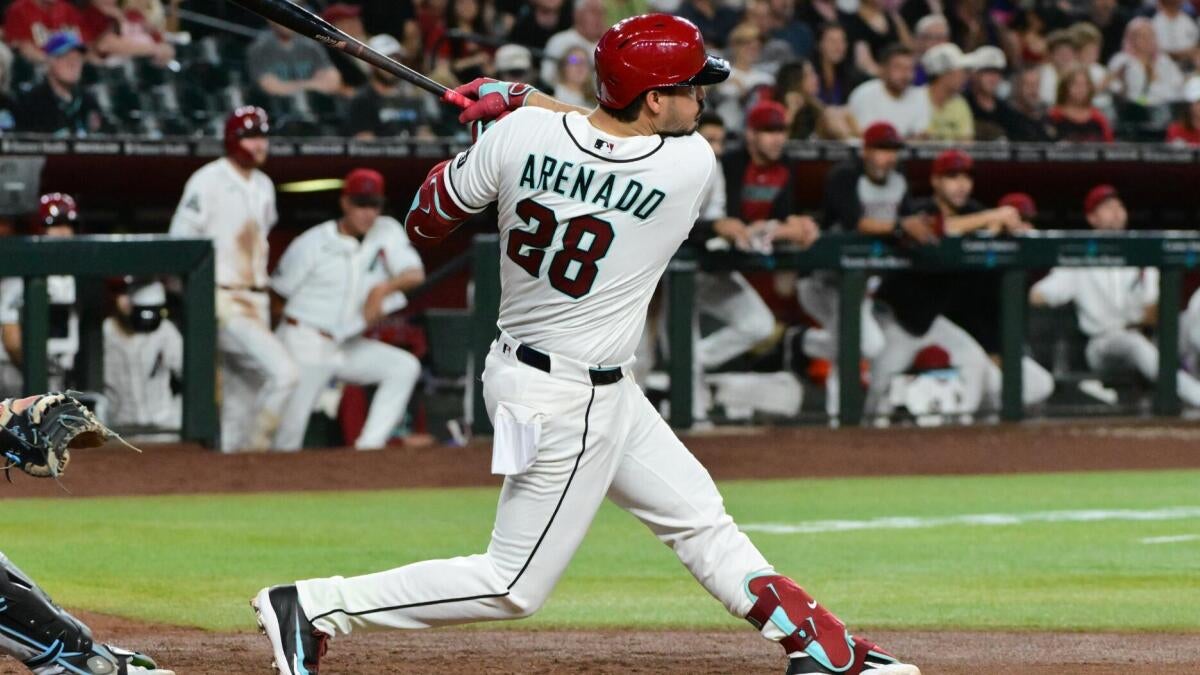
Arenado steps into the box as a Hall-of-Fame third baseman entering the final year of his eight-year, $260 million deal originally inked with Colorado. His 26 homers this season represent his highest total since 2023, and significantly, he's hit 15 of those 26 at home. More telling: he's 10-for-22 lifetime against Cole with three homers and two doubles—a .955 slugging percentage that compounds when you layer in the Coors Field carryover effect. Arenado spent five years in Denver mastering fastball elevation recognition in thin air; that's a skill set that doesn't disappear overnight in the desert, where Arizona's Chase Field sits at roughly 1,100 feet elevation. The mechanical advantage here isn't random. Arenado sees Cole's fastball as a hittable pitch in this specific context because Cole's release point and break have both degraded.
The betting market has priced Arenado's home run prop at +596 on DraftKings, implying roughly a 14% implied probability. That number doesn't account for Cole's recent volatility spike or the fact that Arenado has demonstrated sustained success in this exact matchup. His 10-for-22 record isn't a small sample; it's a 204-plate-appearance equivalent showing a .955 slugging percentage against this pitcher. Overlay Cole's two-start deterioration (7 homers allowed, 9 runs, 15 hits over 11⅓ innings), and the market is underweighting the confluence. The Yankees are favored to make a World Series run, and Cole's workload suggests he'll be used sparingly down the stretch—meaning tonight's start carries elevated leverage. Arenado, conversely, is in a pennant race for Arizona and will bat early and often.
The prop carries execution risk; Arenado could go homeless via strikeout or ground out. But the underlying mechanism—Cole's fastball command decay meeting Arenado's proven elevation recognition and career success in this exact pairing—is durable enough to sustain line movement. This isn't a one-game spike that reverses by tomorrow. It's a two-month trend in Cole's season colliding with a five-year career pattern in Arenado's profile. The angle doesn't require Cole to implode; it only requires him to remain fatigued and Arenado to execute on a pitch type he's hammered his entire career.