Soto's May Tear and Olson's Matchup Spot: Two HR Props on the Right Side of Risk Saturday
By PropBetEdge Editorial Team ·
A 15-game slate offers rare clarity on two sluggers whose hot streaks and pitcher exposure align with sharper edges than standard recency bets.
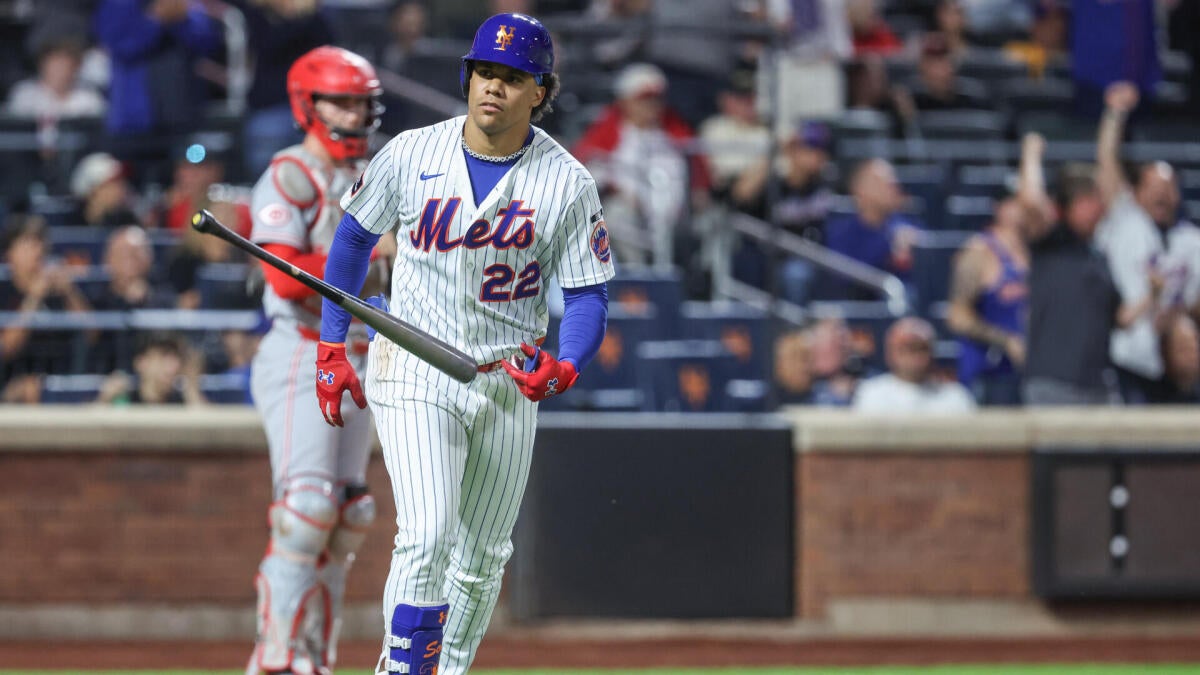
Saturday's 15-game MLB card presents two home run props with distinct mechanical foundations—one riding elite current form, the other exploiting a specific pitching liability. Juan Soto and Matt Olson emerge as the day's cleanest HR bets, but the reasons differ enough that understanding the mechanism behind each one matters more than chasing the +360 or +240 odds.
Soto's case rests on a five-game interval of elite offensive output. Since May 17, he's hit six home runs—the league's highest during that window—and he's now at nine for the month despite missing time to injury. The Mets' broader offensive struggles in 2026 haven't dragged down his individual profile: 12 homers through late May with an OPS near 1.000 across the board. The matchup against Miami adds a second layer. Tyler Phillips is slated to start, but the Marlins are running a bullpen-heavy game plan with Phillips capped at 3⅔ innings max. That compressed starting role means Soto faces multiple relievers in unfamiliar conditions—a scenario where an in-form hitter typically maintains his edge. At Citi Field, where Soto's OPS tops 1.000, the probability of contact advantage only improves. This isn't a "hot streak correction bet." It's a pattern-recognition trade on short-term performance paired with favorable field and pitching structure.
Olson's trade operates on pitcher exposure rather than batter momentum. He's slowed from his opening salvo—15 homers entering Saturday with a May OPS of .765—but the Cincinnati matchup is categorically bad for Brady Singer. The Reds' starter has allowed 14 home runs overall, with 10 to left-handed hitters. That 10-for-[at-bat volume] rate is not noise; left-handers have posted a 1.000 OPS off Singer in 2026. Olson has driven 10 of his 15 homers off right-handed pitching, and his recent 13-game homer drought only underscores how matchup-dependent his power distribution is. His last homer came Tuesday, breaking the cold spell. Against a pitcher this vulnerable to his handedness, Olson's .765 May OPS matters less than the 14 homers Singer has already surrendered and the 1.000 OPS ceiling he's established for lefty sluggers.
The distinction matters for risk management. Soto's edge is multi-layered—form, venue, and pitcher workload—and likely survives moderate line movement if sharp money enters Saturday morning. Olson's edge is narrower and more single-event: it collapses if Singer doesn't pitch or if Cincinnati makes a bullpen change that shuffles appearances. Neither is a "lock," but one carries durability across the slate while the other is tournament-specific.
For bettors evaluating Saturday's slate, the practical takeaway is straightforward: Soto to homer at +360 carries value tied to sustainable form and field advantage; Olson at +240 requires conviction in the Singer liability and works best as part of a multi-leg parlay where you're hedging the bullpen variance. Both deserve action at their listed odds, but the mental model underpinning each trade is different. One is pattern confirmation; the other is matchup exploitation.