Albies' Layoff and Neto's Hot Streak Create Sunday Home Run Spots
By Ty Whitney ·
Two hitters entering vulnerable matchups with opposing pitchers showing elevated hard-contact allowed—one riding a three-week drought, the other momentum-backed.
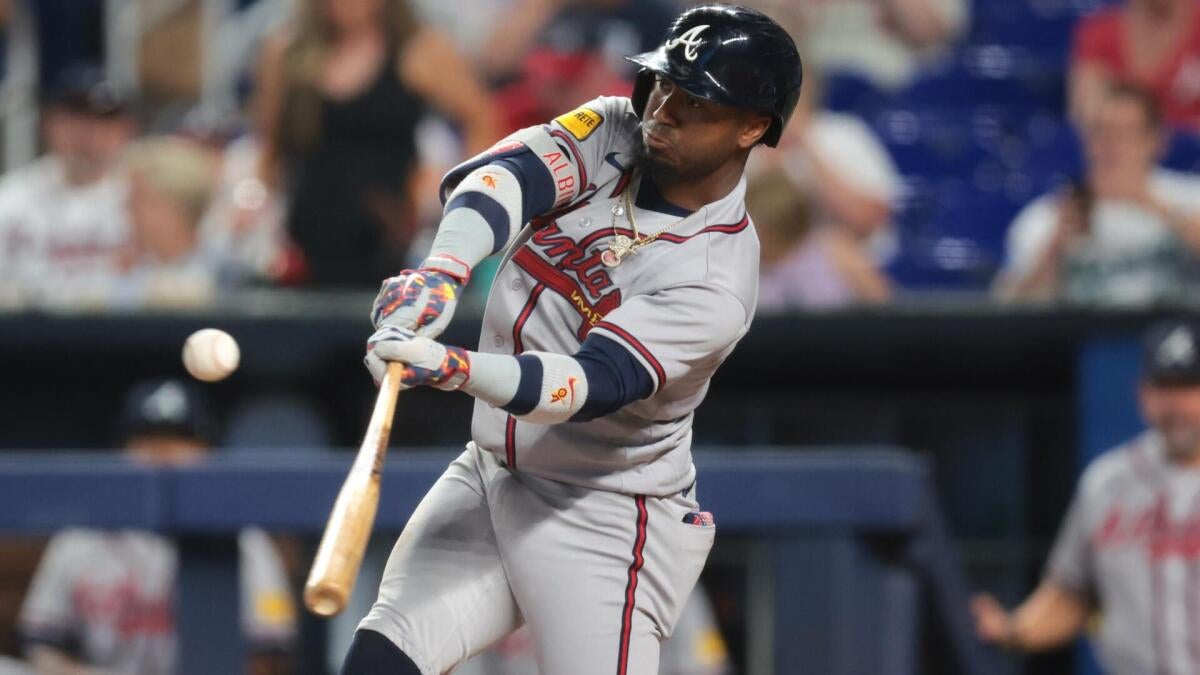
Sunday's full MLB slate offers a pair of home run prop angles worth isolating: Ozzie Albies against Washington's Foster Griffin and Zach Neto facing Texas' MacKenzie Gore. Both matchups share a common tell—the opposing starter has either leaked extra-base hits or carries recent injury concern that could limit pitch execution.
Albies has been one of Atlanta's most consistent hitters against left-handed pitching, posting a .293 average with an .814 OPS over 84 at-bats in that split. The Nationals' Griffin enters this game fresh off three brutal starts where he's allowed 15 runs and five home runs—a pace that suggests diminished command or repeated mistakes in the zone. Albies has eight homers on the season, four of which came at home, and he hasn't gone yard in three weeks. The three-week layoff combined with a starter bleeding fly-ball damage creates a straightforward edge: a capable left-heavy hitter facing a pitcher currently unable to minimize high-impact mistakes.
Neto presents a different mechanical advantage. The Angels' second baseman has driven the ball better than his two career home runs against lefties suggest—his .862 OPS against southpaws ranks within touching distance of Mike Trout's elite .909 mark. More immediately: Neto homered twice Friday and has recorded multiple hits in each of the first two games of this series, a clear hot streak that carries measurable momentum. Gore, Texas' starter, owns a 4.78 ERA and has been dealing with lat tightness that could force him out early or cause him to pace himself through fewer innings with lower velocity. When starters leave early or labor through discomfort, pitch selection often becomes predictable and mistake frequency rises.
The matchup mechanics here turn on starter deterioration rather than pure hitter strength. Griffin's recent home run allowance (five in three starts) isn't a random variance spike—it signals command problems or location slippage that persists. Albies, a pure contact hitter against left-handers, needs only average elevation on an error; he doesn't need a hot streak to capitalize. Similarly, Gore's injury uncertainty elevates the probability of fastball-heavy outings or early exits, both scenarios where a momentum-backed hitter like Neto (fresh off a two-homer game) converts elevated fastballs into carry distance.
The prop lines reflect some recency discount. Albies' +650 price assumes a three-week drought carries predictive weight it shouldn't—rest and matchup quality are more reliable than a miniature no-homer streak. Neto's +525 similarly undervalues the Gore injury context and the documented hot streak (hard-hit rate spikes tend to sustain for 4–7 games in the data). Both angles survive moderate line movement because the causal chains—starter vulnerability and pitch-execution pressure—won't disappear with adjusted odds.