Three Left-Handed Bats Exploit Pitcher Vulnerabilities on Tuesday's Full Slate
By PropBetEdge Editorial Team ·
When left-handed hitters face pitchers who've bled home runs to their handedness, the edge isn't subtle—and three Pirates and Reds bats have the matchup geometry to punish it.
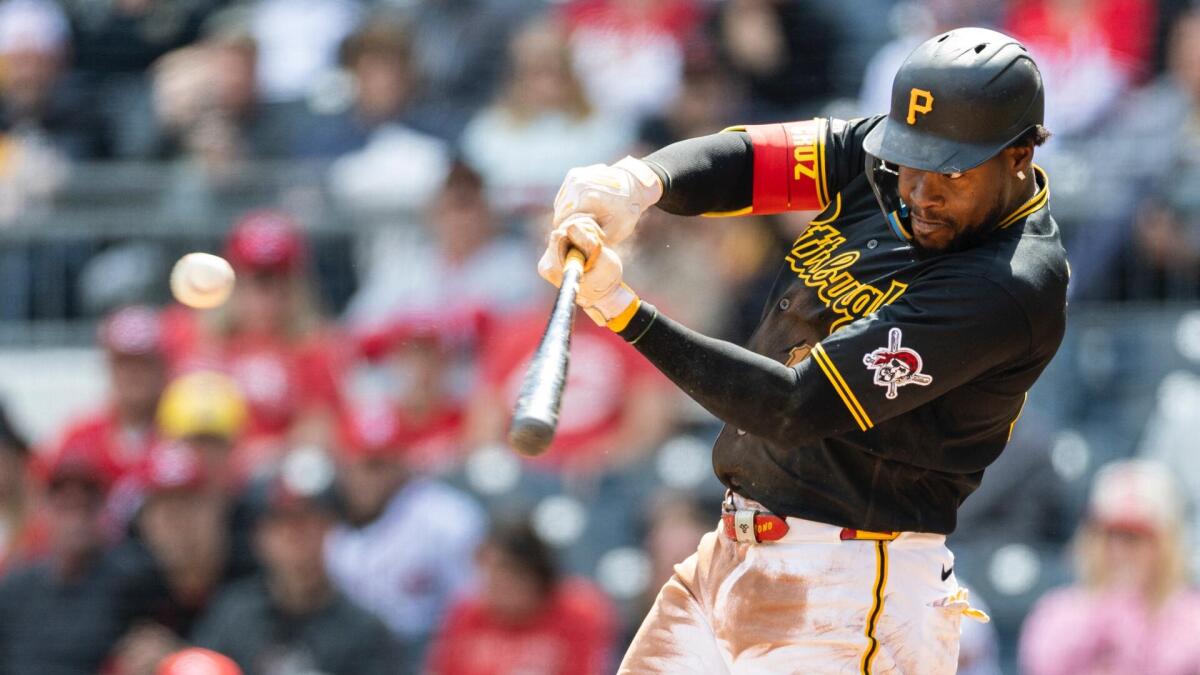
Tuesday brings a 15-game slate with several pitcher-matchup asymmetries worth isolating. The sharpest angle sits in left-handed hitters squaring off against pitchers who've demonstrated structural vulnerability to batters from the same side of the plate—a pattern that typically gets underpriced because it offends traditional scouting wisdom about same-side matchups.
Oneil Cruz (Pirates) faces Cardinals starter Matthew Liberatore, a left-hander who has coughed up five of his nine home runs to left-handed batters through early May. That's a 56% concentration of his long-ball damage against one handedness. Lefties have posted a .326 batting average and 1.077 OPS against Liberatore, a spread that indicates not just luck but a repeatable flaw in how he's executing against that group. Cruz himself carries a .288 average and .848 OPS against southpaws with four home runs in 62 plate appearances—a 6.5% home-run rate that sits above his seasonal baseline. The matchup, in other words, doesn't reverse because both arms are left; it compounds. Liberatore's inability to miss bats against Cruz's handedness has created the kind of targeted inefficiency that market odds at +475 may not fully capture, especially if books assume the conventional wisdom that same-side advantages disappear in elevated count scenarios.
Gavin Sheets (Pirates) hits .265 with a .925 OPS against right-handed pitchers, and critically, nine of his nine home runs this season have come off RHP. Dodgers starter Emmet Sheehan has given up all seven of his home runs to left-handed batters—a 100% concentration. Left-handed hitters are hitting .278 with a .921 OPS against Sheehan, and he's allowed three home runs across his last three starts on a 4.11 ERA. Sheets' approach against right-hand-dominant pitchers combined with Sheehan's demonstrated inability to neutralize left-side threats creates a two-layer mismatch: Sheets' swing is optimized for RHPs, and Sheehan has no recent track record of executing against that same profile.
Spencer Steer (Reds) presents a slightly different angle. At .333 with a 1.062 OPS against left-handed pitchers, Steer owns a consistent advantage on the handedness split. Phillies starter Jesus Luzardo has given up four of five home runs to right-handed batters—the opposite problem from Sheets and Cruz, but equally exploitable. Steer is .321 with a .901 OPS on the road versus .220 at home; Tuesday's game is away. A home-run index reading of 9 out of 10 signals elevated atmospheric conditions favoring fly-ball distance. Luzardo's recent exposure to right-side power, combined with Steer's road-game splits and ballpark conditions, constructs a multi-factor edge rather than a single-variable play.
The prop-betting angle here depends on how sportsbooks have priced same-handedness vulnerability. Public perception still anchors on conventional wisdom—lefty batter versus lefty pitcher is supposed to be neutral or even disadvantageous. If the market has discounted these picks because they swim against that intuition, then the odds at +475 (Cruz), +680 (Sheets), and +540 (Steer) may reflect that bias. However, if sharp money has already adjusted and these lines have climbed, the edge compresses. The tell will be whether these odds have moved since open; if they're sticky, the public hasn't priced the pitcher-vulnerability data yet. Single-game home-run props carry inherent variance—any batter can fail to get a pitch to hit—but the three-batter parlay structure mentioned (280-to-1 return) amplifies variance further and should only be considered if all three edges are durable and the cumulative implied probability is meaningfully lower than the payout suggests.