Home Run Weather and Pitcher Vulnerability Converge on Tuesday's 15-Game Slate
By PropBetEdge Editorial Team ·
A rare atmospheric condition—a 10-out-of-10 home run index—collides with matchups where vulnerable pitchers face platoon-advantaged hitters; three names emerge with structural edges.
Tuesday's 15-game slate arrives with an anomaly: the home run index is at its maximum, 10 out of 10, a condition that transforms borderline fly balls into carry distances that clear the fence. When weather and wind align this way, batters with pull power and pitchers already conceding elevation gain a measurable premium. The three picks emerging from this environment all share a common thread—not just recent performance or season-to-date stats, but a specific pitcher vulnerability meeting a hitter's structural platoon advantage.
Taylor Ward of the Orioles carries a stark split profile: .846 OPS on the road this season versus .250 at home. Tonight he's on the road against the Angels' Ryan Johnson, a right-hander who has yielded a .361 average and .934 OPS to right-handed batters over the past year, including four home runs in 79 plate appearances. Johnson has surrendered 11 earned runs across 8⅓ innings in two starts this season—red flags for command and elevation—and allowed three home runs in that span. Ward has hit three home runs in his last 10 road games. The mechanism here is clean: a struggling pitcher facing a hitter who thrives away from home, with weather conditions that reward carry.
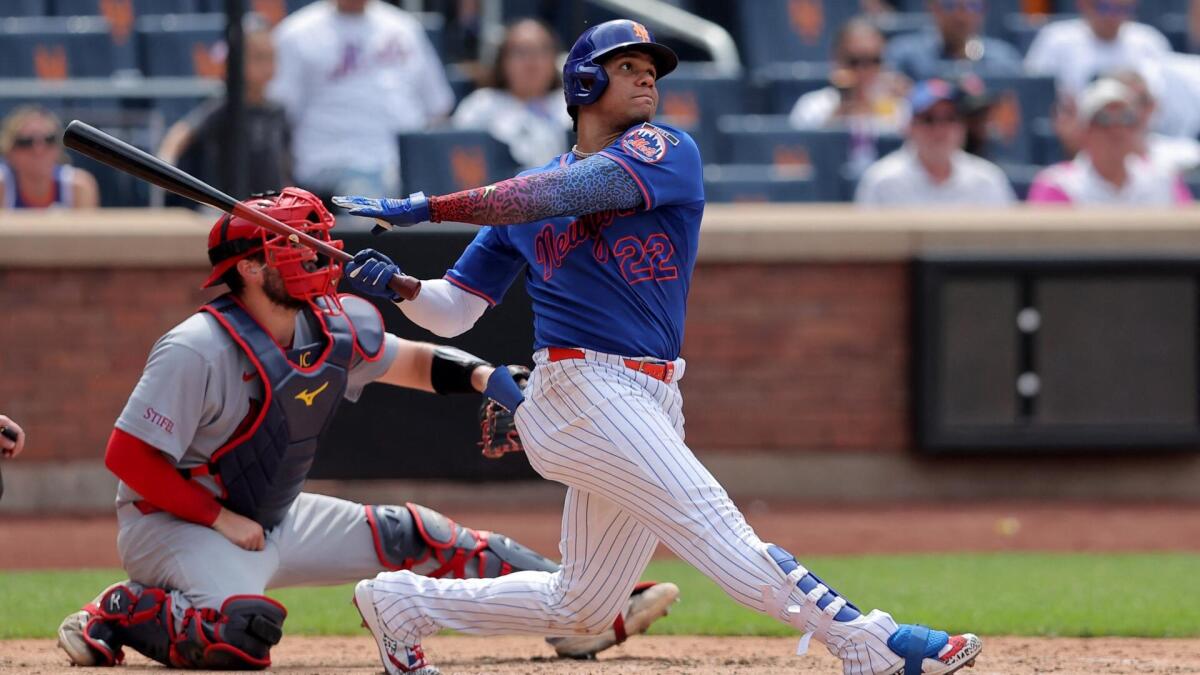
Juan Soto presents a different but equally traceable edge. The Mets outfielder sits 13th in baseball with a .974 OPS and has been devastating against right-handed pitching this season: .314 average, 1.058 OPS, 13 of his 17 home runs off righties in 170 plate appearances. Tonight's opponent, Cubs right-hander Edward Cabrera, has allowed a .809 OPS to left-handed hitters across 175 plate appearances and has coughed up six home runs in his last three starts, including two multi-HR outings over 13⅓ innings. Soto also carries a 1.142 OPS at Citi Field this season. The platoon advantage stacks on top of recent pitcher collapse; Soto is 1-for-9 career against Cabrera, but that one hit was a home run—a small sample, but directionally consistent with his approach.
Pete Crow-Armstrong of the Cubs rounds out the trio with a similar construction. He's hit .286 with a .911 OPS against right-handed pitching this season in 221 plate appearances, and 12 of his 16 home runs have come off righties. Mets pitcher Kodai Senga has allowed a 1.000 OPS to left-handed batters in just 54 plate appearances—a limited window but a clear tell—and has given up seven home runs in his last four starts with three multi-HR outings over 12⅓ innings. The weakness here is that Armstrong's home OPS (.962) is notably stronger than his road mark (.803), and he's batting on the road tonight, a structural headwind against an otherwise compelling matchup.
The betting angle is not that these hitters are "hot" or have momentum. It's that each faces a pitcher in measurable distress (recent home run rate, walk rate, or ERA spike) within a favorable platoon split, compressed into a night where the atmospheric conditions are extreme. The 10-out-of-10 home run index is the accelerant, but it's temporary; line movement will follow first-inning results. The edge is on early-market pricing, before recalibration. Soto's +300 price represents the sharpest standalone value because his season-long dominance against righties (.314/.1.058) creates a durable floor beneath the single-night weather bonus. Ward at +650 requires heavier reliance on the index itself but benefits from Johnson's recent collapse. Armstrong's platoon edge is real, but home-road splits create headwind.