Platoon Advantage and Park Factor: Why Wednesday's Home Run Props Hinge on Matchup Specifics
By PropBetEdge Editorial Team ·
Three MLB hitters align with favorable left-right splits and ballpark conditions on Wednesday; the edge is narrower than recent hit rates suggest.
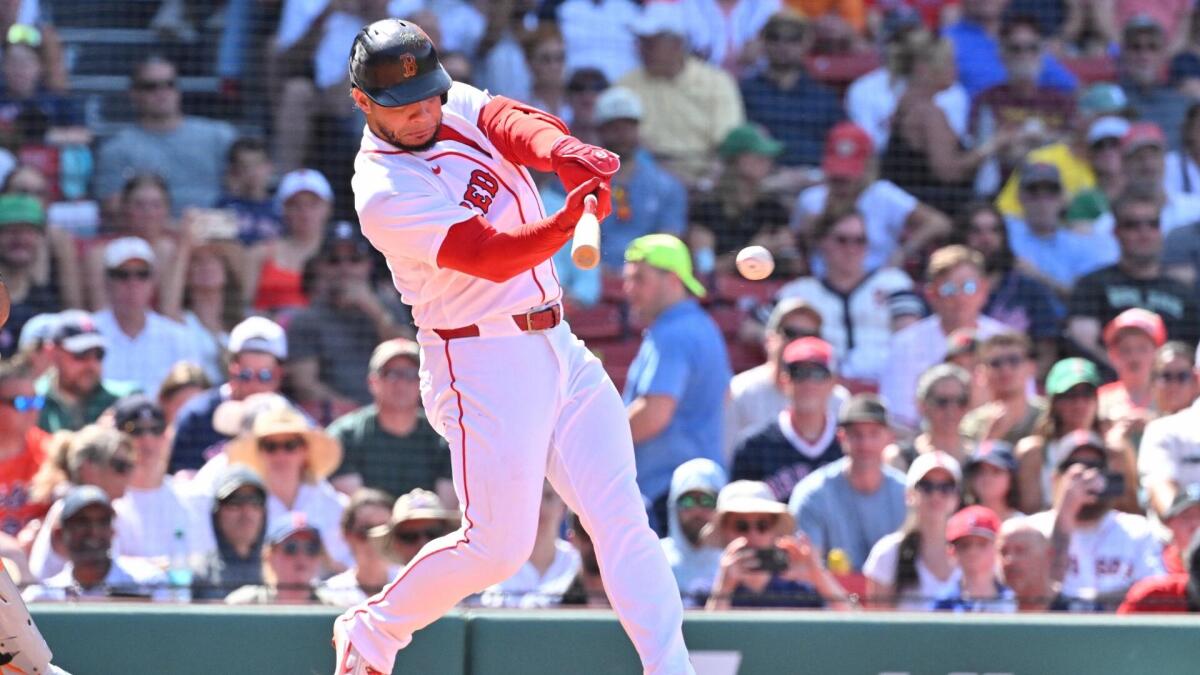
Wednesday brings a 14-game slate, and SportsLine's Jacob Fetner—up 50 units on MLB home run picks over the past year—has identified three home run props with favorable risk-reward. The plays hinge on platoon matchups and environmental factors rather than broad offensive form, which matters because home run props live or die on specificity. Without the right pitcher-batter dynamic, even a hot bat whiffs.
Fetner's three selections are Justin Foscue (Rangers, +650 vs. Cleveland LHP Joey Cantillo), Gavin Sheets (Padres, +400 vs. Chicago RHP Colin Rea), and Willson Contreras (Red Sox, +400 vs. Washington LHP Andrew Alvarez). The throughline: each batter carries a platoon split so pronounced it functionally changes their upside. Foscue has a 1.053 OPS against left-handed pitching (54 PA this season, three HRs) versus a .564 OPS against righties. Sheets has all 14 of his home runs against right-handed arms, posting .842 OPS in that split but a .493 OPS from the left side. Contreras carries a .950 OPS against lefties (84 PA, five HRs) compared to his broader season profile. These aren't marginal differences; they're structural.
Environment amplifies the edge. Fenway and Wrigley both register a 10-out-of-10 home run index for Wednesday, meaning air density, wind, and field dimensions conspire to turn high-exit-velocity fly balls into home runs at elevated rates. Foscue adds a road platoon bonus—.912 OPS in away games, .467 average over his last five road contests. Sheets is .937 OPS away from home. Small samples matter less when the splits are this wide; a single long fly ball becomes a home run rather than a warning-track out.
The betting angle traces through mechanism, not recent hit rate alone. Fetner's 13 correct HR picks over four-and-a-half weeks is variance-driven; he's exploiting specific matchups, not surfing a hot streak that will fade. The market prices Contreras at +400 (20% implied probability) despite a .950 OPS split against the opponent's handedness and a 10-out-of-10 park factor—that's underpriced if his true probability of a home run in this exact spot lands closer to 25-28%. Sheets and Foscue carry identical logic: narrow matchup advantage, high-exit environment, and odds that haven't fully adjusted for the platoon blowout. The risk is variance; one swing can end a home run prop, and recent success is not predictive of the next at-bat. But the structural advantage persists across all three. These aren't lottery tickets masquerading as value. They're edge cases with defined causal chains.