Coors Field Becomes Ketel Marte's Correction Play—If He Can Stay Healthy
By PropBetEdge Editorial Team ·
A career .295 hitter at Coors with nine homers and a .525 slugging percentage, Marte is due for regression in the opposite direction—his 2026 season has been throttled by a .236 BABIP.
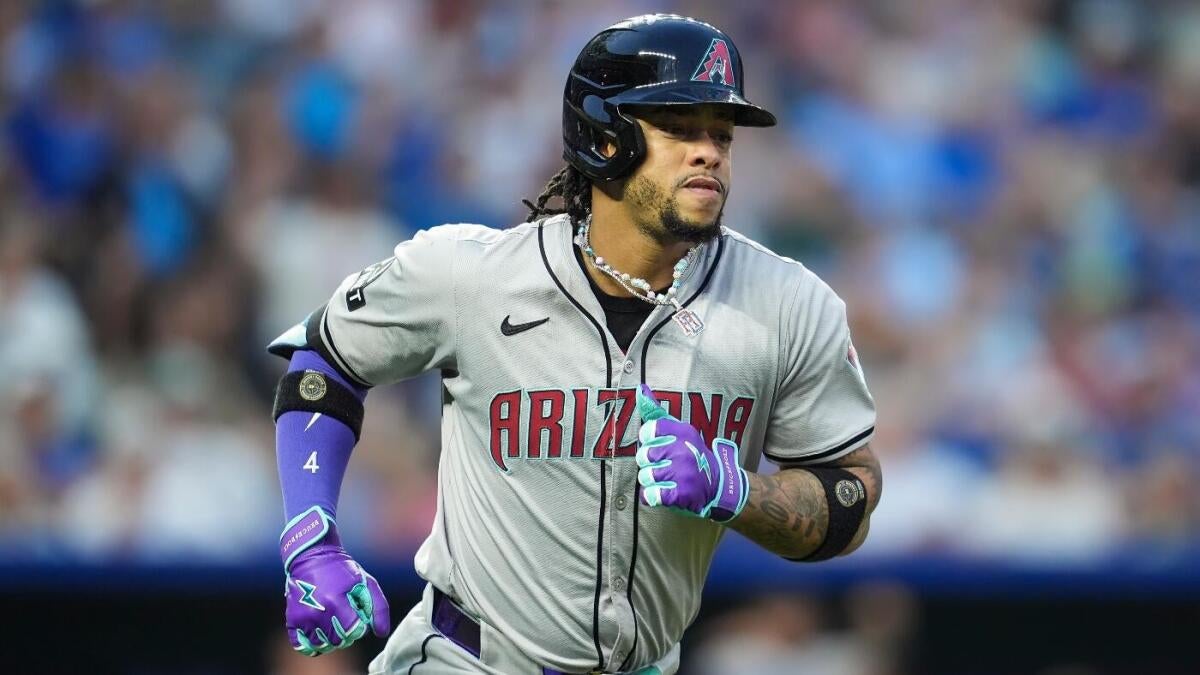
Ketel Marte arrives at Coors Field on Friday night carrying two contradictory data sets. The first is brutal: .215 batting average, five homers, .367 slugging through mid-May—a sharp departure from his 2025 baseline of .283, 28 homers, .517 slugging. The second is historical. At Coors, Marte has hit .295 with nine homers and a .525 slug across his career, a 110-point boost over his current season average. That gap is not noise. It is the product of a pitching environment where the air is thin and a hitter's luck has already turned south.
The mechanics of Marte's slump trace to a single, brutal stat: his .236 BABIP—a 54-point crater below his career norm and the lowest single-season mark of his 13-year run. BABIP (batting average on balls in play) is partly skill and partly variance, but when a hitter's line drives and ground-ball contact patterns remain intact and the hits simply stop falling, the variance door swings open. Marte's career BABIP sits at .290; a correction of that magnitude does not persist. Coors Field, where fly balls carry 20 percent farther and ground balls find grass, becomes the venue where that correction is most likely to accelerate.
Against Rockies lefty Kyle Freeland specifically, Marte owns a .354 average with a .688 slugging mark, three homers, five doubles and a triple in his career ledger. Freeland throws a fastball-slider mix that Marte has historically punished, particularly on pitches elevated in the zone. The Diamondbacks shortstop profile does not hinge on one-off variance—Marte has been productive at Coors across multiple seasons and multiple Rockies rosters, which suggests the effect is real and not a mirage.
From a prop perspective, Marte's home run line at +235 (FanDuel) prices in a roughly 30 percent implied probability. That number ignores the Coors elevation factor, which adds approximately 5-8 percent to expected home run rates league-wide, and the specific Freeland splits, which have tilted in Marte's favor throughout his career. The market is pricing Marte as a 32-year-old in the middle of a down season—which he is—without fully capitalizing on the venue-pitcher mismatch. A hitter with a .236 BABIP at sea level who moves to Coors against a pitcher he has historically crushed does not remain a 30-percent proposition. The edge compounds when you consider Arizona's depth at the top of the order: Nolan Arenado (5-for-10 with two doubles vs. Freeland), Lourdes Gurriel Jr. (4-for-12 with a homer), and Corbin Carroll (3-for-9 with a homer) all carry strong recent splits in the same matchup, suggesting the Diamondbacks lineup is primed for a collective breakout rather than a solo performance by Marte alone.