Pirates' Unexpected Offensive Surge Reshapes Mid-Season Landscape
By PropBetEdge Editorial Team ·
Pittsburgh has vaulted to second in runs per game despite losing three core contributors to injury for most of July—and two under-rostered hitters are doing the heavy lifting.
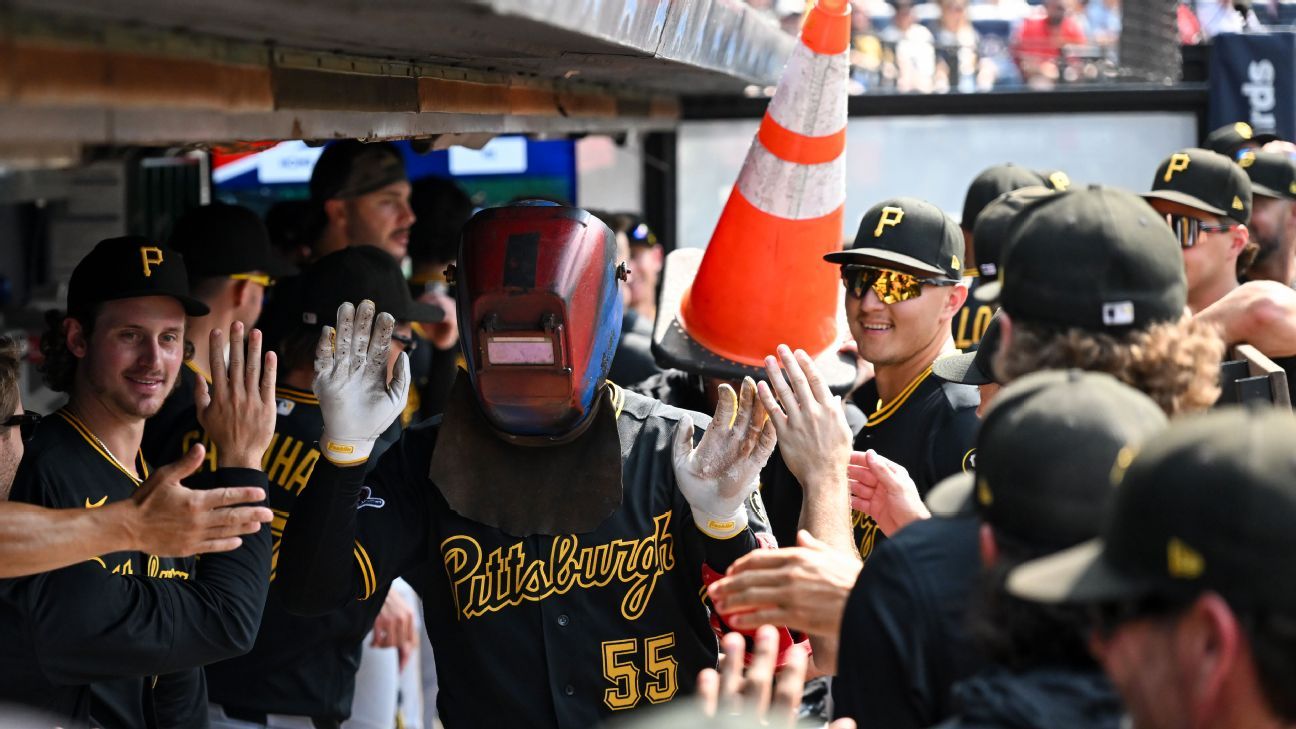
The Pittsburgh Pirates rank second in Major League Baseball in runs per game at 5.33 this season, a perch they haven't occupied since 2000. That sentence alone should trigger disbelief: this is a franchise that finished dead last in runs per game as recently as 2025 and has posted four of baseball's 13 worst single-season marks over the past six years. Yet here they are, outpacing the Los Angeles Dodgers in offensive production.
The mechanism behind this turnaround is straightforward and volatile. Oneil Cruz, Spencer Horwitz, and Konnor Griffin—the Pirates' three primary power sources—have been sidelined for roughly 73% of games in June and July combined. Despite their absence, Pittsburgh averaged 5.80 runs per game during those two months, placing them atop MLB for that window. This is not a sign of systemic improvement. It's proof that a handful of role players have sustained an unsustainable pace while the team's injury-depleted core heals.
Esmerlyn Valdez carries the largest share of that load. Since his June 11 recall, he has scored 92 fantasy points (17th among all hitters over that span) while starting just 22 of Pittsburgh's 32 games—a 69% appearance rate. His 27.4% Statcast barrel rate would rank best in baseball if he qualified, and he's added 10 home runs in that window (sixth-best). The swing-and-miss concern is real: he ranks fourth-worst in whiff rate on strikes among hitters with 100+ plate appearances, which forecasts volatility. Valdez isn't a model of consistency. He's a high-variance bat who's hit a hot streak precisely when the Pirates needed one most.
For prop betting purposes, Valdez's elevated production creates a specific problem: the market has already adjusted. At 42.2% roster ownership in ESPN leagues and now recognized widely as a waiver-wire asset, his fantasy appeal (and by extension, his betting lines) reflect recent outperformance, not forward expectation. His barrel rate and power potential are real, but his plate discipline remains mid-tier, and his swing-and-miss profile predicts corrective downswings. This is not a player whose underlying metrics support an extended hot streak. The pitch recognition gaps will resurface, likely within the next 10-14 days as opposing pitchers scheme around him.
The broader Pirates narrative matters for team-total and spread positioning. If Cruz, Horwitz, and Griffin return over the next 2-3 weeks (the standard recovery window for injury absence of this magnitude), Pittsburgh's offensive shape normalizes downward. The 5.80 runs-per-game average during June-July will not hold. Smart money should already be fading Pirates overs in team totals and run-line favorites as that return-to-norm risk materializes. Current numbers likely overshoot the sustainable baseline.