Boston's Acquisition Spree Opens Power Play: Curtis Mead and the Fenway Pareto Frontier
By PropBetEdge Editorial Team ·
The Red Sox acquired Curtis Mead to weaponize his pull rate against the Green Monster—and the market has barely priced the positional eligibility shift into his prop value.
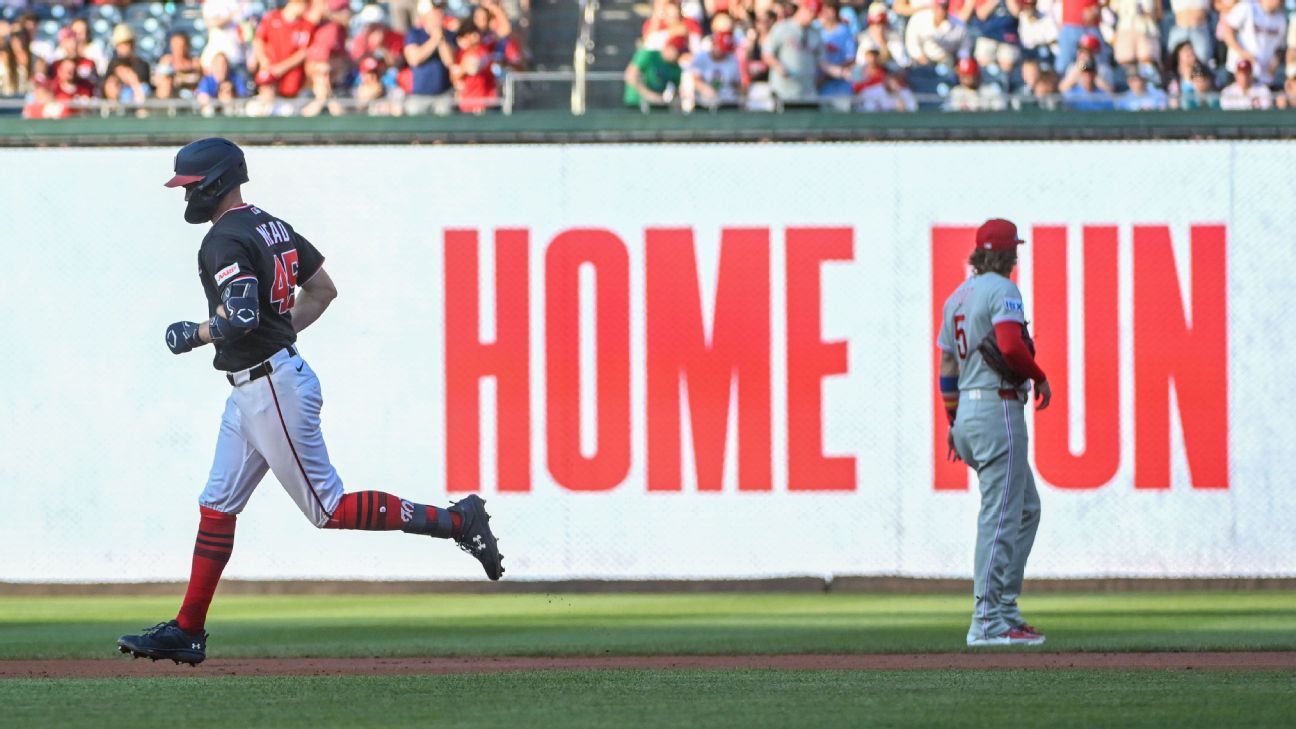
The Boston Red Sox acquired Curtis Mead from Washington over the weekend, dispatching left-handed starter Connelly Early in return. On the surface, it's a minor trade for a mid-tier bat. In practice, it's a calculated deployment of a hitter into one of baseball's most favorable environmental conditions—and one that has immediate prop implications the waiver wire has already begun to exploit, even as deeper layers of the trade remain unpriced.
Mead's profile reads as a classic Fenway fit: 17 home runs on the season, a .500 slugging percentage, and a disciplined 48.6% pull rate that ranks 23rd in the league. More important than the volume is the vector. Pulled fly balls die hard in Fenway; the Green Monster sits 310 feet down the left-field line, making it the shortest power target in baseball for a left-handed or switch-hitting righty. Mead is neither—he's a left-handed hitter whose pull tendency now faces the sport's most forgiving fence. The Red Sox offensive infrastructure has warmed considerably since June 25, when the team embarked on a 22-4 run. That streak has ended as of this week, but the underlying mechanics remain intact. Boston faces Oakland and Houston in the coming days, with both rotations in free fall. The timing compounds the edge.
But the real trap lies in eligibility arbitrage. Mead arrives at second base and DH, per Chief Baseball Officer Craig Breslow, but the Red Sox have him penciled in daily. After five games at the keystone position, he becomes eligible at second base league-wide—a positional unlock that solves a chronic fantasy baseball shortage. Third base remains an underperforming position across most leagues. The market has Mead's name on waiver wires (21.1% rostered), but the dual-tier prop value—immediate power upside in a hitter-friendly venue plus future positional flexibility—hasn't fully resolved into his hit and home run lines yet. Books will price Mead's opening week at conservative thresholds before they recalibrate after he's logged three or four games and the Green Monster effect is undeniable.
From a betting lens, the window is narrow but sharp. Mead's home run prop for his first week in Boston should reflect his season baseline (roughly 0.8 HR/9 games), not the Fenway boost. Once he clears five games and eligibility shifts, sportsbooks will re-evaluate—but by then, his batting average and slugging will have benefited from the short porch, and overs on those metrics will have already corrected higher. The edge is in early week props: fade the under on his home run total for July 27-August 2 if it lands at 1.5 or lower, because Fenway's environmental advantage against a weak A's/Houston rotation is as close to mechanical as baseball gets. This isn't a hot-streak bet; it's a physics bet.
The Red Sox have deployed a hitter specifically because of ballpark dimensions and opponent weakness. That's the rare moment when proposition markets lag opportunity.