Coors Field's Week-Long Home Stand Opens a Hitting Edge That Oddsmakers Haven't Fully Priced
By Erik Schwartz ·
The Rockies face seven consecutive home games starting this week, and their underrostered position players carry measurable splits advantages that sharps are already hunting on the waiver wire.
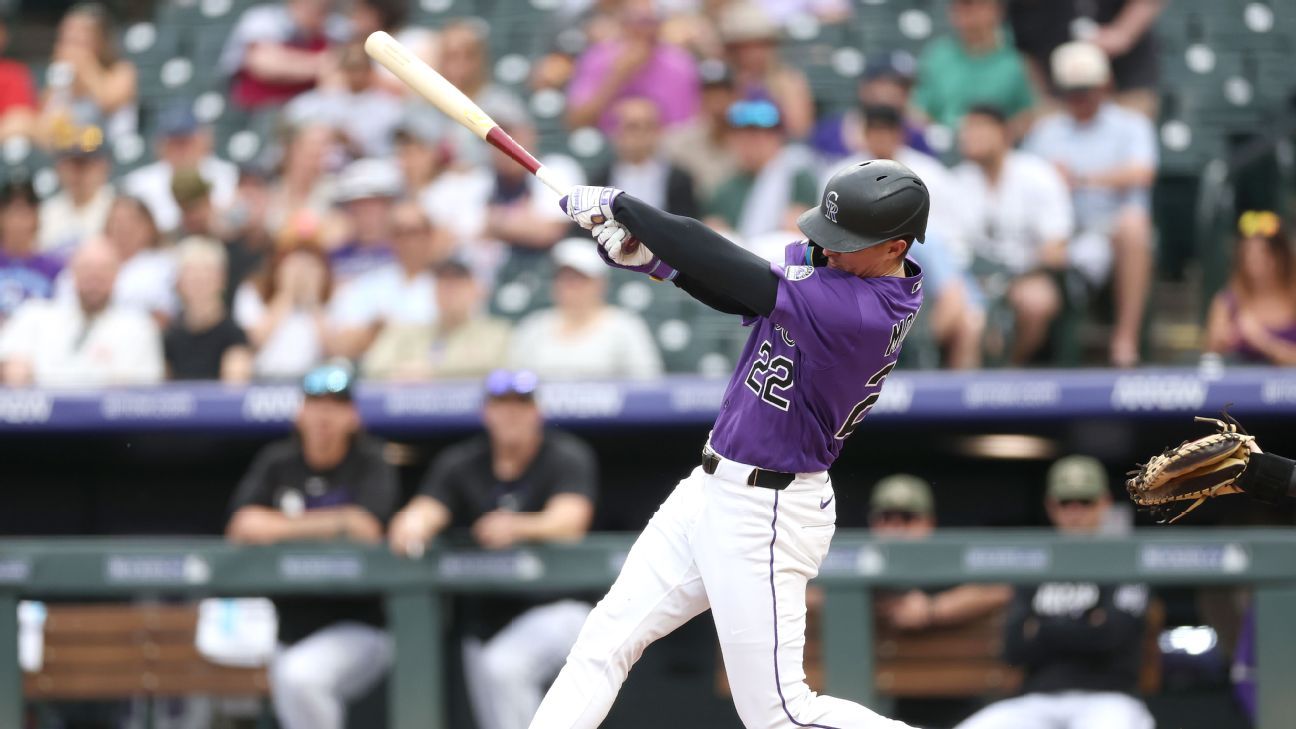
Colorado begins a seven-game homestand Monday, June 29, anchored by matchups against right-handed pitching. For fantasy operators and sharp bettors alike, this is the kind of fixture-driven edge that moves prop lines intraweek — yet the Rockies' position player pool remains dramatically underowned in public leagues, a signal that retail bettors haven't recognized the opportunity yet.
Coors Field doesn't work the way casual observers think. Yes, elevation inflates home runs, but the real statistical advantage lives in hits that stay in the park. The Rockies rank seventh in home wOBA, a figure built on doubles, triples, and contact rates rather than explosive power alone. That distinction matters for prop pricing: the books have conditioned the public to think "Coors = dingers," so they overprice home run totals and underprice hits and runs scored.
Mickey Moniak (recently activated from a month-long IL stint for ankle tendinitis) carries a .316/.354/.697 line at home against right-handers — a 250-point slugging advantage over his broader season profile. Jake McCarthy's reverse splits (he's hit .313/.363/.590 at Coors across 92 plate appearances, bucking his typical patterns elsewhere) don't explain long-term value, but they DO justify his elevated lineup usage this week. Willi Castro's .329 on-base percentage at home (96 PA sample) provides consistent table-setting; Cole Carrigg, a rookie with a .357/.526/.857 mark in 19 Coors plate appearances, has earned enough trust to stay in the lineup despite minuscule volume.
The betting angle surfaces here: individual hitter props against the full-week Rockies slate will likely misprice early because the counterintuitive edge (hits and runs over home runs) hasn't sunk in for the broader market. A bettor targeting Moniak or McCarthy on hits-plus-runs derivatives — or stacking the Rockies team total on runs scored rather than team home runs — captures a mechanic that books are still pricing as if these players are bench options. The seven-game window compresses variance; a player who gets 25-28 plate appearances across that stretch at Coors Field, facing majority right-handed arms, will touch their season-high contact and gap rates. That's not recency; it's context.
The catch: this edge erodes as the books and casual leagues react. By midweek, line movers will have repriced Rockies offensive props upward, and the informational advantage flips to faders. The first 24-48 hours are when the gap between sharp and retail pricing is widest.