Peralta's Mets Exit Opens Rays Rotation—But It's No Cy Young Fix
By Ty Whitney ·
Tampa Bay acquires a former elite starter in decline, banking on postseason pedigree over 2026 performance; the bet is that situation matters more than stuff.
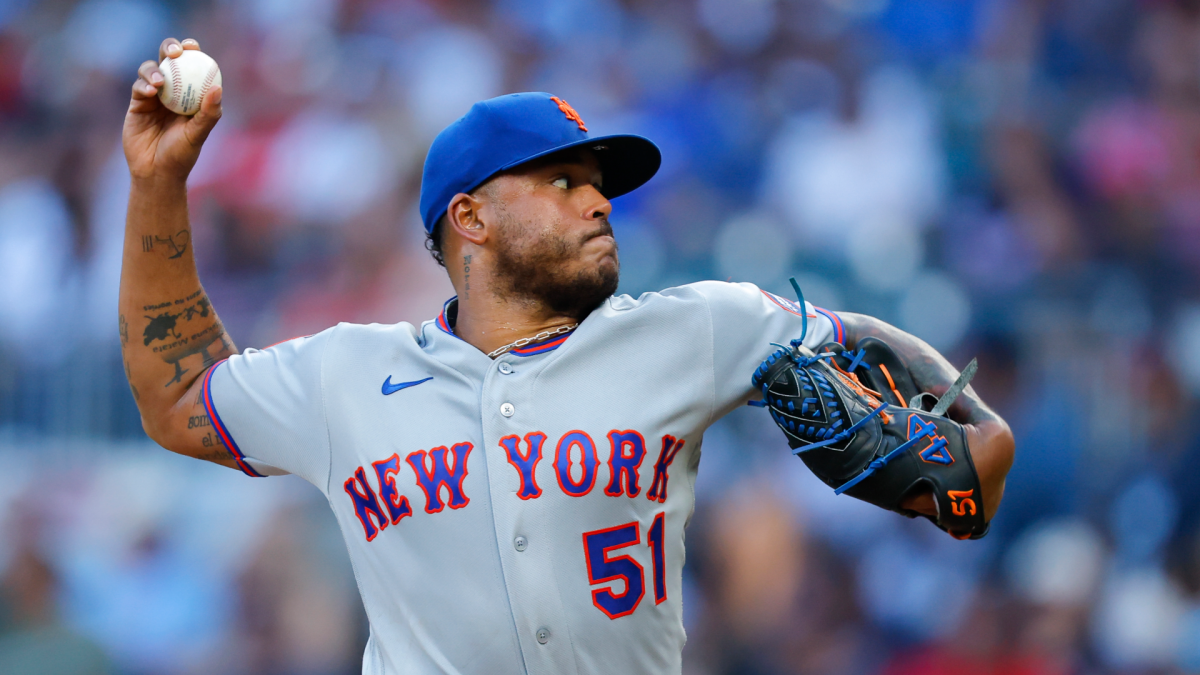
The Rays have officially acquired right-hander Freddy Peralta from the Mets in a trade aimed at bolstering their rotation before the August deadline. Tampa sends back minor-league prospects Aidan Smith, Emilien Pitre, and pitcher Gary Gill Hill—a modest haul that signals New York's desperation to move payroll. Peralta, 30, joins a Tampa rotation anchored by Shane McClanahan and Drew Rasmussen as the team attempts to defend a 3.5-game AL East lead over the Yankees heading into the final two months.
But the underlying mechanics of this trade cut against straightforward optimism. Peralta's 2026 season has been undeniably ugly: a 4.99 ERA with a 1.48 WHIP across 113.2 innings, marked by 48 walks and just 113 strikeouts. His walk rate has ballooned and his strikeout rate has compressed relative to his established baseline—this is not a pitcher suffering from sequencing noise or bad luck. Last season in Milwaukee, Peralta finished fifth in NL Cy Young voting, which provides the pedigree argument: postseason experience, durability (he takes the ball every fifth day without incident), and a track record of performing in high-leverage October games. The Mets dealt him believing a fresh environment and lower-stress situation might reset his mechanics or command. That's the implicit wager in any mid-season pitcher trade: that context overrides the underlying decline.
What makes this trade analytically revealing is what it tells us about Tampa's true belief system. The Rays missed out on Tarik Skubal and didn't chase spending aggressively at the top of the market; instead, they pivoted to a reclamation play on a pitcher whose strikeout rate and walk rate have both deteriorated. The message is pragmatic: they're betting that Peralta's postseason pedigree and mechanical stability (he doesn't walk eight guys in an outing; his 3.76 BB/9 is high but not chaotic) matter more than his 2026 velocity or spin-rate data suggests they should. In a compressed playoff series, a pitcher who takes the ball every fifth day and has thrown 1,300+ innings of MLB baseball carries institutional value that regular-season metrics alone don't capture.
For prop bettors, this creates a short-term overshoot opportunity. Peralta's next start—whenever he toes the rubber for Tampa—will likely see the market price him based on his Mets tape, not his Rays role. His strikeout prop will probably land at a number reflecting his 2026 K/9 rate of 8.96, which is historically low for him. However, the Rays will place him in a rotation designed to suppress run production through soft contact and ground balls, and he'll face lineups that are fundamentally different from NL East competition. Take unders on Peralta's strikeout total in his first two Tampa starts; the market will overprice his volatility because he's just been traded, and the early-August adjustment phase rarely accounts for scheme fit. Beyond those first two outings, expect his strikeout line to stabilize as the market reprices him correctly. This is a short-window edge that evaporates once the sample size grows.