Moniak's Fifth-Inning Breakthrough Signals Rockies Offensive Recalibration Against Quality Starters
By Ty Whitney ·
Mickey Moniak's 5-RBI outburst on his 28th birthday reveals how the Rockies' middle order finally adjusted to Mitch Keller's early command.
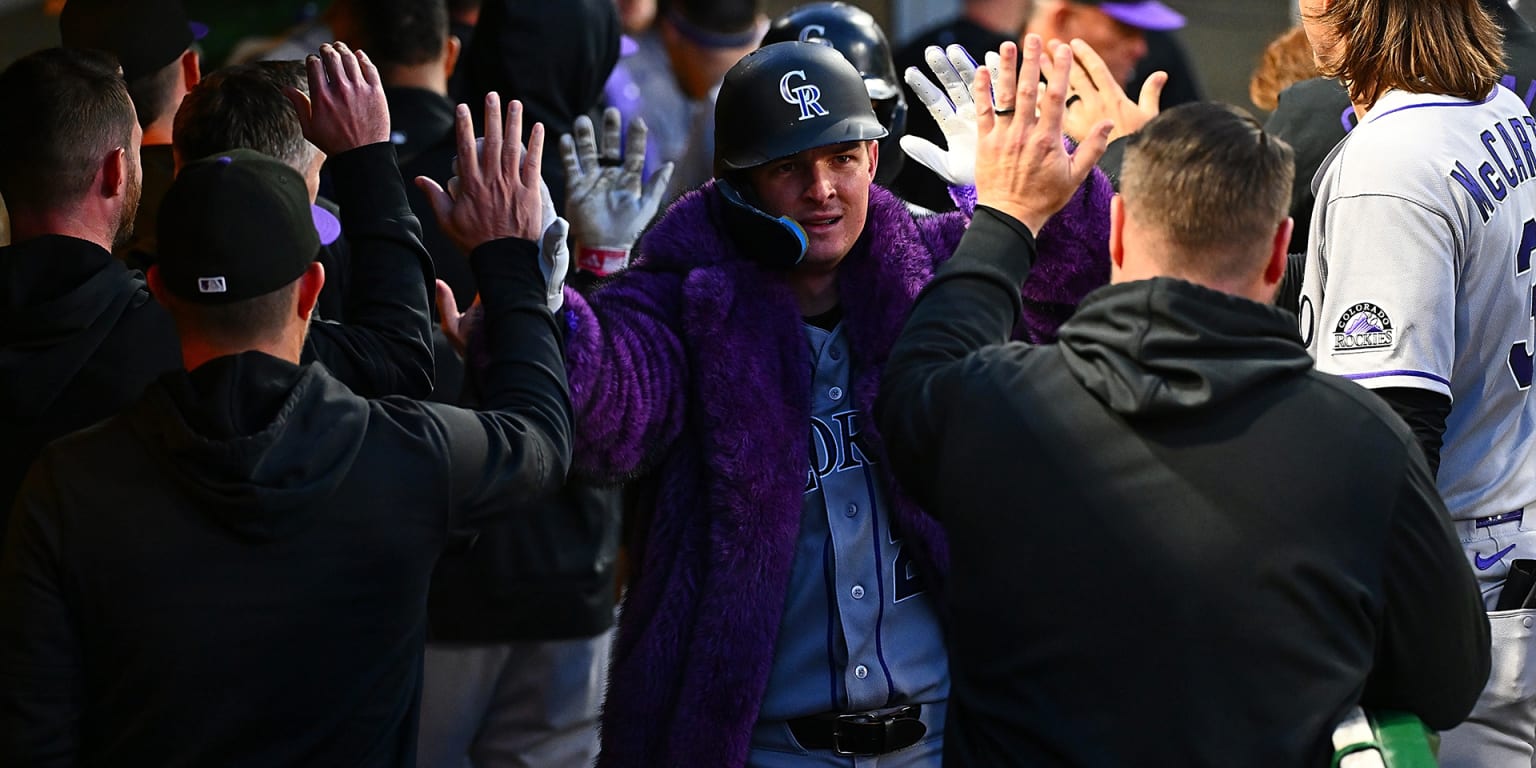
Mickey Moniak went 3-for-5 with a three-run homer, a double, and a two-run triple on Wednesday against Pittsburgh, driving in five runs in Colorado's 10-4 win at PNC Park. The birthdate performance came one hit shy of a cycle—the latest feat by a Rockies hitter in their modern era. But the raw stat line understates the more significant story: the Rockies' offense deconstructed a Pirates starter who had dominated them through four scoreless innings.
Mitch Keller entered the fifth with a 2.87 ERA and a track record of stellar outings. He had held Colorado hitless and runless, keeping the Rockies trailing 3-0. Then the order clicked. A lead-off single by TJ Rumfield (who later homered) opened the floodgates. Colorado sent five straight hits to the plate—singles by Johnston and Karros, an RBI double from McCarthy, and an RBI single by Tovar that tied the game. The sequence broke Keller's rhythm. By the time Moniak stepped in, the pitcher was no longer operating in rhythm. Moniak's three-run blast to right field was the punctuation mark on a six-run inning that flipped a deficit into a 6-3 lead.
Moniak's individual production is noteworthy: his 12th homer moved him into a tie for third in the National League in home runs at the time the Rockies' game concluded, and he increased his slugging percentage from .648 to .693 in the process. But more instructive for future matchups is how the Rockies executed their adjustment. Moniak later said the offense didn't panic, stayed composed through Keller's opening dominance, and worked counts to force mistakes. That discipline materialized as contact quality in the fifth—five hits generating six runs.
For betting purposes, this win underscores a critical pattern in Colorado's road trip. The Rockies entered Thursday's rematch at 4-2 on their previous road swing against the Mets and Reds, and they face a chance to finish this trip at .500 against a Pirates team that relies heavily on elite starter performances (Paul Skenes struck out 10 in eight innings on Tuesday). Moniak's hot streak—elevated power production and now proof of plate-discipline adjustment against quality arms—is a single-game spike born from a specific fifth-inning matchup collapse. That dynamic rarely repeats identically. However, Keller's inability to maintain his command once the order made contact is the kind of vulnerability that persists across a series. He gave up hard contact once the floodgates opened, suggesting that team totals against middle-tier Pirates starters (Keller, not Skenes) may be underpriced if books priced them based on the starter's season-long ERA rather than his susceptibility to compact offensive sequences.
The Rockies' willingness to stay engaged through early scoreless baseball and then pounce on a tired pitcher in the fifth inning is repeatable. Single-game offensive explosions typically don't transfer, but the mechanism—adjusting to a starter's early effectiveness, then hunting mistakes once command slips—carries forward into the Dollander vs. Pirates matchup on Thursday. Moniak's specific line (3-for-5, 5 RBIs) will regress. The team's offensive architecture against competent but not elite starters will not.