Daylen Lile's Two-Homer Night in Cincinnati Signals Real Prospect Maturation, Not a Breakout Moment
By Erik Schwartz ·
A 23-year-old outfielder hits two home runs in front of family, but the tape suggests sustainable power development—not a single-game spike worth chasing.
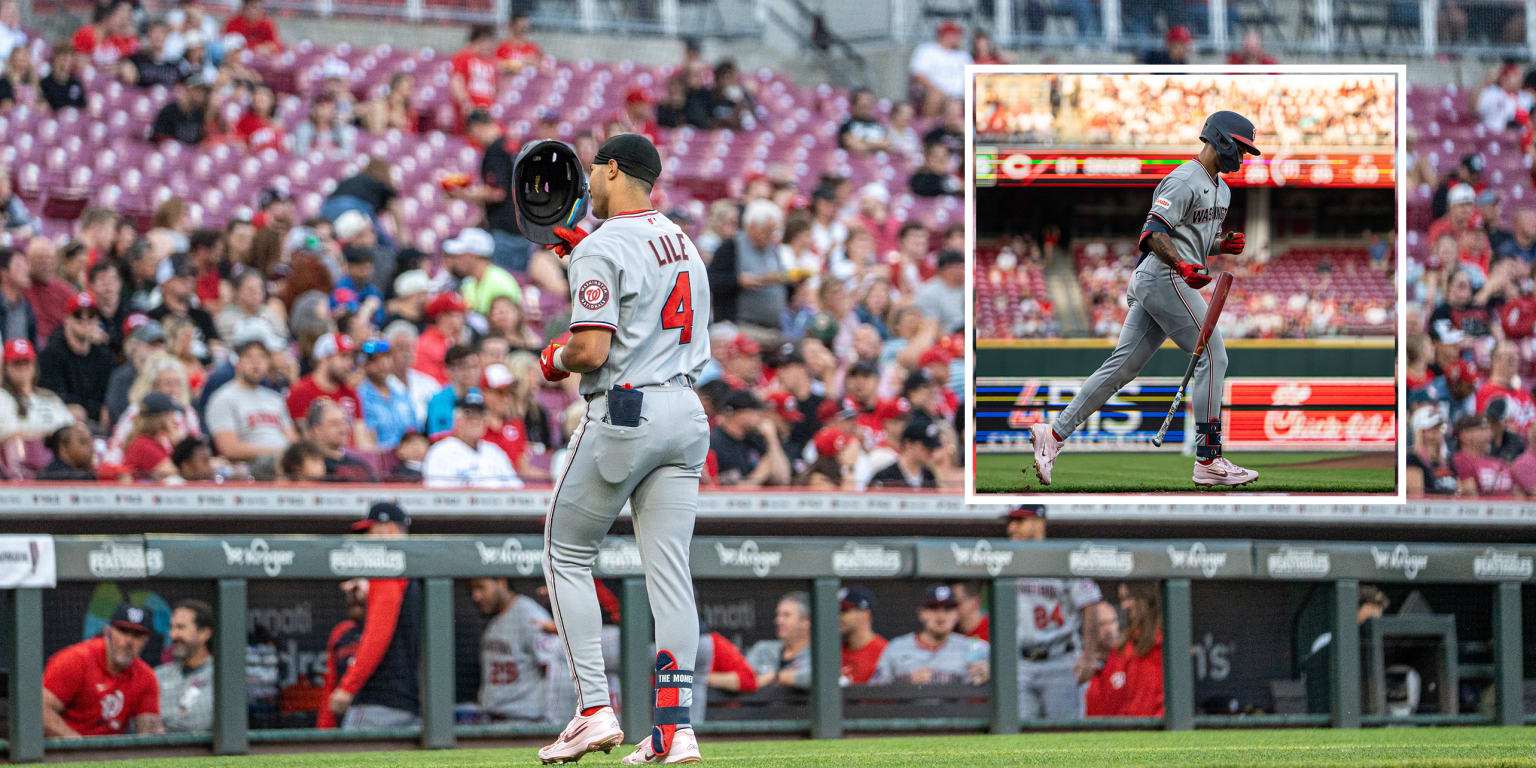
Daylen Lile launched two home runs in the Nationals' 10-4 win over Cincinnati on Tuesday, including a 429-foot bomb at 109.2 mph—his hardest-hit and farthest batted ball of his young career. The moment carried obvious emotional weight: 70-80 family members and high school coaches packed Great American Ball Park, only two hours from his Louisville, Kentucky hometown, to watch the second-round 2021 draft pick in his first MLB game in the region. Manager Blake Butera described seeing Lile's face light up as he looked toward his family section in the stands.
But beneath the narrative sits a more instructive data point for prop bettors: Lile's power profile has been building steadily across his minor-league progression. His 105.7 mph first-inning solo shot off Brady Singer and the subsequent three-run 109.2 mph blast weren't anomalies—they reflected an outfielder who has consistently shown 95th-percentile exit velocity potential in controlled settings. Coming into the game, Lile carried a 31-percent strikeout rate across limited MLB exposure, typical for a young prospect adjusting to big-league fastballs. The real story isn't the home run total; it's that both came against right-handed pitching and landed in the upper tier of his exit-velo distribution.
For prop modeling, this matters because single multi-homer games in a player's first 50 plate appearances are routine variance, not signal of a new floor. The book will almost certainly price Lile's next home run line higher tomorrow and the remainder of the series, overweighting the Louisville crowd effect and the emotional boost. That's the overcorrection window. If you're monitoring his home run props—say, over 0.5 HRs at -110 or better—expect the line to tick to -140 or worse by Wednesday's first pitch. The underlying power (hard contact, swing plane, age 23) is real and durable; the single-night bounce isn't.
Lile's pitcher selection in this game also matters. Singer (92.4 average fastball) and Mey (91.8 average) sit in the lower half of MLB fastball velocity distribution. Against stiffer velocity and better movement curves in rotation-topping starters, his strikeout rate will likely hold closer to 30 percent and his home run distance average will compress. The Reds' somewhat pedestrian stuff doesn't represent his upcoming matchup environment. Expect his hitting props to compress once he faces a Gerrit Cole or Sonny Gray type; the line adjustments after this game may create a short window to fade overs on his isolated power metrics for the next week or two, until the market resets baseline expectations.