Fisher's First Save Plants Blue Jays Bullpen Depth Flag
By Erik Schwartz ·
A 25-year-old reliever with a 30% whiff slider just completed his first career save against Baltimore's power lineup, signaling Toronto's closer situation has shifted.
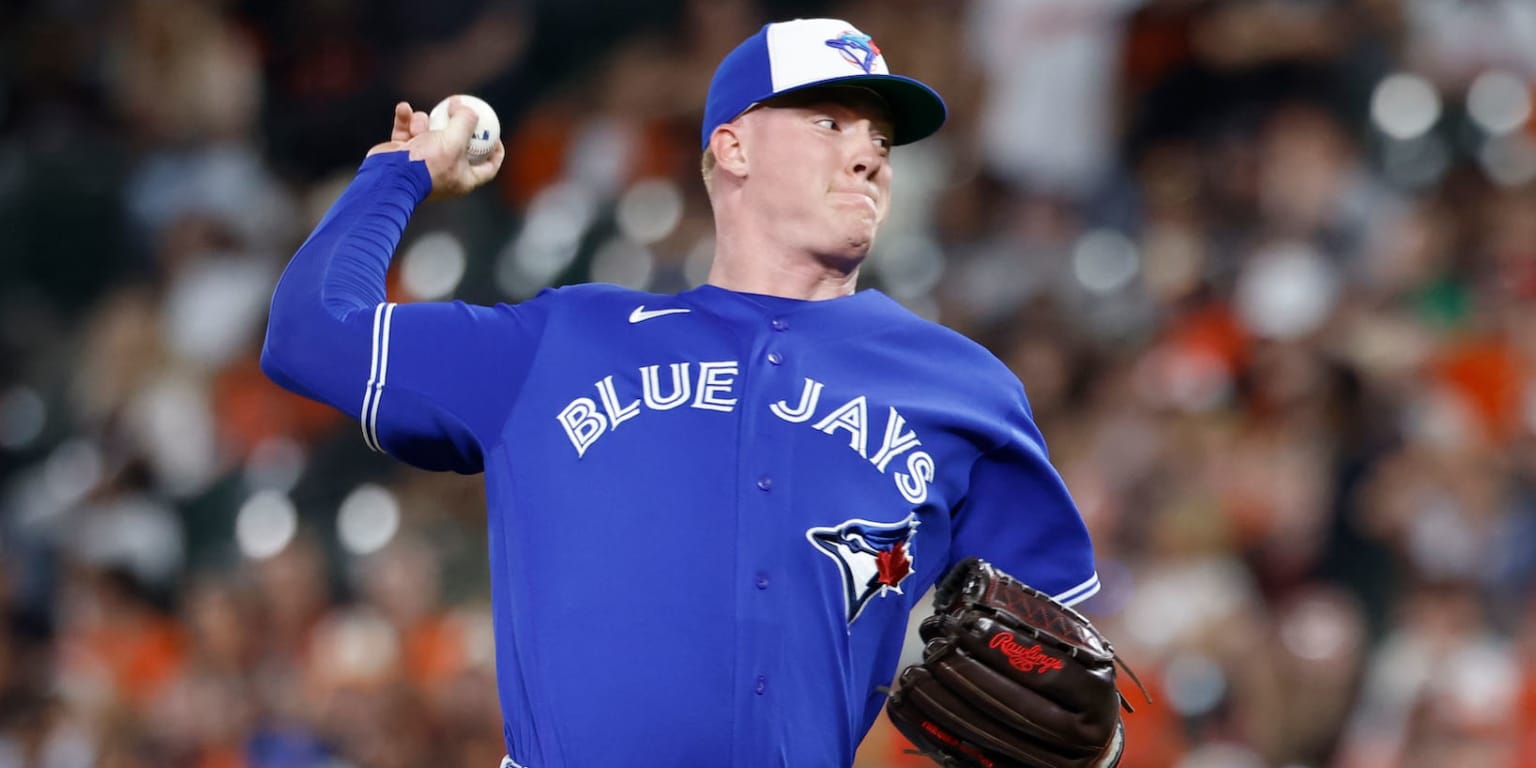
Braydon Fisher notched his first MLB save Friday night as the Blue Jays rallied from a 5-0 deficit to beat the Orioles 6-5, with closer Jeff Hoffman unavailable. The 25-year-old entered the ninth with the game on the line against one of baseball's most dangerous lineups—Baltimore had already homered three times—and delivered a clean inning: a pair of flyouts, a ground ball, and a chase-and-grounder from two-time All-Star Adley Rutschman on an 0-2 curveball that sealed the win.
Fisher's path to closer minutes reflects Toronto's internal depth calculation. He's logged 30 appearances in 2026—the most of any Blue Jays reliever—working as an opener, a setup arm, and now a closer, posting a 2.48 ERA across all roles. His slider carries a 30.9% swing-and-miss rate, elite territory for a power pitch. Manager John Schneider highlighted Fisher's composure: even after an error prolonged the Orioles' ninth-inning threat and put Rutschman in the box with the game hanging, Fisher didn't wilt—he stayed locked on the next pitch, not the scoreboard.
The save itself matters less than what it signals about closer usage going forward. With Hoffman serving as the primary closer, Fisher's demonstrated ability to handle high-leverage ninth-inning situations against live bats becomes a genuine option for Schneider on days when Hoffman is unavailable or overworked. Fisher admitted his heart rate spiked when he learned pregame he'd get the save opportunity, but that volatility tends to compress with repetition. The next save situation will feel less foreign.
For bettors, Fisher's emergence changes the texture of Blue Jays bullpen props and leverage metrics. If Fisher is now a secondary closer capable of eating high-leverage innings, Toronto's relief ERA and team total modeling shift. On nights when Hoffman gets rest or when the Blue Jays find themselves in late-inning trailing scenarios, Fisher becomes a key variable—one with a slider that hitters can't consistently lay off. Look for his leverage usage to climb over the next two weeks; markets have been pricing Toronto's closer depth as a single-arm operation (Hoffman), but Friday proved it's at least a two-man rotation. That redundancy typically reduces variance in late-inning outcomes and can suppress totals when weaker hitters face a competent secondary closer instead of a true closer in save situations.