Jared Jones Returns With Velocity But Without Command: Pirates' Right-Hander Flashes Ceiling and Risk in First Start Since UCL Surgery
By Erik Schwartz ·
Twenty months after Tommy John surgery, Jones threw triple-digit heat but couldn't control it, striking out six while coughing up five runs in 4⅓ innings—a reminder that velocity alone doesn't equal pitcher reliability.
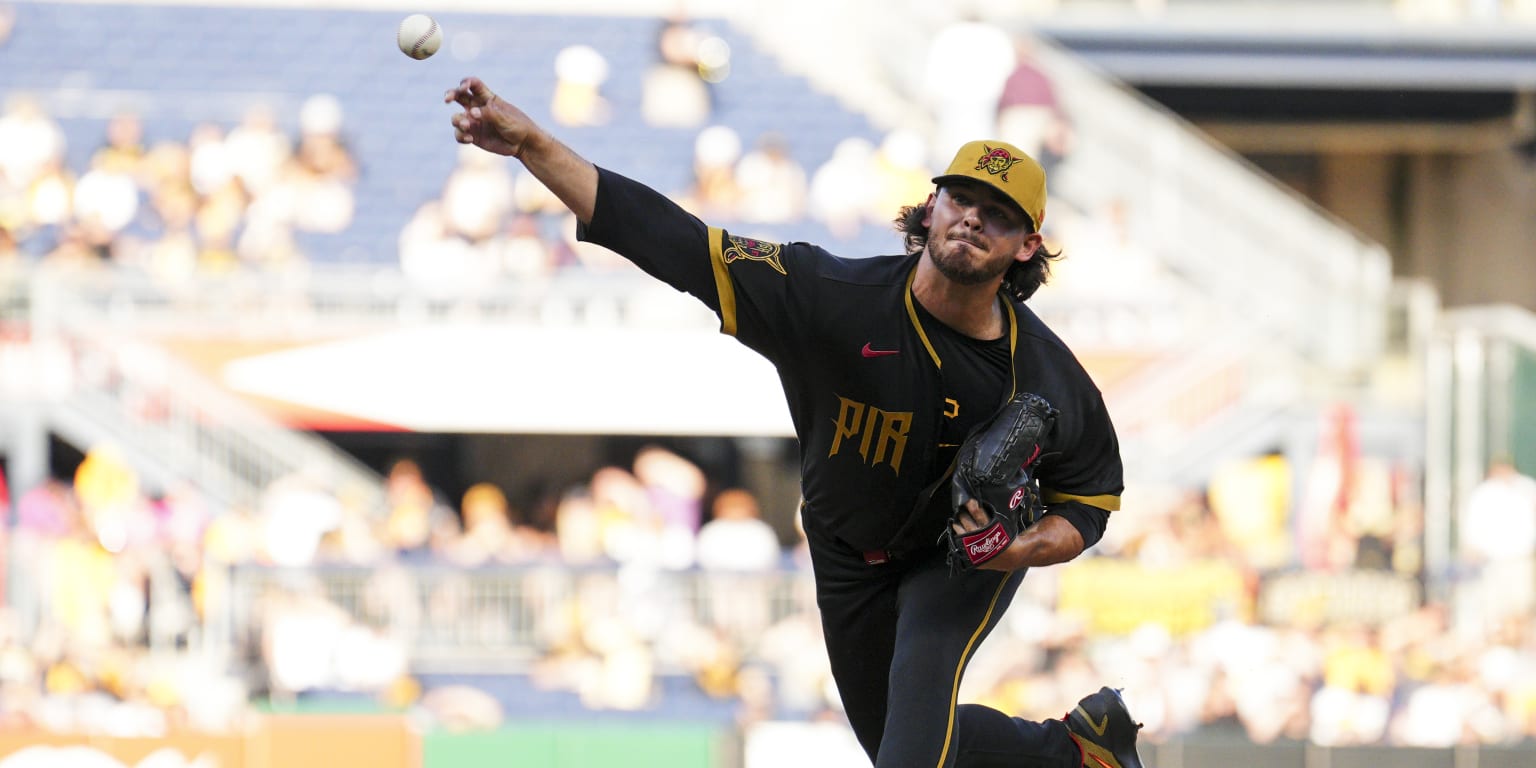
Jared Jones opened his return to the Pirates rotation Friday against Minnesota by throwing nine consecutive fastballs at 100 mph or higher, the first nine pitches of a start he hadn't thrown since September 2024. The velocity was unambiguous: he maxed out at 101.5, his arm fully recovered from the UCL reconstruction. But command was another story entirely. Over 4⅓ innings, Jones allowed seven hits, five runs, and walked two—a 77-pitch outing that exposed the gap between raw stuff and functional control.
Manager Don Kelly had prepped the pitcher for exactly five innings if circumstances permitted. Jones didn't make it past 4⅓. In the second inning alone, he loaded the bases with no outs on a single and two walks before striking out Luke Keaschall; Tristan Gray's two-run single followed. The third inning brought Trevor Larnach's two-run shot off a 98 mph fastball into the Allegheny River—the fastest pitch anyone has homered on all season. That swing underscores a brutal MLB reality: triple-digit fastballs without pinpoint accuracy become batting practice. Velocity is a table stake for a pitcher returning from major surgery, not a finish line.
What's worth watching is Jones' pitch mix evolution. Last season, he ran a 65-35 split between fastball and slider. Friday he deployed slider only 25% of the time while introducing a curveball at 19%—nearly double his 2024 rate. That suggests the Pirates' coaching staff is building him back methodically, adding secondary pitches to reduce fastball dependency and the early exit rate we saw. The strikeout rate (six K in 4⅓) is encouraging in isolation, but swallowing five runs before the fourth inning tells you he's operating on a thin margin between flashes of dominance and moments of exposure.
For bettors, the takeaway hinges on patience and sample size. One start off 20 months of inactivity is noise—Jones could develop into a reliable mid-rotation arm as command returns through his next three or four outings, or the control issues could persist as a post-surgery signature. The Pirates likely won't push him hard this early; look for a restricted workload (sub-80 pitches, 5-6 inning cap) across his next few starts. That cap fundamentally changes his strikeout prop profile: fewer innings pitched means lower volume thresholds and reduced leverage spots where he might dial in more focus. His K/9 may look elite on paper (12.4 through 4Ⅷ innings), but that's a mirage built on a compressed sample where he was throwing heat with reckless abandon, not precision. Markets will chase the velocity story; the edge is in fading strikeout props for the next 2-3 starts until innings rise and command stabilizes.