Chase Burns's Two-Year Arc Redefines Pitcher Development—and Betting Volatility
By Erik Schwartz ·
From second-overall pick to All-Star Game starter in exactly 24 months, Burns has compressed a trajectory most arms never complete, forcing sportsbooks to recalibrate strikeout and team-total pricing around a pitcher still learning his craft at the highest level.
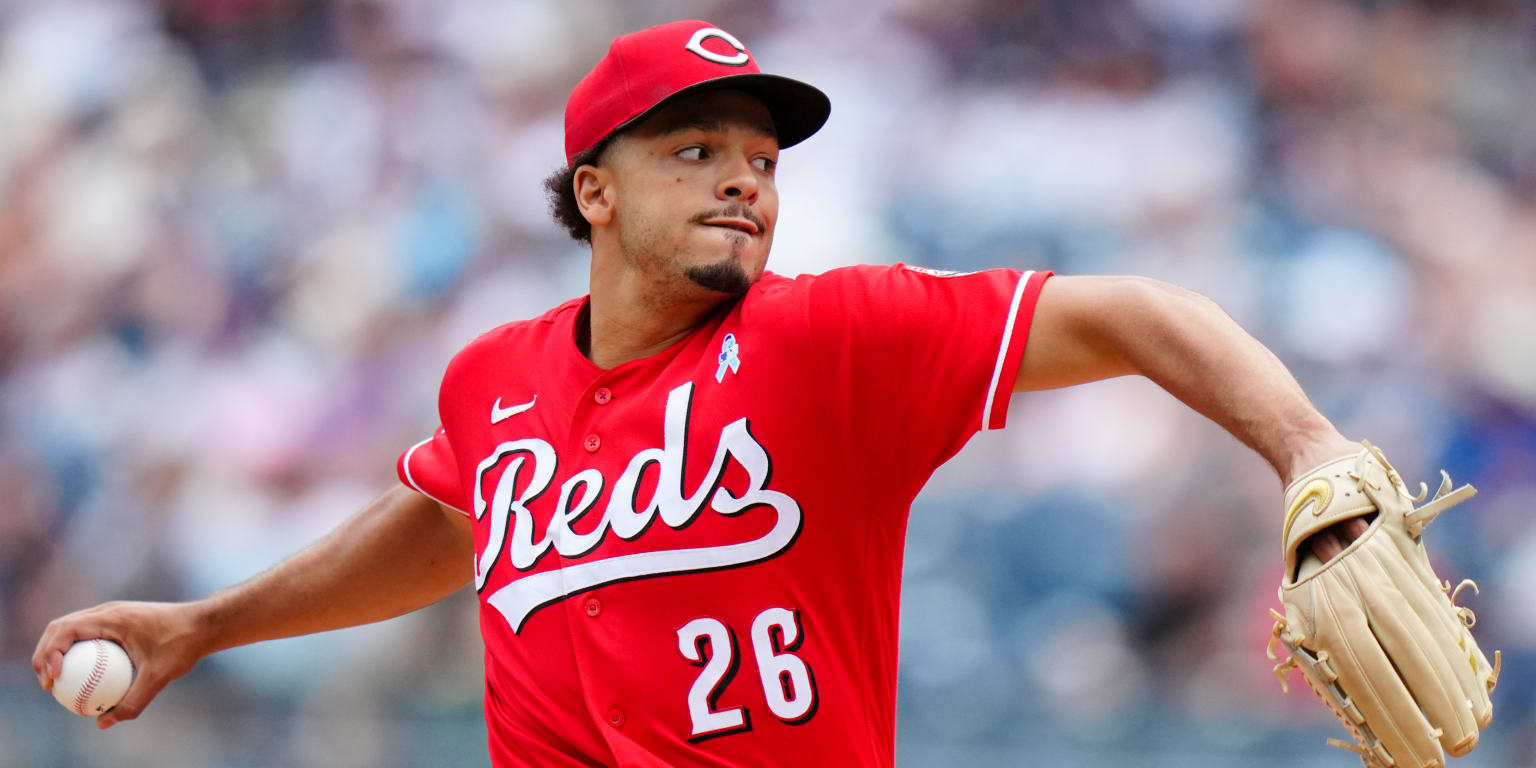
Chase Burns takes the mound tomorrow night at Citizens Bank Park as the Cincinnati Reds' representative in the 2026 All-Star Game—exactly two years to the day after being selected second overall in the 2024 MLB Draft. That symmetry masks the real story: Burns did not throw a competitive pitch in professional baseball until June 2025, has now assembled a 10-1 record with a 2.40 ERA across 17 starts this season, and was selected to the Midsummer Classic despite a workload trajectory that would have been unthinkable five years ago.
The compression of pitcher development timelines is real. Per Elias, only five pitchers since 2006 have reached the All-Star Game within two years of being drafted—Tim Lincecum, Aaron Crow, Chris Sale, José Fernández, and Paul Skenes. Burns joins that club at 23 years old. But his path carries unique volatility. He did not pitch as a pro in 2024. He made only 13 Minor League starts before his June 2025 major-league debut, in which he struck out his first five Yankees batters. He then pitched exactly six innings across his entire debut season—twice—while battling a right flexor strain and ending up in the bullpen for October. His 2025 line read 0-3, 4.57 ERA over 13 games. That was the pitcher the Reds built around for 2026.
The pivot happened in Spring Training. Cincinnati shortened Burns's camp progression, deliberately "deloading" him to develop better between-start recovery protocols and flexibility routines. The rotation cratered early: Hunter Greene and Nick Lodolo opened the season injured, Rhett Lowder joined them in May. Burns became the beacon precisely when the team had no alternative. In 17 starts through early July, he has allowed 2.40 runs per nine innings on a 10-1 record—elite efficiency for a pitcher 14 months into his professional career. The strikeout rate has climbed. His early-season whiff totals stabilized as his workload did.
That stability matters to the betting market, but differently than recency might suggest. Burns's strikeout props have moved sharply upward in recent weeks—books have adjusted aggressively to his mid-season efficiency run. The problem: there is zero institutional memory here. Burns has never pitched a full season, never navigated a stretch of 15 consecutive starts without injury, never faced the cumulative fatigue that separates a 97-inning burst from a 160-inning campaign. His 2.40 ERA sits 0.80 runs below his debut-year mark—an enormous jump—but also depends entirely on a workload his arm has never sustained. Reds pitching coach Craig Kimbrel managed Aroldis Chapman's early career; he knows young heat requires careful deployment. The market has priced Burns as established. The mechanics suggest he remains developmental, accelerated.
For bettors, the leverage lives in the extremes. Burns's strikeout totals have climbed to 8.5-9.0 range depending on matchup, a line that reflects his recent dominance but not the baseline volatility of a pitcher who has started 30 professional games total. Conversely, Reds team totals and win probability on nights Burns starts have compressed to reflect his elite recent ERA—yet a single flexor flare-up or a regression to mean strikeout sequencing rewrites the narrative overnight. The All-Star selection validates the short-term trajectory but not the long-term durability. That gap between market perception and mechanical reality is where the edge sits.