Ewing's Power Emergence Reshapes Mets Leadoff Profile
By Ty Whitney ·
A.J. Ewing's first career leadoff homer signals a velocity shift in his plate approach—one that could fundamentally alter how books price Mets early-inning run production.
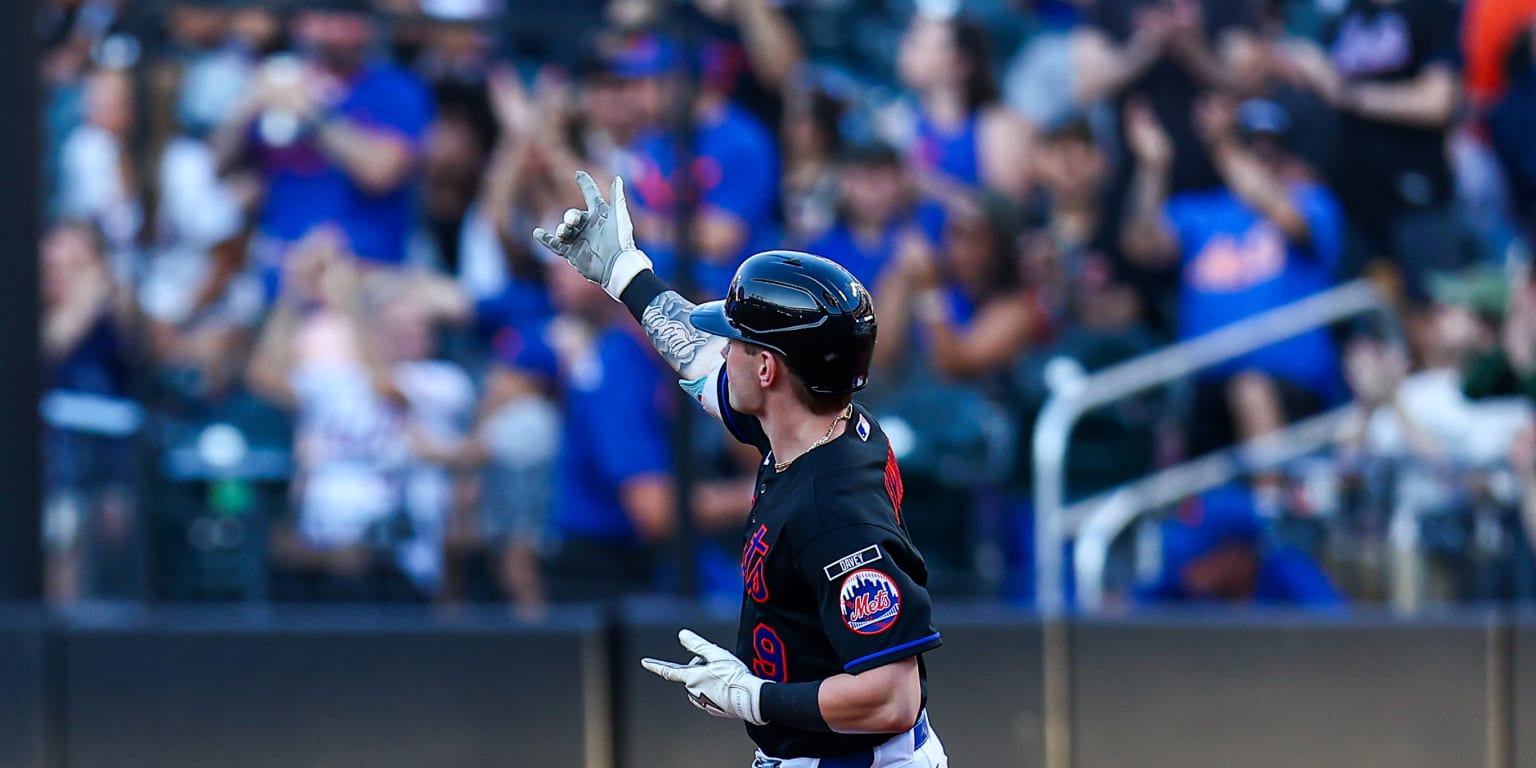
A.J. Ewing hit the first leadoff home run of his career Wednesday, launching a 420-foot blast off Royals opener Steven Cruz that set the tone in a 6-2 Mets win. The blast itself—tied for his longest of the season—arrives as part of a larger recalibration in how the 2026 version of Ewing operates at the plate. It's the seventh home run in his 53-game MLB tenure, but the context matters more than the raw count.
Ewing was brought to the leadoff spot specifically for his on-base and speed attributes—a classic table-setter archetype. His minor-league profile supported that read: one home run every 73.3 plate appearances in the farm system. But since reaching the majors in May, he's generating one every 29.3 plate appearances—a 150% increase in power frequency that defies the traditional scouting summary. That gap doesn't close on random variance alone. Ewing credits a comfort adjustment, a willingness to let line-drive intent produce pull-side elevation. When a leadoff hitter begins consistently getting the ball in the air on his pull side, the entire offensive calculus shifts—you're no longer pricing him as a speed-and-walk guy who happens to hit homers; you're pricing him as a multi-dimensional threat who can generate power.
The Mets' three-of-four winning stretch (now 2-1 in their last three since Ewing took the leadoff role full-time against righties) includes Wednesday's run-heavy game: a five-run eighth inning fueled by singles, a hit-by-pitch, and timely two-strike hitting. The book opened Mets team total at 4.5 for this game; they hit six. That's not a fluke—it's what happens when your leadoff hitter extends plate appearances. In his last six trips to the plate, Ewing reached base in all six, including the homer. Reached base means runners in scoring position, which means downstream runs.
Here's the prop angle: Mets team totals against right-handed starters have been priced at 4.5–4.7 runs the last two weeks, a number that assumes a leadoff hitter who manufactures at-bats but doesn't generate power. That model is now obsolete. If Ewing maintains even a 35-40 home run per 162-game pace (on track at his current 29.3 PA/HR), he's no longer a pure speed play; he's a run-initiator. Markets typically lag on role redefinition because it requires abandoning the player's pre-MLB identity. The Mets have signaled internally that they see him as more well-rounded—the team's decision to run him out regularly against righties and bat him leadoff is institutional valuation. Early numbers suggest that valuation is accurate.
The bet isn't that Ewing hits a homer every game—he won't. The mechanism is that a leadoff hitter who reaches base at 67% (6-of-9 in his last two games) and generates power from the pull side creates downstream value that a pure-speed leadoff hitter doesn't. That compounds across a lineup. Overs on Mets team totals at current 4.5–4.7 levels have margin because the pricing hasn't adjusted for a leadoff profile that now includes consistent power application.