Pérez's Perfect Game Pull Exposes the Marlins' Innings-Limit Tightrope—and Why It Matters for Team Durability
By Ty Whitney ·
Miami's decision to remove Eury Pérez at 92 pitches through seven perfect innings was medically defensible but tactically damaging, forcing a closer look at how workload management is reshaping the team's bullpen burden down the stretch.
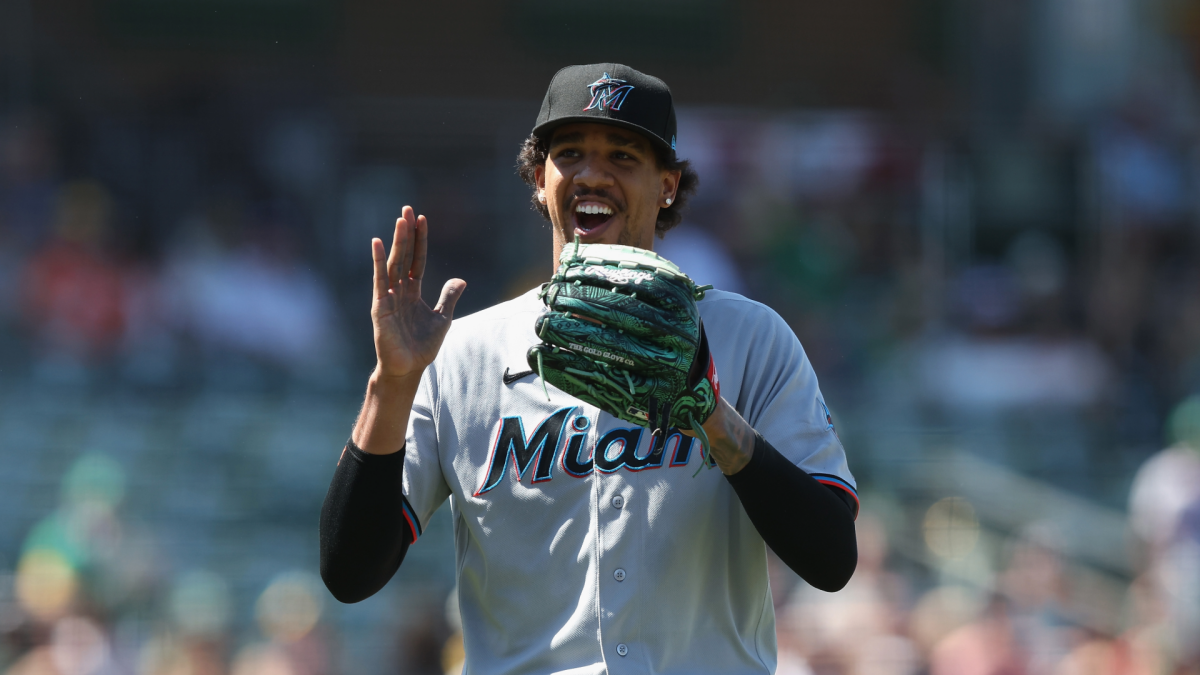
Eury Pérez carved out the best outing of his career Sunday in Sacramento—21 batters faced, 21 retired, eight strikeouts, only three batted balls hit hard—before getting yanked in the eighth with a perfect game intact. The decision cost Miami a shot at franchise history (the Marlins have never thrown a perfect game) and immediate credibility: relief pitcher Lake Bachar walked the first batter, gave up a single, and blew the no-hitter before recording an out. Then Bachar imploded entirely, surrendering five runs without registering a single out. That the Marlins won anyway, 9-5, is almost beside the point. The narrative—and the stat line—screams dysfunction.
But pull back the scope. Pérez has Tommy John surgery in his recent past (2024) and missed four weeks this season due to a hamstring injury. Sunday was only his third start since returning. His pitch progression has been conservative: 68 pitches (June 24), 86 pitches (June 30), 92 pitches (July 5). He has never thrown a complete game in 53 major-league starts, never gone beyond seven innings, and finished seven innings only twice before. Manager Clayton McCullough faced a binary choice: extend a pitcher still ramping up from injury risk with the bullpen available, or honor the workload ceiling and live with the result. From a player-health standpoint, the decision was sound. From a bullpen-management standpoint, it was catastrophic.
That contradiction frames the Marlins' actual problem. They're 49-42, in contention for a wild card and only 4.5 games back in the NL East after trailing by 14 games earlier in the season. June was dominant (20-6 record), and they just swept Sacramento. But the reliance on conservative starter innings limits—a necessary evil for a team managing injury recovery—means the bullpen absorbs more leverage situations than it may be built to handle. Bachar's implosion wasn't random; it was the cost of a system that assumes relief availability. When that assumption breaks down in a high-leverage moment, the math is brutal.
For prop bettors, this surfaces a durable edge. The Marlins' bullpen ERA should face upward pressure over the final two months precisely because starters like Pérez operate on shortened leashes. His next three or four starts will likely follow the same pattern: efficient through six or seven, pulled regardless of game state or performance, forcing the bullpen into leverage it may not be equipped for. Miami's team totals should edge downward on games where Pérez starts, particularly in close contests. If you're tracking bullpen-dependent offenses, the Marlins qualify now: their starters are managing toward injury recovery, not run prevention. The perfect game that wasn't is a symptom, not a surprise.