Emerson Hancock Is Emerging as Seattle's Next Rotation Ace — And the Unders Are Taking Notice
By Erik Schwartz ·
The Mariners keep manufacturing elite starters out of thin air, and Hancock's breakout has real implications for how you should be pricing Seattle's pitching lines.
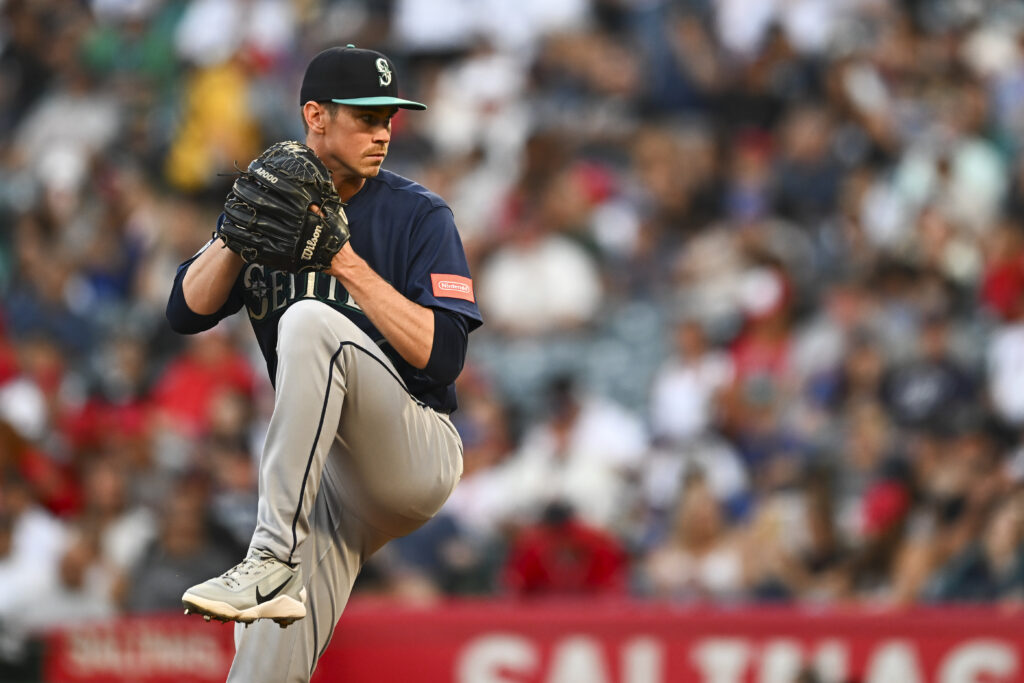
The Seattle Mariners have done it again. Per MLB Trade Rumors, Emerson Hancock — the sixth overall pick in the 2020 draft — is carving out his place in one of the deepest homegrown rotations in baseball, joining a staff that already boasts Logan Gilbert, George Kirby, and Bryan Woo, three starters who have each earned All-Star recognition and each carry a career ERA of 3.61 or better. That's not a coincidence. That's a pitching development system operating at an elite level.
What makes the Mariners' rotation model so replicable — and so dangerous for opposing offenses — is the organizational fingerprint on every arm they produce. Seattle consistently develops starters with above-average strikeout rates and elite walk suppression, a combination that doesn't just produce good ERAs; it produces low-variance outings that bettors often undervalue. Hancock fits the mold: a big right-hander with a power arsenal who has refined his command enough to miss bats without missing the zone. That's the Mariners formula, and it works.
The context here matters. Gilbert, Kirby, and Woo didn't arrive as finished products — each had a developmental arc that looked a lot like what Hancock is showing now. The Mariners have shown they can take high-ceiling arms and accelerate their timelines through in-house coaching and a pitching infrastructure that is quietly one of the best in the sport. Hancock's emergence means Seattle potentially has four legitimate frontline starters under team control, which is an organizational asset that rivals anything in the American League West.
From a betting standpoint, this is exactly the kind of story that the market is slow to price. When a new starter breaks out, sportsbooks often lag on adjusting team totals and first-five-innings lines until the sample is large enough to force recalibration. Hancock's strikeout and command profile suggests his K prop lines — likely sitting in the 5.5–6.5 range depending on the opponent — deserve a harder look on the over when he faces swing-heavy lineups. More broadly, Seattle's team totals on nights he starts should be approached with the same under-leaning logic that has made Gilbert and Kirby starts so consistently profitable on the low-scoring side.
The one legitimate caveat the market will cite is Seattle's offense, which has chronically underperformed relative to the pitching staff's quality. That's a real drag on moneyline value and run-line plays, but it's also what keeps Mariners team totals attractively priced for under bettors. A staff this deep, anchored by starters who suppress walks and generate strikeouts, will continue to keep opponents off the board — and that's the angle worth building around as Hancock cements his role.