Rutschman's Defensive Overhaul Lands Third All-Star Nod—And Reshapes Baltimore's Catching Math
By Ty Whitney ·
A mid-season stance adjustment has vaulted Adley Rutschman's throwing accuracy to career highs, signaling the Orioles' catcher has solved the durability puzzle that derailed 2025.
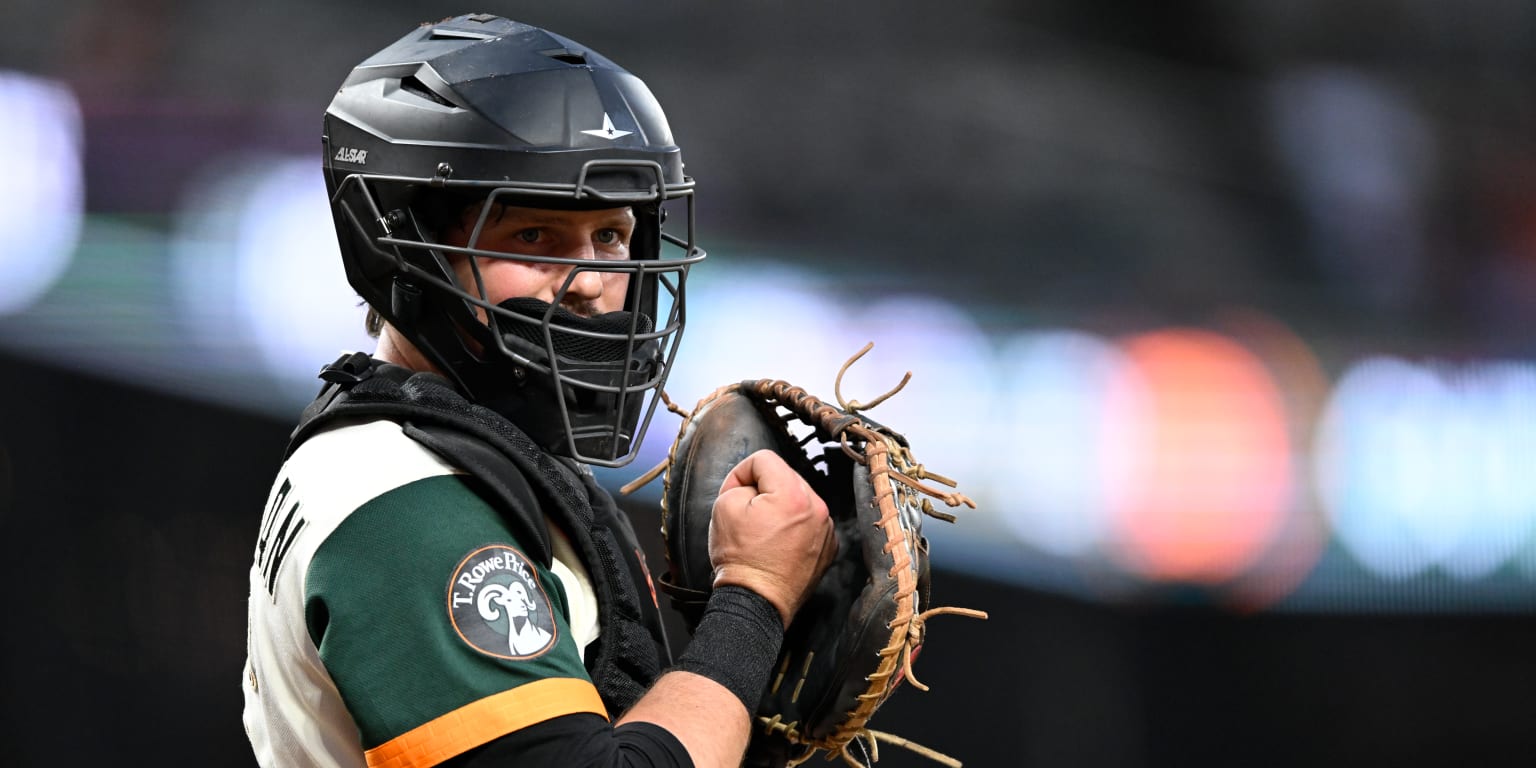
Adley Rutschman earned his third All-Star selection on the back of a defensive renaissance that reshapes how the Orioles' pitching staff operates. The catcher, who missed significant time in 2025 with two oblique injuries that limited him to 90 games, entered 2026 with a single objective: stay healthy and rebuild the elite form that defined his first half of 2024. Through 63 games this season, he's accomplished both. The pivot came during spring training when catching coach Joe Singley—a former college catcher and longtime student of the position—convinced Rutschman to adopt a right-knee-down stance, a technical adjustment that fundamentally altered his throwing platform and release mechanics.
The numbers validate the change. Rutschman has thrown out 16 of 43 potential base stealers entering Friday, a 37.2% caught-stealing rate that exceeds his previous career best of 30.6% set during his rookie 2022 season. More important, he ranks in the 97th percentile in both caught stealing above average and framing, per Baseball Savant. These aren't marginal gains. A catcher operating at elite efficiency behind the plate changes how opposing baserunners think and how a pitching staff attacks the zone. The improvement is structural, not a variance bounce.
Offensively, Rutschman is contributing at a respectable clip—.256 average with eight home runs and a .774 OPS through 63 games—which signals he's not sacrificing production to fund his defensive gains. That balance matters. A catcher who strikes out excessively while improving his pitch-framing profile often trades one problem for another. Rutschman's offensive steadiness, paired with his catching breakthrough, positions him as a full-value asset rather than a specialist play.
For bettors, the prop implications flow through Baltimore's pitching leverage. When a catcher improves his framing by 97th-percentile margins, umpires unconsciously expand the strike zone on his pitches—a well-documented effect in the literature. Orioles pitchers facing opposing lineups will see marginally more favorable calls on borderline pitches, which translates to lower walk rates and fewer deep counts. Additionally, Rutschman's 37.2% caught-stealing rate suppresses opposing stolen-base attempts; teams stop running when the threat of being thrown out climbs. These macro effects show up in team-total unders and pitcher strikeout props via the mechanics of fewer baserunners and more first-strike situations.
The durability question remains the core risk. Rutschman's 2025 was derailed by recurrent oblique issues—the second strain is a red flag for structural imbalance or training load problems. If the 2026 season stays healthy and he completes 120+ games, the defensive gains compound over time and the catching coach relationship with Singley sustains the trajectory. If another injury emerges, the improvement vaporizes and the offensive baseline becomes the binding constraint again. Monitor injury reports weekly; the edge depends entirely on staying on the field.