Dubón's Two-Out Hits Are a Real Edge, Not a Mirage
By PropBetEdge Editorial Team ·
Atlanta's utility man is crushing situational baseball at a rate that separates him from the league—and his overall line isn't reflecting the clutch wins he's delivering.
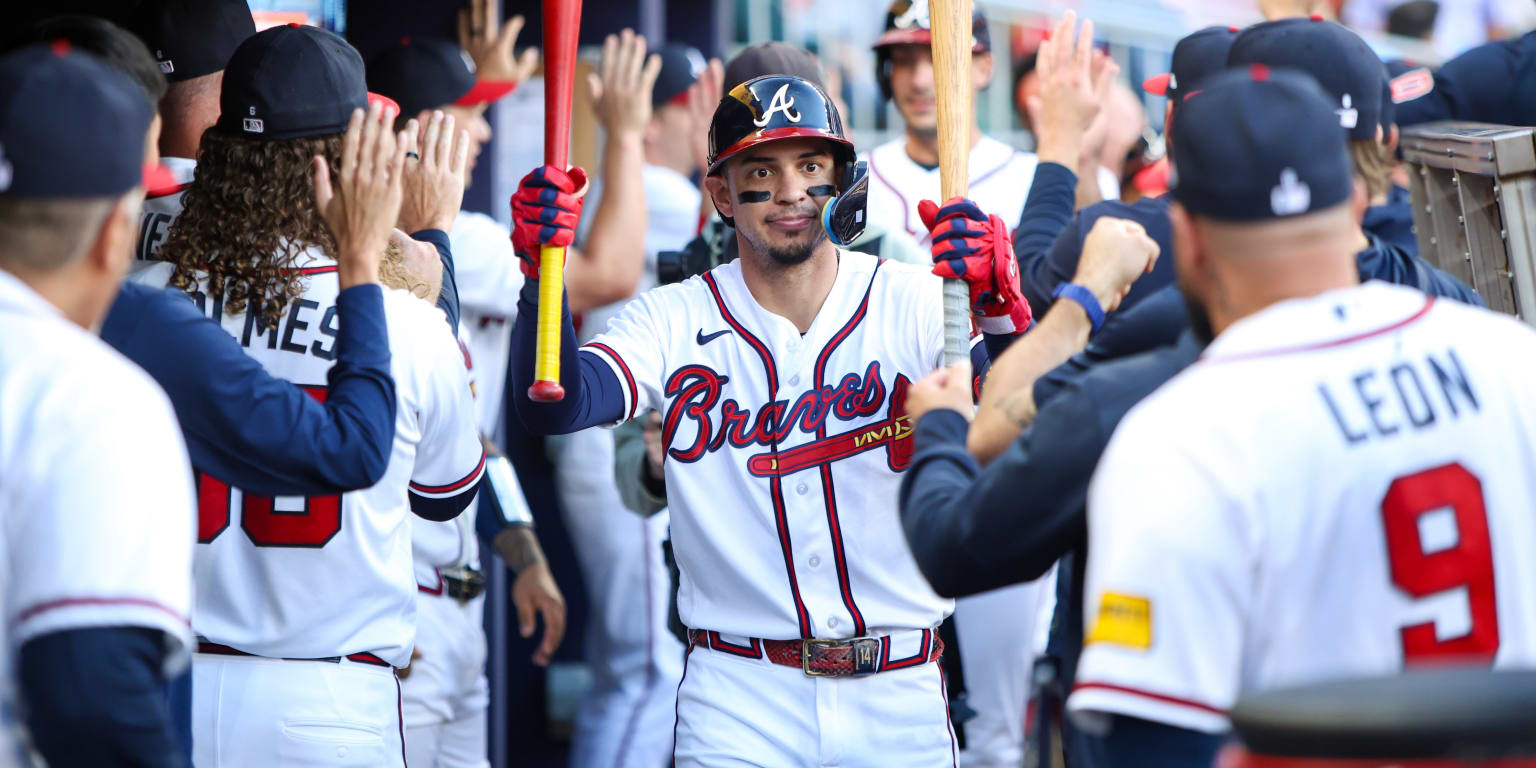
Mauricio Dubón stepped into the box in the third inning of Wednesday's Braves-Blue Jays matchup with two outs, runners in scoring position, and the game still tight. He left the yard. The three-run blast punctuated a 7-3 Atlanta win and cemented Dubón's emerging identity as a consistent situational bat—one the Braves have begun to rely on in high-leverage moments.
Dubón arrived in Atlanta from Houston in November as a known defensive commodity: two-time Gold Glove winner, versatile enough to play short, second, or third, the kind of player who stabilizes a clubhouse through professional at-bats and glove work. What's emerged over the first quarter of the season, however, is a hitter who thrives precisely where it matters most. He's hitting .440 (11-for-25) with two outs and runners in scoring position—second in MLB. With runners on in any configuration, he's at .305 (25-for-82). Strip away the runners, and the picture inverts: .214 (28-for-131) with bases empty. This isn't random variance or a small-sample mirage. Situational hitting patterns this pronounced persist because they reflect approach adjustments, not luck.
The mechanics are clear. Dubón tightens his pitch recognition and shortens his swing in two-out, RISP scenarios. He's hunting fastballs in zones where he can drive the ball rather than chasing. In clean-bases situations, pitchers attack the zone more aggressively, and Dubón's overall approach—a .249 average and .684 OPS—suggests he struggles against high-velocity stuff when he can't eliminate his chase instincts. The Braves, now 42-20 and positioned as World Series favorites, have internalized this split. They're likely giving him preferential at-bats in those high-leverage moments, which explains why his clutch hits feel almost scheduled.
For prop bettors, this creates a narrow but real angle. Dubón's RBI props in games where Atlanta is favored (which they almost always are) carry edge when he's likely to bat in the third inning or later—matchups where run-scoring opportunities cluster. His line against teams that pitch to contact and avoid strikeouts (like Toronto) should see tighter counts and more fastballs in the zone, playing directly into his strength. Over the next 10 games, watch for Dubón batting second or third; his placement in the order signals usage intent. Standard season-long hitting props undervalue him because they're dragged down by his empty-bases floor. But if you're building tournament stacks or single-game lineups (DFS), his situational floor in win scenarios is substantially higher than his overall batting line suggests.
The caveat: this edge is durable at the individual-at-bat level but volatile at the daily prop level. Two-out, RISP situations don't occur every game in equal frequency. If Atlanta gets blown out or leads by six runs late, Dubón's leverage moments vanish. The real edge isn't a season-long play—it's a game-construction read. Stack him in Atlanta wins where the Braves are chalky and in-game variance gives him chances to bat in scoring position.