Dubón's Two-Out Clutch Gene Exposes the Misiorowski Myth
By Erik Schwartz ·
The Brewers' historic ERA run crumbles against Atlanta's late-inning execution, and sharp books may be overweighting pitcher dominance in matchup props.
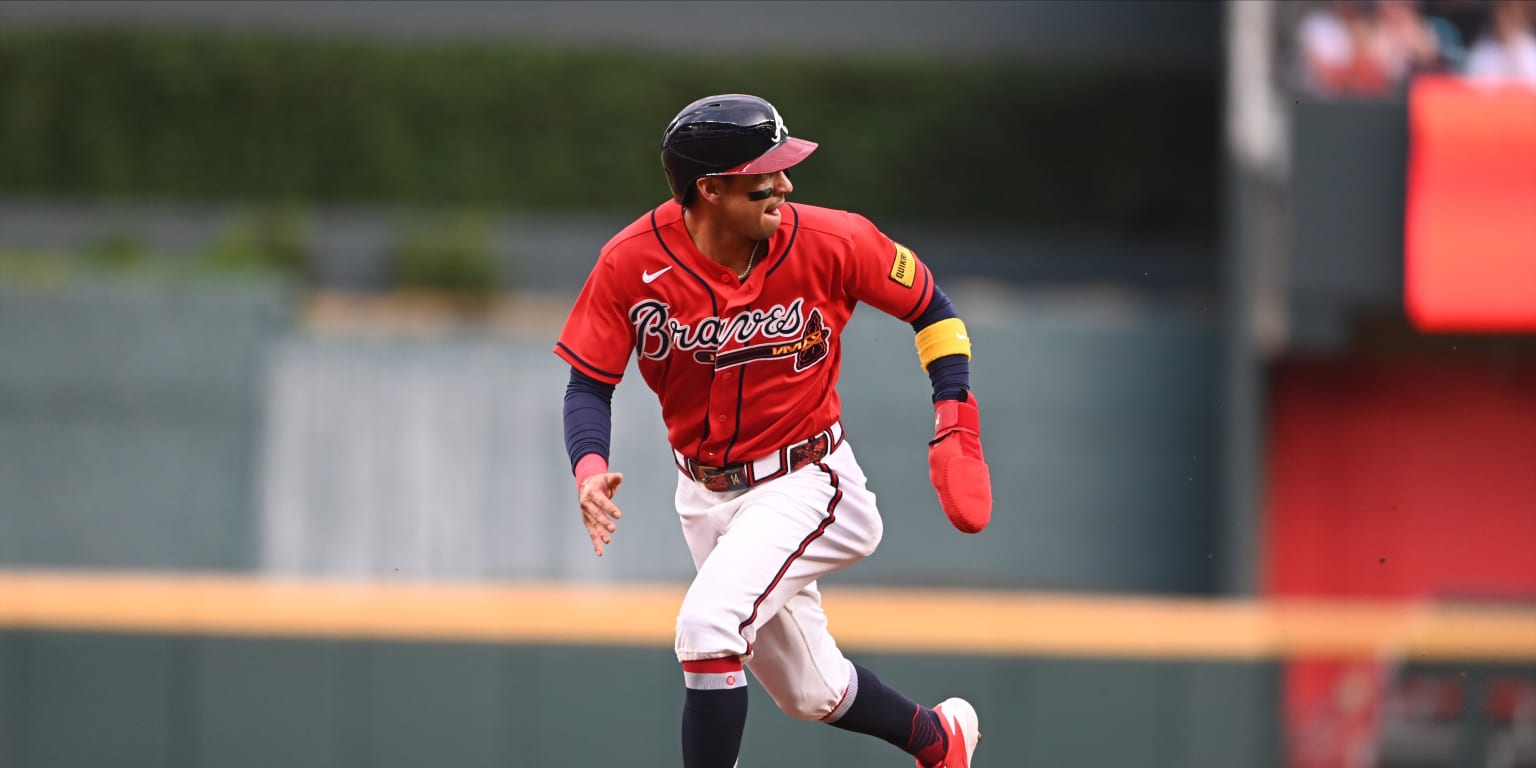
Jacob Misiorowski arrived at Friday's series opener at Truist Park with credentials that looked like a typo: 7-0, 0.17 ERA over his last eight starts, the lowest eight-start ERA in major league history dating back to 1913. Seven strikeouts. One run allowed in 54.1 innings. The Brewers' 24-year-old was throwing 103 mph on every third pitch. He was a talking point on SportsCenter. And he lost 3-2 to a Braves team starting Martin Pérez—a pitcher Atlanta had designated for assignment in April—missing Ronald Acuña Jr. and Michael Harris II from the middle of the order.
The collapse hinged on two structural vulnerabilities that Misiorowski's era-era had masked. First: he had never allowed a hit with the bases loaded all season until Mauricio Dubón laced one to left field with two outs in the sixth. Second, and more revealing, his strikeout total (7) was his second-lowest of the season. Against a Braves lineup that was already compromised by injuries and playing out of rhythm, Misiorowski didn't need strikeouts. He had been pitching in abbreviated appearances against lineups without the offensive structure to string together multi-hit innings. Friday exposed what happens when a pitcher's dominance rests on opponent weakness rather than stuff-driven execution. The Braves manufactured three hits total before the sixth inning. They didn't swing at bad pitches. They made him work longer, shortened their strokes, and waited for mistakes. Pérez, meanwhile, allowed one run over six innings—a straightforward, unremarkable performance that nonetheless won the game.
This matters for prop markets because Misiorowski's season-long ERA has become the baseline for projecting his strikeout prop lines and opponent team totals. Books have built lookahead pricing assuming his historic run extends into matchups against full-strength lineups. What Friday revealed is that his strikeout floor is considerably lower than his recent averages suggest when facing teams with runners in scoring position and disciplined approaches. The 7-K performance wasn't an outlier—it was a signal that his K-rate compresses against better contact hitters who refuse to chase.
Dubón's success in two-out, RISP situations (.382 AVG, 23 RBIs in 34 PA) isn't mystical; it's a reliable sample size at this stage. He's demonstrating the kind of plate discipline and pitch recognition that doesn't fade. The prop angle here is directional but grounded: fade strikeout overs on Misiorowski when he faces lineups that can construct at-bat plans against him. His ERA may stabilize at elite levels, but his K-rates are vulnerable to discipline and situational hitting. The Braves proved Friday night that historic ERA runs don't automatically translate to dominant strikeout totals against prepared hitters.