Betts' Lineup Drop Sparked 4-Hit Night, but Dodgers' Pitching Cost Them in Philly
By PropBetEdge Editorial Team ·
A move down in the batting order unlocked Mookie Betts' best swing in three weeks, yet the Dodgers' bullpen collapse in a 10-7 loss signals deeper offensive consistency questions heading into the stretch.
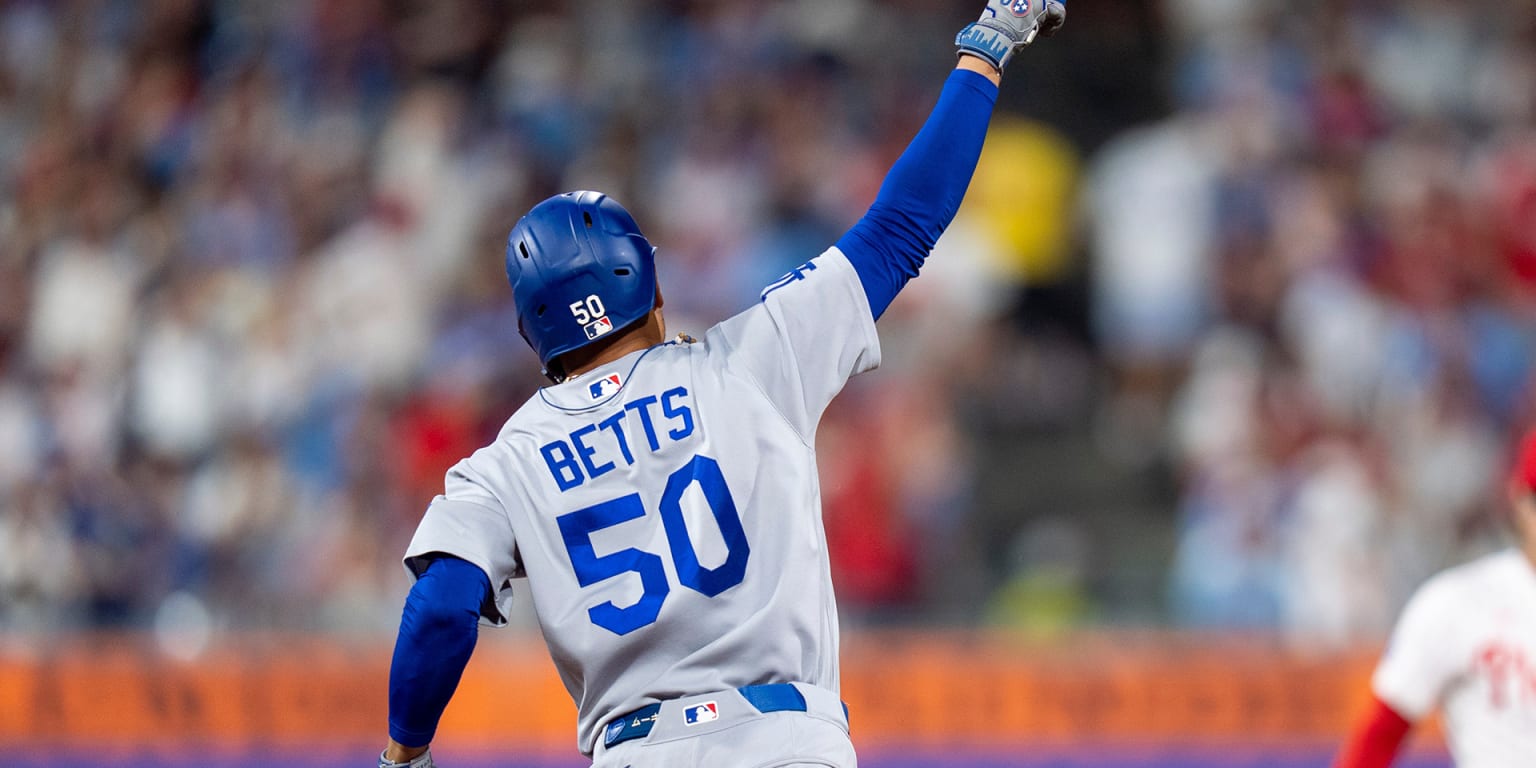
Mookie Betts returned to form Monday night against Philadelphia, collecting four hits including two homers after manager Dave Roberts dropped him to the fifth spot in the lineup. The demotion came in response to a rough July start—a stark contrast to a .375/.408/.653 slash line over a 17-game stretch ending July 2. Since then, Betts had managed only four hits in 11 games before the series opener, a stretch that invited lineup tinkering. The move worked. His 12th homer in the seventh and a two-run blast two innings later gave the Dodgers a jolt at Citizens Bank Park, yet Los Angeles still fell 10-7 in a game where the pitching staff's inability to locate proved decisive.
The loss itself tells a different story than Betts' performance. Starter Emmet Sheehan surrendered six earned runs over 5 1/3 innings, including two solo shots and a two-run blast to Trea Turner. The bullpen didn't steady things: Alex Vesia allowed a homer, and Landon Knack gave up two more in relief. Philadelphia stacked four runs in the second inning alone, and even after the Dodgers clawed back—using a Muncy pinch-hit double and an Andy Pages single aided by a Turner defensive miscue—they trailed by five entering the seventh. Betts' solo shot and later two-run blast made it a one-run game at one point, but the damage was already structural.
What's actionable here is less about Betts' single night and more about what his pre-July collapse and post-drop resurge tell us about lineup construction leverage. A .375 clip over 17 games followed by .267 over 11 games is a textbook confidence variance—the demotion functioned as a reset button, and early returns suggest it worked. Yet one four-hit game doesn't erase the trend. Betts has hit 13 homers in 86 games through July 20, a 19-homer pace over 162 games, which aligns with his career norms but doesn't suggest a breakout power month. More relevant: his ISO has compressed from .278 pre-July 2 to .182 post-that date (through Monday's plate appearances prior to the Philly game), a mechanical signal worth monitoring.
For prop bettors, Betts' home run total sits at an inflated number following Monday's two-bomb night—likely 5+ or 5.5 over the next three games at Citizens Bank Park. The Phillies' pitching has been vulnerable to the long ball (four homers allowed in one night), but that's a park effect and small-sample noise, not a sustained weakness. The real angle is his contact rate: entering the series, he'd struck out in four of his last 11 games and walked in only two of them, a 6.8% walk rate well below his season average. That compression in plate discipline—not his power—is what depressed his value. Monday's four-hit night partially reverses that signal, but one game doesn't reestablish a pattern. Any prop pricing that overweights the Philly game and assumes sustained aggression should be faded. Betts will produce value, but the mechanism is patience at the plate returning, not a power surge.