Sheets' Ninth-Inning Dagger Exposes Brewers' Closer Vulnerability—and San Diego's Clutch Upside
By Ty Whitney ·
With one out remaining, Gavin Sheets erased a shutout deficit with a three-run homer off Milwaukee's closer, exposing both Uribe's command issues late and the Padres' capacity to manufacture wins from nothing.
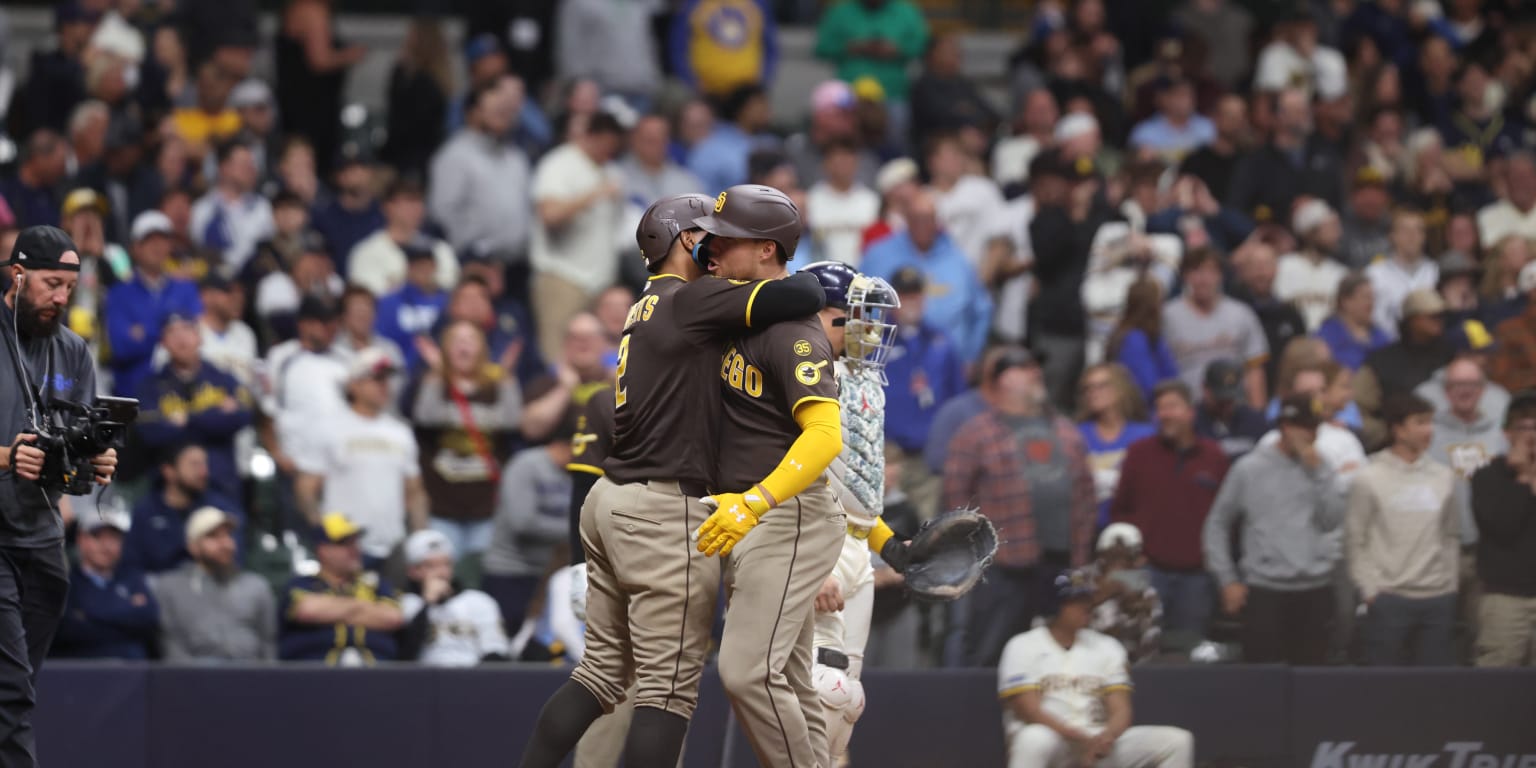
Gavin Sheets' go-ahead three-run home run in the bottom of the ninth inning off Brewers closer Abner Uribe delivered a 3-1 upset for San Diego on Tuesday at American Family Field. The Padres had managed no runs through 26 outs—a scoreless stalemate orchestrated by Brewers starter Jacob Misiorowski, who locked down seven innings. Miguel Andujar's pinch single and Xander Bogaerts' walk were the only cracks in Milwaukee's armor before Uribe's slider hung over the plate and Sheets deposited it over the right-center-field wall for his sixth home run of the season.
What made the sequence remarkable wasn't just the late-inning heroics; it was the second time in five days San Diego had stormed back from a scoreless deadlock with a single swing. Nick Castellanos did the same against the Cardinals on Sunday. For a slumping offense that had looked thoroughly neutralized for nearly three hours, the pattern suggests either improbable clutch variance or a deeper structural advantage—Padres hitters are getting their chances with runners in scoring position late, even when their overall offensive output appears dormant.
Milwaukee's fifth-inning run, meanwhile, came from the kind of small-ball execution the Brewers have built their identity around: Sal Frelick's single, Joey Ortiz's bunt, and a chain of ground balls that exposed defensive positioning. The Padres' transition of Fernando Tatis Jr. to second base has been mostly seamless, but on this occasion the nuance of the situation—hangman runners, force plays, throw angles—created just enough friction to prevent a double play. Milwaukee capitalized on that half-step of hesitation. It's a microcosm of how the Brewers operate: they don't need dominance; they need precision and your mistakes in sequence.
For bettors, the takeaway cuts two directions. On the surface, Uribe's meltdown in a high-leverage spot—hanging a slider with men on base—signals closer fragility. If San Diego faces Milwaukee again soon, Uribe's fastball/slider mix will carry scrutiny from sharp action. His command margin in the ninth inning is now a data point. But the Padres' ability to manufacture a win from a scoreless tie also hints at something tougher to quantify: this roster has enough contact and positional flexibility (Andujar, Bogaerts, Sheets in reserve roles) to create damage in bunches, even when they look outmatched. Michael King's 2.63 ERA anchors a rotation plagued by injuries to Pivetta and Musgrove; his ability to keep games one-run affairs creates the canvas for exactly this kind of ninth-inning reprieve. The next time San Diego is listed as a moderate favorite—not because their offense is explosive, but because their starter is steady and their closer is available—this tape should carry weight.
Sheets himself carries a secondary angle: he's now authored a walk-off homer at Petco Park and a go-ahead ninth-inning blast in Colorado this season, suggesting his late-game plate discipline is genuine, not noise. Reserve power hitters with clutch sequencing don't stay under-priced long once the pattern crystallizes, especially in a Padres lineup short on other sources of explosive upside.