Suárez's Ninth-Inning Blast Vindicates Reds' Power-Over-Contact Bet
By Ty Whitney ·
Cincinnati's designated slugger delivered the exact moment he was signed to provide, turning a ninth-inning collapse into a 9-7 win and signaling that clutch power in late innings remains underpriced in close games.
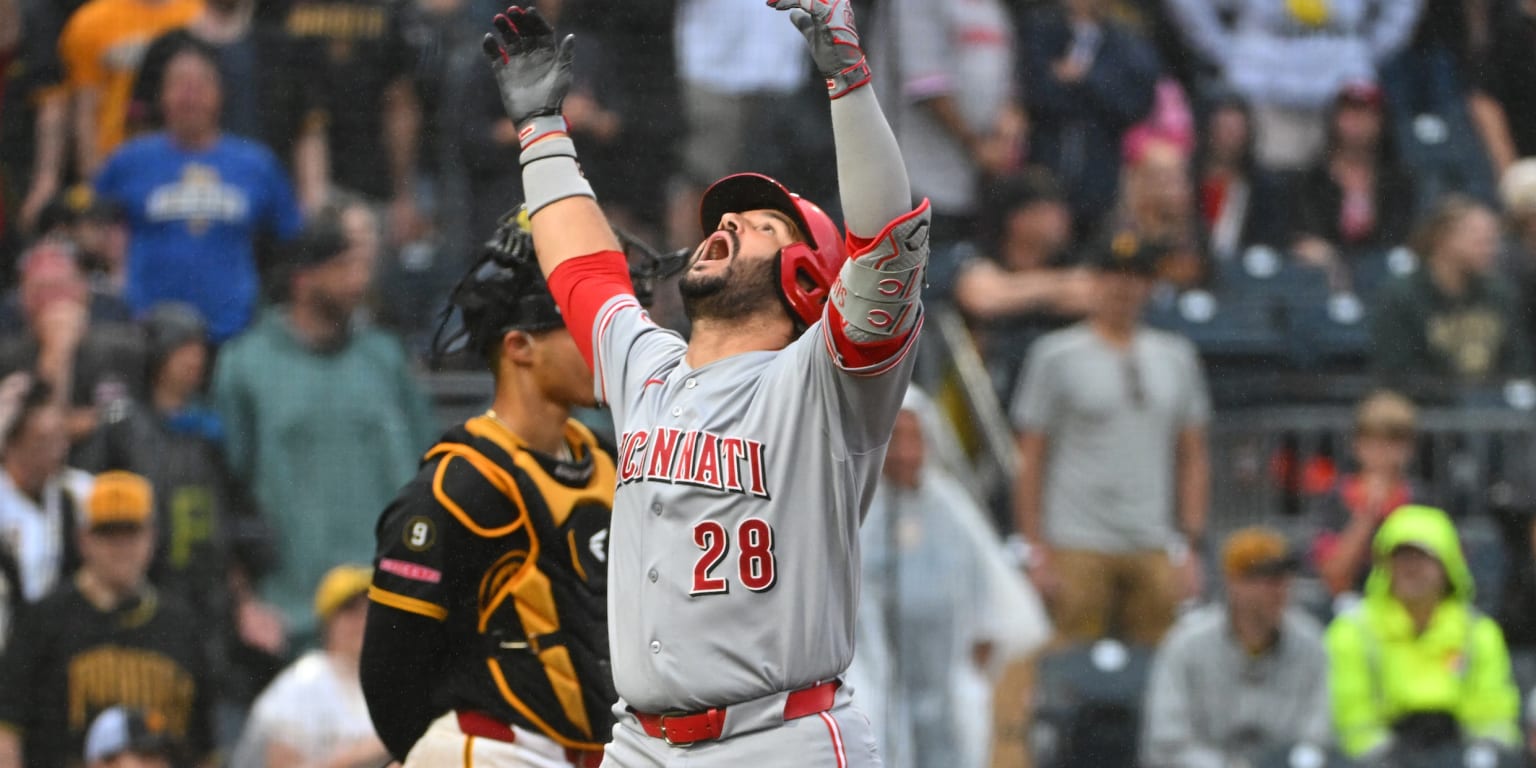
Eugenio Suárez, down to one strike with two outs and the Reds facing elimination in the ninth inning, drove a 2-2 sinker into the right-field bleachers at PNC Park for a three-run homer that lifted Cincinnati past Pittsburgh 9-7 on Saturday. It was his eighth home run of the season—and structurally, it was the moment the Reds organization had paid for when they acquired him.
Cincinnati's offense had been leaky all afternoon. The Reds built leads of 2-0 and 6-4, only to watch them evaporate. By the eighth inning they were tied 6-6 when Pirates pinch-hitter Esmerlyn Valdez sent a solo shot off reliever Caleb Ferguson to give Pittsburgh the advantage. The game had the texture of a coin-flip—two teams trading momentum in steady rain, neither capable of holding traction. That's when the Reds' ninth-inning sequence unfolded: Edwin Arroyo's leadoff single, Elly De La Cruz's walk, Sal Stewart's momentum-killing double play, JJ Bleday's full-count reprieve. Then Suárez, facing Gregory Soto on a sinker, went the opposite way.
The larger story here traces Suárez's place in the Reds' roster construction. He was brought in as a high-leverage power bat—a player designed to convert plate appearances into home runs in moments when the game is still in balance. His 8 homers through late June reflect a predictable power profile: not a league leader in volume, but positioned to fire in high-leverage spots. This victory reinforces why teams pay for that specific skillset. Against a closer in a save situation with runners in scoring position, Suárez's two-out heroics—turning a 2-2 count into a game-winner—illustrates the rare, repeatable edge that late-inning power hitters hold.
For prop bettors, the angle is indirect but material. Teams that employ designated sluggers with late-inning track records see their moneyline odds contract sharply when those bats reach the plate in the ninth with runners in scoring position. The Pirates closed as favorites before the ninth began; Suárez's profile and history should have compressed that edge further than it did. More broadly, games featuring Reds matchups where Suárez bats cleanup or lower and the team trails by one or two runs heading into the eighth inning carry hidden value on Cincinnati's moneyline. The market prices close ninth-inning contests as near-coin-flips, but a roster with a credentialed two-out power bat in a 2-2 count carries a measurable edge. Saturday's result won't change the market's collective pricing on moneylines—it's a single outcome, not a pattern—but it reinforces that Suárez's salary and roster slot earn their cost precisely in these scenarios.