Skubal's Dodgers Debut at Wrigley Carries Real Strikeout Risk—and It's Priced Wrong
By Ty Whitney ·
The Dodgers' ace makes his first start in Los Angeles colors against the Cubs on Tuesday, but his elbow history and new-team adjustment window create a strikeout floor that oddsmakers haven't fully accounted for.
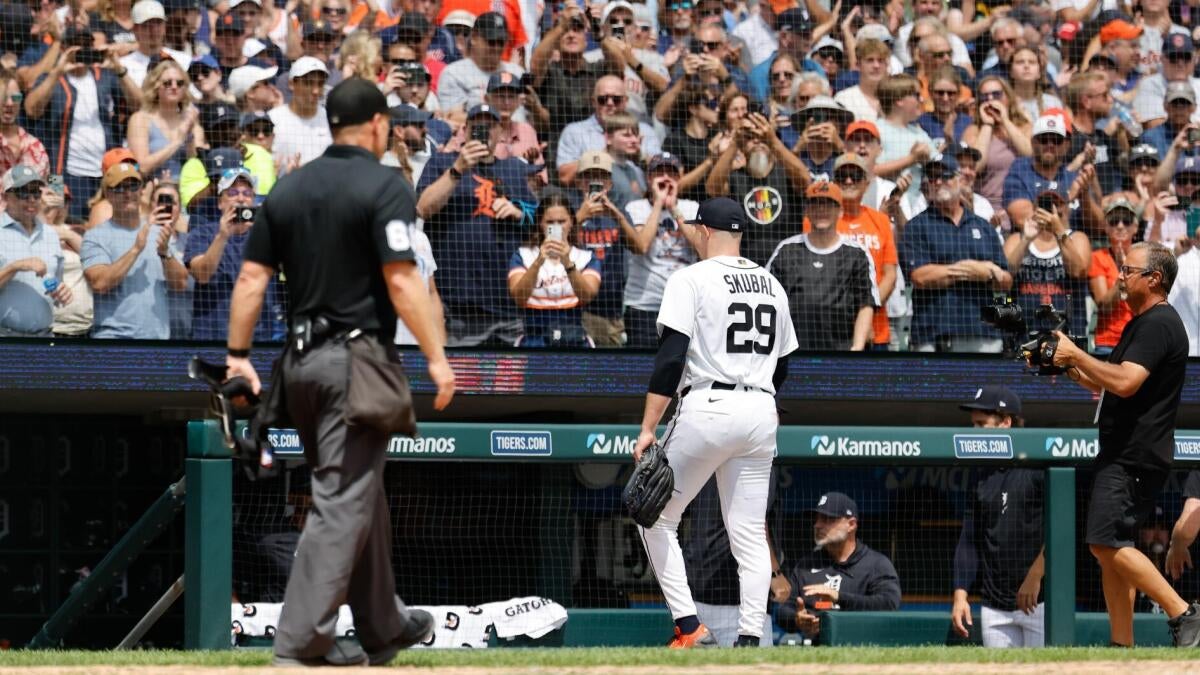
Tarik Skubal takes the mound at Wrigley Field on Tuesday night in a Dodgers uniform for the first time, immediately becoming the centerpiece of Los Angeles's midseason upgrade and a marquee storyline in what's already a high-leverage series. The Dodgers sit on a four-game losing streak and have ceded the best record in the National League to Milwaukee; a win here matters as much for momentum as it does for the division message it sends. But the narrative around Skubal's arrival—a two-time AL Cy Young award winner, a historic mid-July acquisition comparable to Houston's 2017 grab of Justin Verlander—masks a more mundane but actionable reality for Tuesday's matchup: new-team debuts by star pitchers often come with execution friction, and Skubal's recent elbow surgery compounds that exposure.
Skubal has been excellent since returning from elbow surgery, posting a 2.79 ERA with a 0.91 WHIP and allowing three earned runs or fewer in eight of nine starts. Those are legitimate ace numbers. But there is a material difference between performing that way in your home ballpark against familiar AL East opponents and arriving at a new organization mid-season, in a new league (he's never pitched in the NL), at a stadium where you've never thrown a pitch. The 2017 Verlander comparison carries weight—he went 5-0, 1.06 ERA for Houston down the stretch—but Verlander was also 34 and joining a team mid-run with an established chemistry and supporting cast. Skubal, at 29, is trying to prove himself to a new clubhouse while also navigating his impending free agency. That combination has historically produced tentative early outings, not immediate dominance. Add in the elbow surgery context: the Dodgers will almost certainly manage his workload carefully, which means fewer high-leverage innings where he can pile strikeouts in bunches. The SportsLine projection model forecasts him at 7.6 strikeouts tonight, but that sits beneath the 7.5 strikeout over-under at DraftKings. That gap matters.
The Cubs' lineup does not present a strikeout-heavy profile, either. Pete Crow-Armstrong has a single in three career at-bats against Skubal; only Alex Bregman carries notable success (7-for-15 with power). Chicago's offense went in a different direction at the deadline, acquiring Kevin Gausman and Clay Holmes rather than pursuing arms to defend against Skubal in the postseason. Tuesday's game flows against the strikeout aggregate: a new pitcher managing an elbow, a young hitter class lacking established vulnerability to him, and a Dodgers team that may elect to get Skubal out of the game early if he's locked in or pulls him sooner than usual if his pitch efficiency dips. The under on strikeouts is the first layer. Beyond that, Skubal's K-prop season total already sits at 116 strikes with an over-under of 191.5 for the year; the under is the stronger play because Los Angeles's caution profile suggests a innings cap or reduced late-season workload that will lower his per-start average over time.
The market has repriced the Dodgers' World Series odds from +190 to +150 and their pennant odds from +105 to -110, which signals appropriate respect for the acquisition. But single-game strikeout props and season K totals lag behind that futures adjustment because they're less liquid, less watched, and require a bookmaker to actively model workload and adjustment friction—the exact factors that public bettors ignore. Skubal's first-game aura and reputation as a Cy Young winner push casual action onto the over, but the structural reality (elbow recovery, new-team debut, Cubs' non-strikeout-heavy offense, Dodgers' probable workload management) creates value on the under. This is a persistence edge: it won't disappear after Tuesday because the factors are multi-game, not one-night noise.