Alfonzo Gets His Call: What a 26-Year-Old Catcher's MLB Debut Means for Dodgers Depth
By PropBetEdge Editorial Team ·
Los Angeles promotes a second-generation prospect to the majors, signaling confidence in internal catching depth behind a crowded roster.
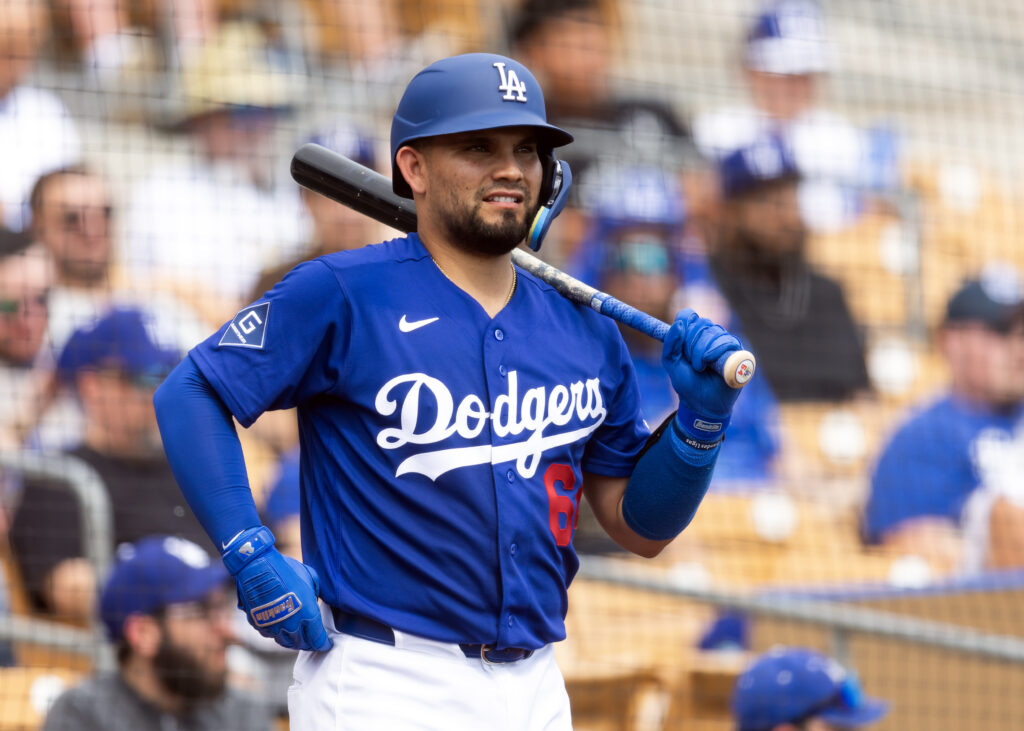
The Dodgers are promoting catcher Eliezer Alfonzo Jr. from Triple-A, marking his first taste of big-league competition at 26 years old. The move opens a 40-man roster spot by optioning fellow catcher Chuckie Robinson back to the minors. It's a routine depth transaction on the surface—but it reflects where the Dodgers stand with their catching hierarchy and what they're willing to bet on mid-season.
Alfonzo is a second-generation player whose family context adds weight to the moment, though that narrative carries no immediate on-field edge. What matters for bettors is the mechanics: the Dodgers already have primary catcher Will Smith locked in, with Robinson serving as the high-ceiling backup. Alfonzo's selection suggests the organization prefers his profile—likely a blend of defensive reliability and left-handed at-bats—over Robinson's upside for this stretch run. The move is defensive positioning, not a signal that Smith is at risk or that the Dodgers are suddenly vulnerable behind the plate.
From a playing-time standpoint, Alfonzo will occupy a utility role. He won't log meaningful consecutive at-bats against major-league pitching unless injury strikes or Smith's workload requires managed rest. His offensive baseline is unproven at this level; Triple-A success translates to majors at rates far lower than hitters expect. The Dodgers' catcher platoon remains Smith-forward, which means Dodgers team totals and Smith's individual props are unaffected by this transaction.
The betting signal here is negative for anyone considering overweighting Alfonzo's offensive ceiling. Second-generation prospects carrying feel-good narratives often draw inflated interest from casual bettors, but the Dodgers' own resource allocation—keeping him deep on the bench—tells you the organization is pricing his offensive contribution as marginal. If Alfonzo props appear on market boards (rare for bench catchers), shorts and fades are the sharper lean. Smith's catching duties, Dodgers run environment, and team-total anchors all remain stable.
This is a roster management move that resolves a logjam without changing the Dodgers' strategic equation. Monitor it for its organizational health signal—promoting internal depth suggests roster confidence—but don't retrofit it into offensive projections. Alfonzo's profile is bench depth, not a lever on run production.