Dodgers Dismantle Padres in Nine-Run Sixth; Offensive Firepower Shifts LA's Run-Prevention Calculus
By Ty Whitney ·
Los Angeles's explosive inning against San Diego represents a structural advantage that props bettors should price into team totals and player performance lines going forward.
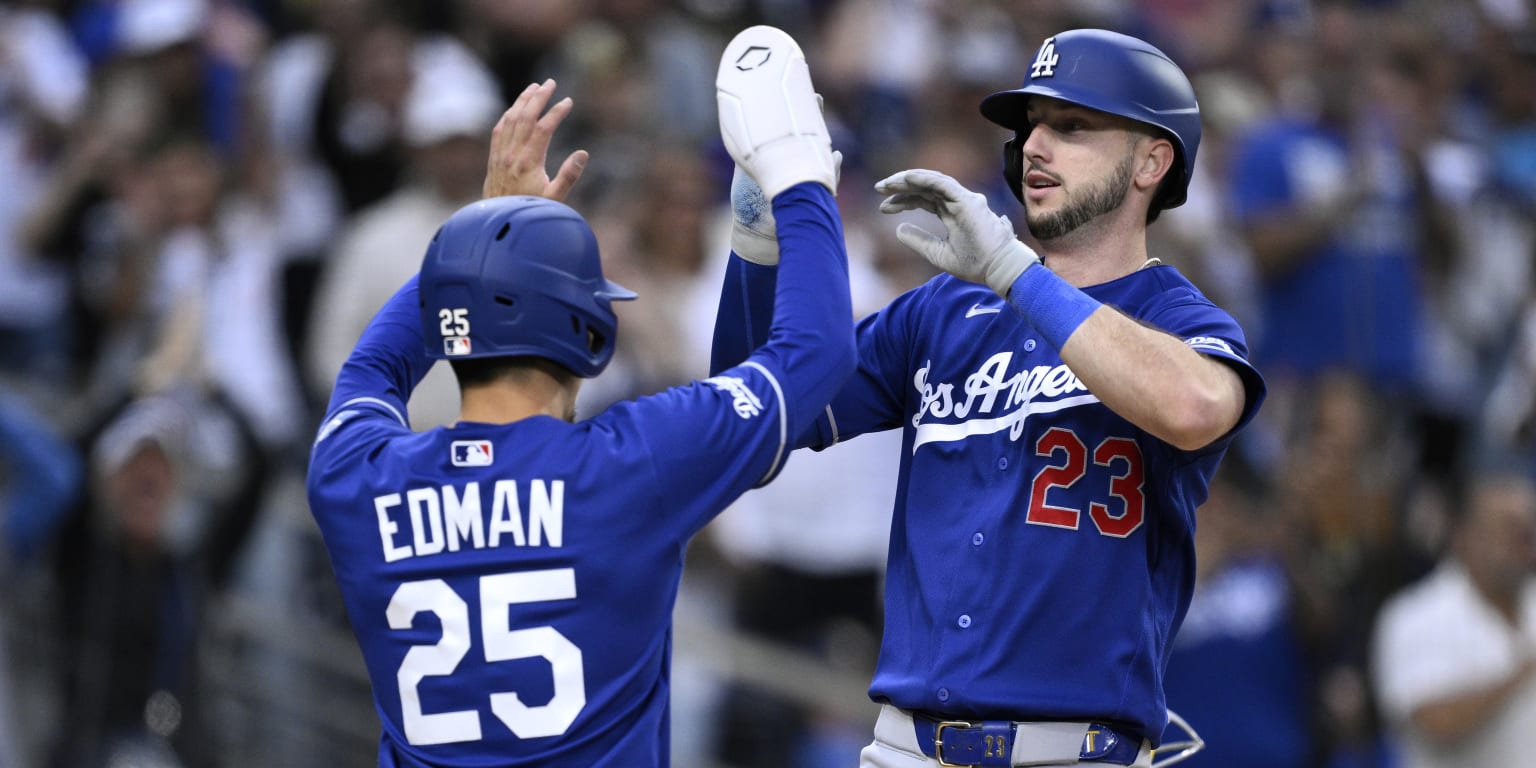
The Dodgers scored nine runs in the sixth inning Saturday night at Petco Park, the most prolific single inning they've posted against the Padres since June 28, 1969—nearly 57 years ago. Kyle Tucker's two-run shot and Dalton Rushing's solo blast sandwiched around a fielding miscue, followed by Mookie Betts's three-run dagger, ignited a 15-3 final that broke the series opener's deadlock and positioned Los Angeles to control the matchup.
What looked like a controlled Padres game—Kyle Hart and Randy Vásquez combining to keep the Dodgers quiet through five innings—collapsed entirely in the sixth when left-hander Vásquez faced the meat of the Los Angeles order a second time. Freddie Freeman's gap double to right-center set the tempo. Max Muncy reached on a fielding error by second baseman Will Wagner on a grounder that should have been an out. The sequence mattered: instead of two outs in a potential double-play scenario, the Dodgers had runners on first and second with Freeman still on base. Edman tripled, Tucker worked a nine-pitch at-bat into a two-run homer, and Rushing went back-to-back. By the time Betts came up for a second at-bat in the same frame, Vásquez had thrown 40+ pitches and the Padres bullpen was already bleeding into a game that had slipped away.
Yoshinobu Yamamoto cruised through six innings allowing only two runs—light work for a Dodgers rotation that has been asked to economize outs all season. That's the core of Los Angeles's value prop right now: the offense has reached a velocity where it can overcome mid-tier starter performances and bullpen exposure. The Dodgers scored again in the eighth, with Muncy, Edman, and Tucker each driving in runs off San Diego relievers who were already operating in garbage time. Three hitters—Betts, Edman, and Tucker—finished with multiple RBIs. That's not a one-night anomaly; it's a lineup with multiple pressure valves all releasing at once.
For prop bettors, Saturday's output has immediate implications. The Dodgers' ability to sustain offensive production against divisional opponents—teams they'll face repeatedly through September—suggests that their team totals in home games (particularly at Dodger Stadium, where they won't have Petco's spacious dimensions cutting into home-run distances) are underpriced relative to their talent distribution. Betts has now driven in runs in consecutive games, and his ability to hit for power in high-leverage spots (third at-bat, runners in scoring position) should nudge his RBI projections upward. Tucker, acquired mid-season, is beginning to establish a usage pattern in this lineup where he faces fastballs early in counts—a structural advantage against relievers who are banking on him being unfamiliar with Los Angeles's pitch sequencing. The Padres' decision to start Hart in Game 2 of the series, designed to prevent their scheduled starter from facing the top of the order three times, accomplished exactly zero; Hart still gave up the first run, and when Vásquez entered, he was already operating on a short leash against an offense that has demonstrated it can turn a quiet series into a statement in a single frame.
The betting angle isn't to chase last night's explosion—blowouts fade quickly, and the Padres will adjust their bullpen management in the series finale. Instead, track whether the market reprices Dodgers team totals in their next three home games. If totals remain in the 4.5–5.0 range, that's where value sits: an offense capable of manufacturing nine-run innings against divisional pitching suggests a 5.3–5.7 expected run total at home against comparable talent. The edge persists because it's rooted in lineup construction (multiple power sources, patient at-bats by Tucker and Freeman creating baserunning leverage) rather than a single outlier performance.